 Bug FAQ
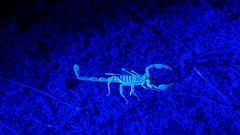
Stripe-tailed Scorpion
Paravaejovis spinigerus · Order: Scorpiones · Family: Vaejovidae
Also called: Arizona stripedtail scorpion, Arizona stripetail scorpion, Desert Stripe-tailed Scorpion
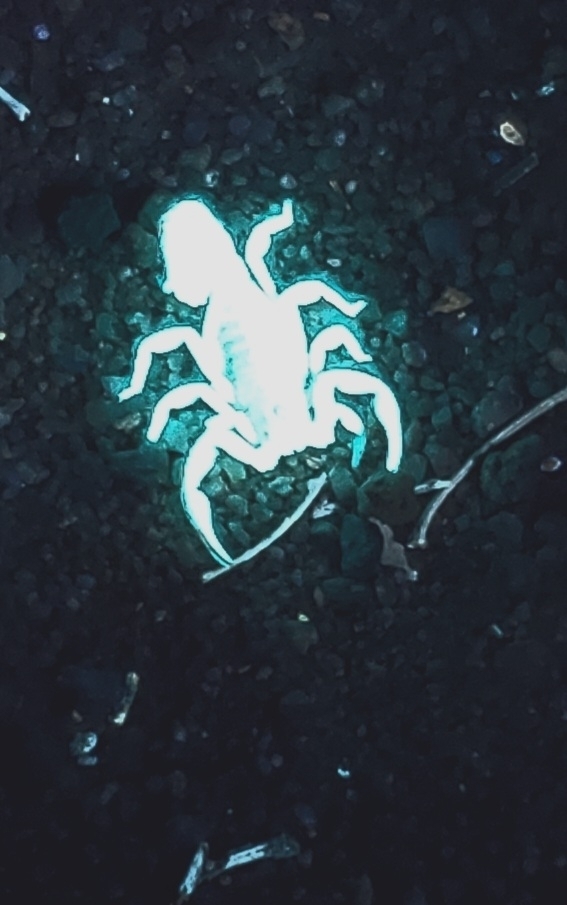
The stripe-tailed scorpion reaches about 6 to 7 cm in length and weighs around 9.5 g. It lives under rocks, shoes or other objects in humid spots across the Sonoran Desert of the southwestern US and north-western Mexico. It eats small insects and other scorpions, and the female gives birth to live young after a gestation of several months.
Source: Wikipedia
How to recognize it
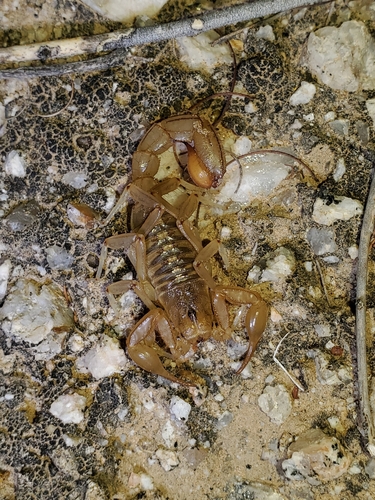
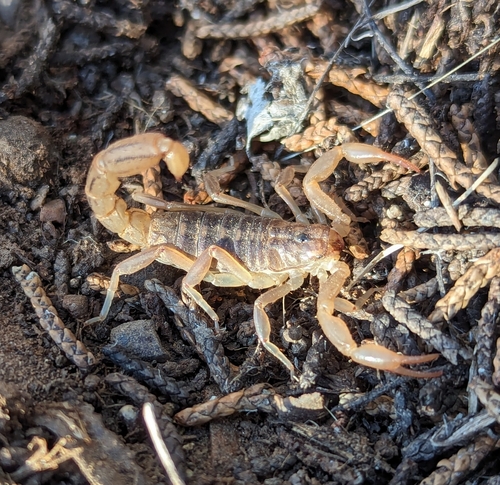
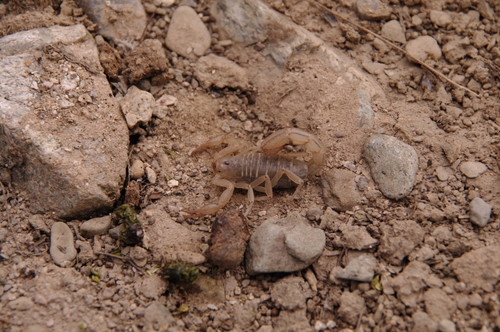
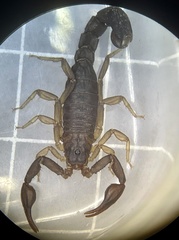
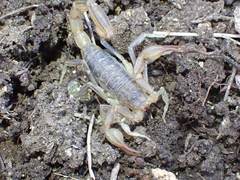
Its tail has brown-tan stripes along the ridges and is thicker than its slender pincers, unlike the Arizona bark scorpion. The base colour is light yellow to golden brown with variable markings on the tail.
Source: Wikipedia
Size
Adults grow to about 60 to 70 mm and weigh roughly 9.5 g.
Source: Wikipedia
Where it lives
You’ll find it under rocks, sleeping bags, shoes or on sandy soil in deserts and rocky hillsides. It prefers the most humid micro-habitats it can locate.
Source: Wikipedia
What it eats
It preys on small invertebrates such as crickets, mealworms, roaches and even other scorpions.
Source: Wikipedia
Life cycle
Females carry developing young inside their bodies and give birth to live offspring. Gestation lasts three to eight months and the female’s posture is distinctive during this time.
Source: Wikipedia
Where it comes from
Its range includes the Sonoran Desert of north-western Mexico and the southwestern United States.
Source: Wikipedia
Lookalikes
It can be told apart from the Arizona bark scorpion by the striped, thicker tail and slender pincers.
Source: Wikipedia
Where it is found in the US
Recorded in 5 of 51 states and DC. Most records: Arizona, New Mexico, California, Nebraska, Utah.
Darker = more records. Counts are museum and citizen-science records, not population size.
Source: GBIF
Status: native in North America. Source: iNaturalist
Months it is reported in the US
Source: GBIF
More photos
Questions people ask
Can the stripe-tailed scorpion sting me?
It can sting, but the venom is not medically significant and is not considered dangerous.
Source: Wikipedia
How can I tell it apart from a bark scorpion?
Look for brown-tan stripes on a thicker tail and very slender pincers; bark scorpions have a thinner tail and no stripes.
Source: Wikipedia
Where might I find this scorpion around my home?
Check under rocks, shoes, sleeping bags or other objects in humid spots, especially on sandy or rocky desert soil.
Source: Wikipedia
What does this scorpion eat?
It feeds on small insects like crickets, mealworms, roaches, and can even eat other scorpions.
Source: Wikipedia
Same family (Vaejovidae)
Sources
- Wikipedia: https://en.wikipedia.org/wiki/Paravaejovis_spinigerus
Look it up elsewhere: GBIF · iNaturalist · BugGuide · Wikipedia
Text written 2026-10-22 from the sources above and checked sentence by sentence against them. Data fetched 2026-10-22.