 Bug FAQ
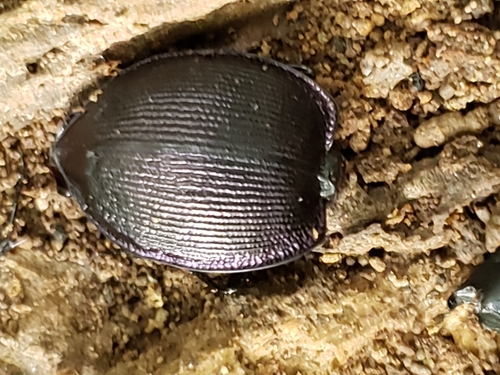
Unicolor Snail-eating Beetle
Scaphinotus unicolor · Order: Coleoptera · Family: Carabidae
Also called: One-color Snail-eating Beetle, Unicolored Snail-eating Beetle
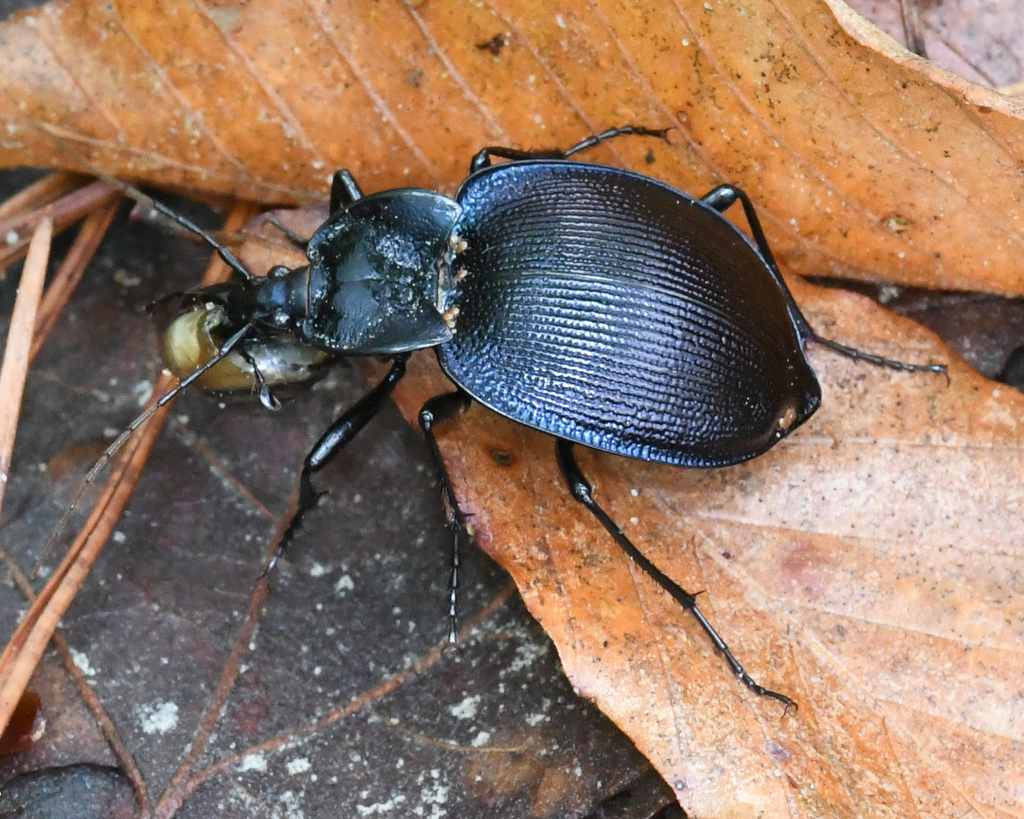
The one-color snail-eating beetle lives in forested areas, often along streams and near springs. Adults have short (brachypterous) wings and are active at night. It is found in many eastern U.S. states, including Alabama, Florida, Georgia, and Pennsylvania.
Source: Wikipedia
How to recognize it
Adults are nocturnal and have reduced wings.
Source: Wikipedia
Size
Adults are brachypterous (short-winged) and active at night.
Source: Wikipedia
What it eats
It feeds on snails.
Source: Wikipedia
Where it is found in the US
Recorded in 16 of 51 states and DC. Most records: Alabama, Tennessee, Virginia, South Carolina, North Carolina, Georgia, Maryland, Mississippi.
Darker = more records. Counts are museum and citizen-science records, not population size.
Source: GBIF
Months it is reported in the US
Source: GBIF
More photos
Questions people ask
Where does this beetle live?
It lives in forested areas, often along streams and near springs.
Source: Wikipedia
Same family (Carabidae)


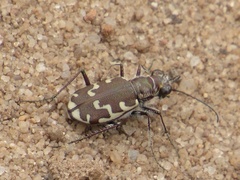
Sources
- Wikipedia: https://en.wikipedia.org/wiki/Scaphinotus_unicolor
Look it up elsewhere: GBIF · iNaturalist · BugGuide · ITIS · Wikipedia
Text written 2026-10-27 from the sources above and checked sentence by sentence against them. Data fetched 2026-10-27.