 Bug FAQ
Unarmed stick-insect
Acanthoxyla inermis · Order: Phasmida · Family: Phasmatidae
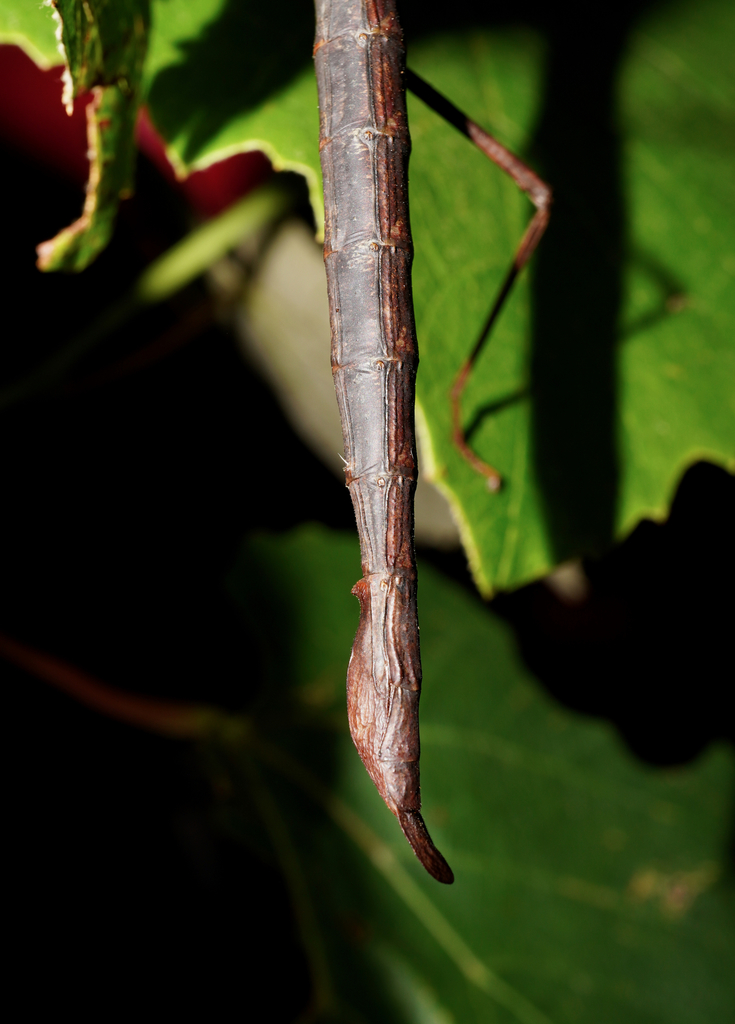
Adult stick insects can reach about ten centimeters in length and show a range of green, brown or yellow shades. They live on trees, feeding on leaves, and are native to New Zealand but now also have a stable population in Great Britain.
Source: Wikipedia
How to recognize it
Their bodies are thin and twig-like with three pairs of slender jointed legs, and their colour varies from green to brown or yellow.
Source: Wikipedia
Size
Adults can grow up to ten centimeters long.
Source: Wikipedia
Where it lives
They spend most of their lives high in trees, where they eat leaves in relative safety. Although native to New Zealand, they have been unintentionally introduced to Great Britain and now maintain a stable population there.
Source: Wikipedia
What it eats
Their diet consists mainly of tree leaves.
Source: Wikipedia
Life cycle
They develop by incomplete metamorphosis, growing through a series of molts. Adults lay eggs by dropping them to the ground or placing them in suitable substrates.
Source: Wikipedia
Where it comes from
The species is native to New Zealand.
Source: Wikipedia
Lookalikes
No subspecies are listed for this insect. The genus Acanthoxyla includes many hybrid, parthenogenetic, and often triploid lineages that look different from each other.
Source: Wikipedia
Questions people ask
How large do these stick insects get?
Adults can reach about ten centimeters in length.
Source: Wikipedia
What do they look like?
They have a thin, twig-like body with three pairs of slender legs and can be green, brown or yellow.
Source: Wikipedia
Same family (Phasmatidae)
 Smooth Stick InsectClitarchus hookeri
 Margin-winged Stick InsectCtenomorpha marginipennisDamages trees, gardens or crops
 Prickly Stick InsectAcanthoxyla prasinaDamages trees, gardens or crops
 Spur Legged PhasmidDidymuria violescens
 Spiny Leaf insectExtatosoma tiaratumCan irritate skin
 Titan Stick InsectAcrophylla titan
Sources
- Wikipedia: https://en.wikipedia.org/wiki/Acanthoxyla_inermis
Look it up elsewhere: GBIF · iNaturalist · BugGuide · Wikipedia
Text written 2026-10-23 from the sources above and checked sentence by sentence against them. Data fetched 2026-10-23.