 Bug FAQ
Margin-winged Stick Insect
Ctenomorpha marginipennis · Order: Phasmida · Family: Phasmatidae
Also called: Margined-winged Stick-insect
Source: Wikipedia
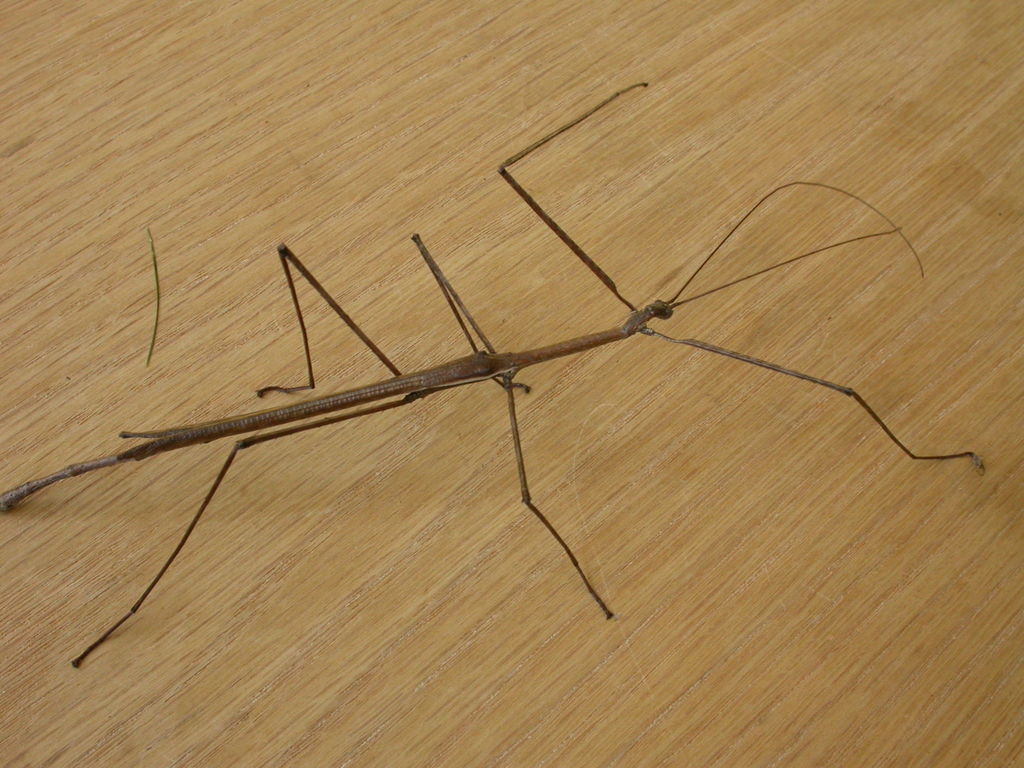
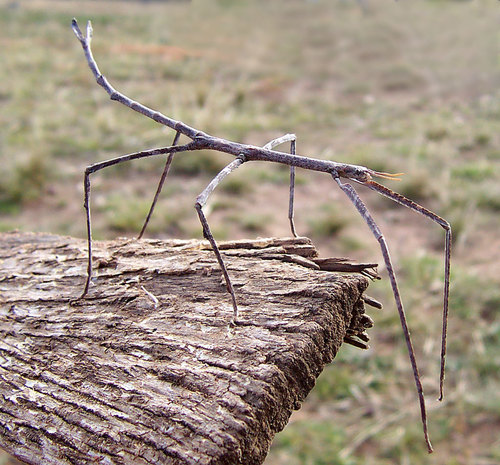
The margin-winged stick insect can grow up to about 20 cm and looks like a twig. It feeds on eucalyptus leaves and may strip foliage from these trees. It lives in heath and woodland areas of southern Australia, especially near the coast.
Source: Wikipedia
How to recognize it
Its head and legs are light pink-brown and the legs have tiny teeth. The middle body, wing covers, abdomen and leaf-like extensions are dark green.
Source: Wikipedia
Size
Adults can reach up to 20 cm in length, resembling a eucalyptus twig.
Source: Wikipedia
What it eats
It eats leaves of eucalyptus trees and other tree species.
Source: Wikipedia
Life cycle
The species reproduces without males (parthenogenetic).
Source: Wikipedia
Where it comes from
The species is endemic to southern Australia.
Source: Wikipedia
Lookalikes
It can be told apart by its very long cerci and the distinctive seed-like eggs.
Source: Wikipedia
More photos
Questions people ask
How large does the margin-winged stick insect get?
Adults can grow up to about 20 cm long.
Source: Wikipedia
What does this stick insect eat?
It feeds on eucalyptus leaves and other tree foliage.
Source: Wikipedia
Where is this insect found?
It lives in heath and woodland areas of southern Australia, especially near the coast.
Source: Wikipedia
How can I tell this stick insect apart from similar species?
Look for its extremely long cerci and the seed-like eggs it lays.
Source: Wikipedia
Same family (Phasmatidae)


Sources
- Wikipedia: https://en.wikipedia.org/wiki/Ctenomorpha_marginipennis
Look it up elsewhere: GBIF · iNaturalist · BugGuide · Wikipedia
Text written 2026-10-23 from the sources above and checked sentence by sentence against them. Data fetched 2026-10-22.