 Bug FAQ
Spur Legged Phasmid
Didymuria violescens · Order: Phasmida · Family: Phasmatidae
Also called: Violet-winged Phasmid, Spur-legged Stick-insect
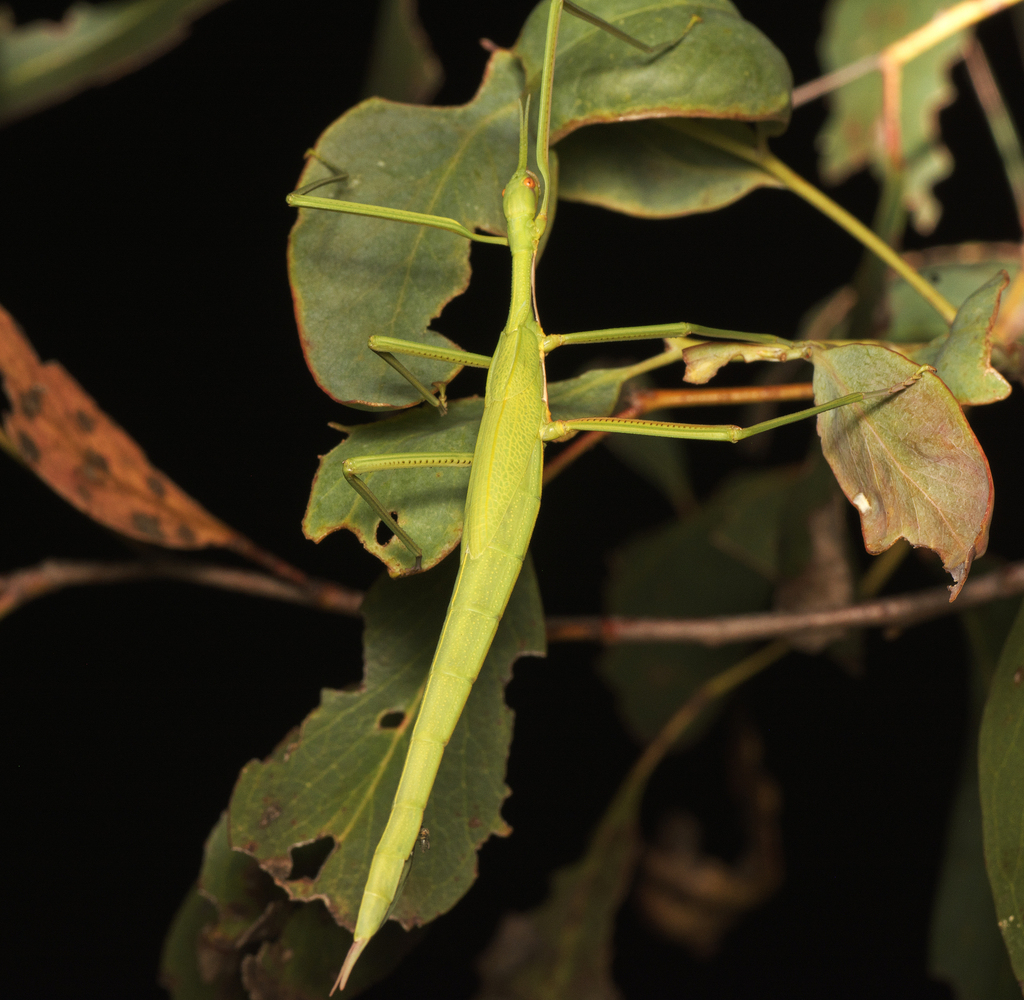
Males have spurs on their thicker hind legs, which give the insect its common name. They live in Australia and feed on eucalyptus leaves. Females lay eggs that can develop without fertilization, producing only female offspring, and the young are called nymphs until their final molt.
Source: Wikipedia
How to recognize it
Males have spurs on their thicker hind legs, which give the insect its common name.
Source: Wikipedia
Where it lives
They are found in Australia.
Source: Wikipedia
What it eats
They eat eucalyptus (gum) leaves.
Source: Wikipedia
Life cycle
Females lay eggs that can hatch without fertilization, producing only females (parthenogenesis). Newly hatched insects are called nymphs until they molt for the final time.
Source: Wikipedia
Where it comes from
They are native to Australia.
Source: Wikipedia
Questions people ask
Can Spur Legged Phasmids reproduce without males?
Yes, females can lay eggs that develop without fertilization, producing only female offspring.
Source: Wikipedia
Same family (Phasmatidae)
 Smooth Stick InsectClitarchus hookeri
 Margin-winged Stick InsectCtenomorpha marginipennisDamages trees, gardens or crops
 Prickly Stick InsectAcanthoxyla prasinaDamages trees, gardens or crops
 Spiny Leaf insectExtatosoma tiaratumCan irritate skin
 Titan Stick InsectAcrophylla titan
 Unarmed stick-insectAcanthoxyla inermis
Sources
- Wikipedia: https://en.wikipedia.org/wiki/Didymuria_violescens
Look it up elsewhere: GBIF · iNaturalist · BugGuide · Wikipedia
Text written 2026-10-23 from the sources above and checked sentence by sentence against them. Data fetched 2026-10-22.