 Bug FAQ
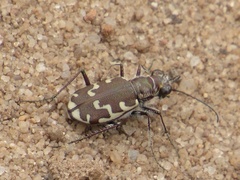
Tyrant Ground Beetle
Anthia maxillosa · Order: Coleoptera · Family: Carabidae
Source: Wikipedia
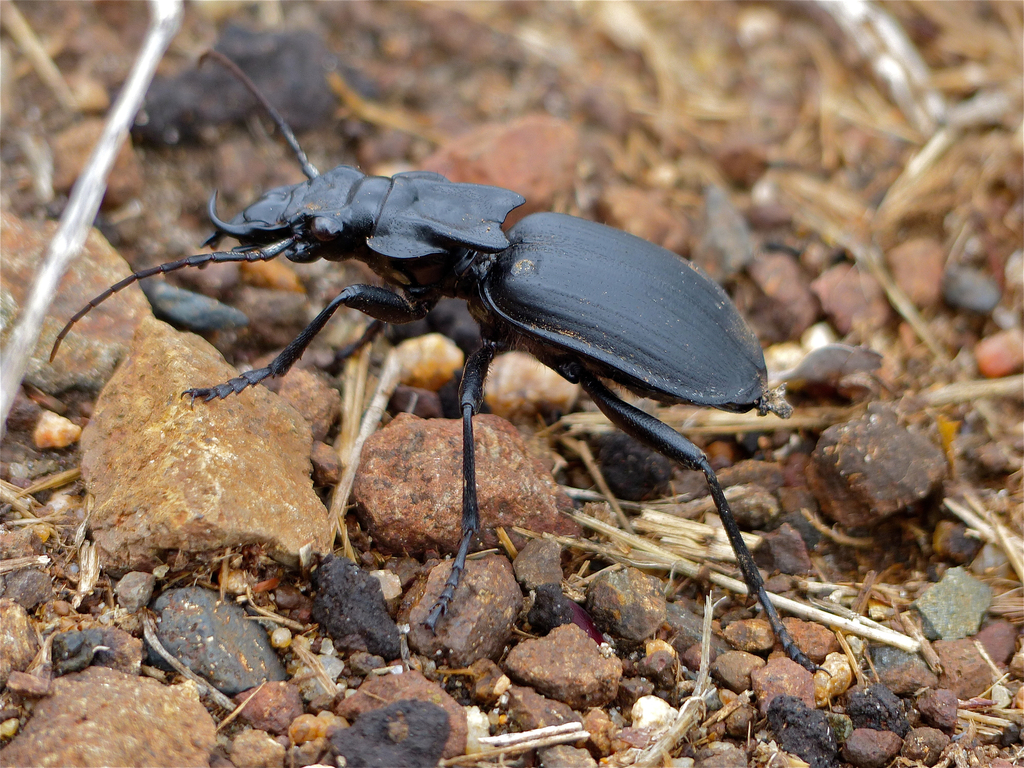
These beetles are large, heavily armored and move quickly, with strong sharp mandibles. Some are active by day in semi-arid areas, others hunt at night, and they are predators.
Source: Wikipedia
How to recognize it
They have a large, armored body and prominent, powerful, sharp mandibles.
Source: Wikipedia
Size
The beetles are large and built like a tank.
Source: Wikipedia
Where it comes from
The genus Anthia is native to Africa and Asia.
Source: Wikipedia
Lookalikes
The genus has been confused with the non-existent genus Thermophilum and related misspellings.
Source: Wikipedia
Questions people ask
Can this beetle hurt my eyes?
Its formic acid jet reaches up to 30 cm (12 in) and, if not treated, can blind animals that harass the beetle.
Source: Wikipedia
What does this beetle look like?
It is large, heavily armored and has strong, sharp mandibles.
Source: Wikipedia
When are they active?
Some are day-time hunters in semi-arid areas, others are active at night.
Source: Wikipedia
Same family (Carabidae)


Sources
- Wikipedia: https://en.wikipedia.org/wiki/Anthia
Look it up elsewhere: GBIF · iNaturalist · BugGuide · Wikipedia
Text written 2026-10-23 from the sources above and checked sentence by sentence against them. Data fetched 2026-10-23.