 Bug FAQ
Two-striped Forceptail
Aphylla williamsoni · Order: Odonata · Family: Gomphidae

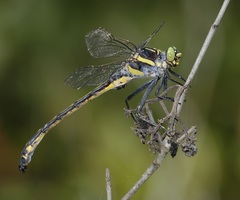
Adults can grow up to about 68 mm (2.7 in) long and often perch on vegetation at the water’s edge. It lives around slow streams, rivers, canals, lakes and ponds that are in full sun, especially in the southeastern United States.
Source: Wikipedia
How to recognize it
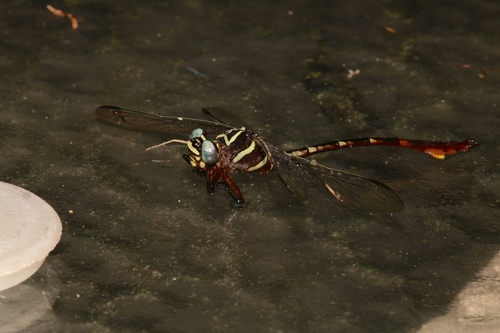
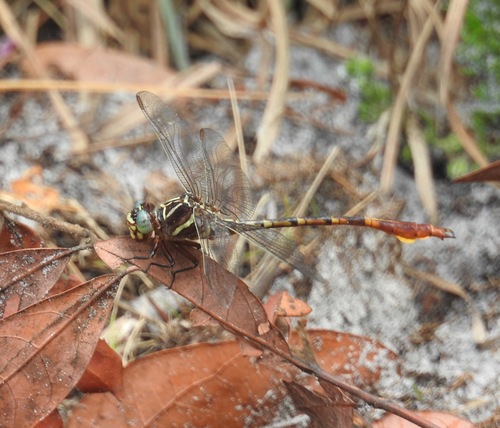
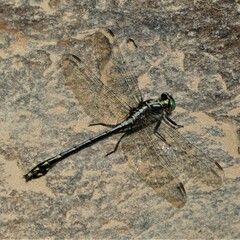
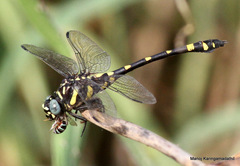
It is dark brown with blue eyes and has yellow stripes on the thorax and other parts of the body.
Source: Wikipedia
Size
Adults may reach about 68 mm (2.7 in) in length.
Source: Wikipedia
How to get rid of it
The IUCN lists the species as Least Concern, indicating no immediate conservation threat.
Source: Wikipedia
Where it lives
It inhabits slow-moving streams, rivers, peat-bottomed canals, lakes and ponds that are often disturbed and in full sun.
Source: Wikipedia
What it eats
Females lay eggs by tapping the water surface or dropping them from above.
Source: Wikipedia
Life cycle
Nymphs lack any color pattern and are almost hairless; the tenth abdominal segment is noticeably elongated.
Source: Wikipedia
When you see it
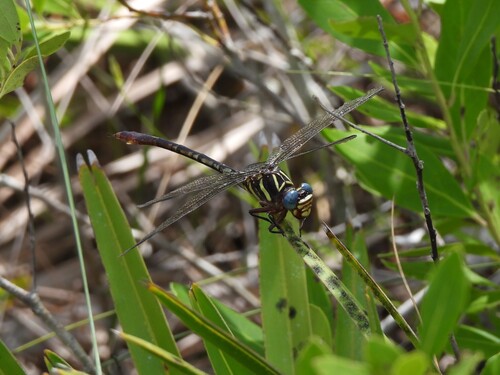
Adults often perch on vegetation at the water’s edge between short flights, holding their abdomen slightly arched.
Source: Wikipedia
Where it is found in the US
Recorded in 12 of 51 states and DC. Most records: Florida, Texas, Georgia, North Carolina, Louisiana, Mississippi, Alabama, South Carolina.
Darker = more records. Counts are museum and citizen-science records, not population size.
Source: GBIF
Months it is reported in the US
Source: GBIF
More photos
Same family (Gomphidae)

Sources
- Wikipedia: https://en.wikipedia.org/wiki/Aphylla_williamsoni
Look it up elsewhere: GBIF · iNaturalist · BugGuide · ITIS · Wikipedia
Text written 2026-10-23 from the sources above and checked sentence by sentence against them. Data fetched 2026-10-22.