 Bug FAQ
Indian Common Clubtail
Ictinogomphus rapax · Order: Odonata · Family: Gomphidae
Also called: Common Clubtail, Rapacious Flangetail
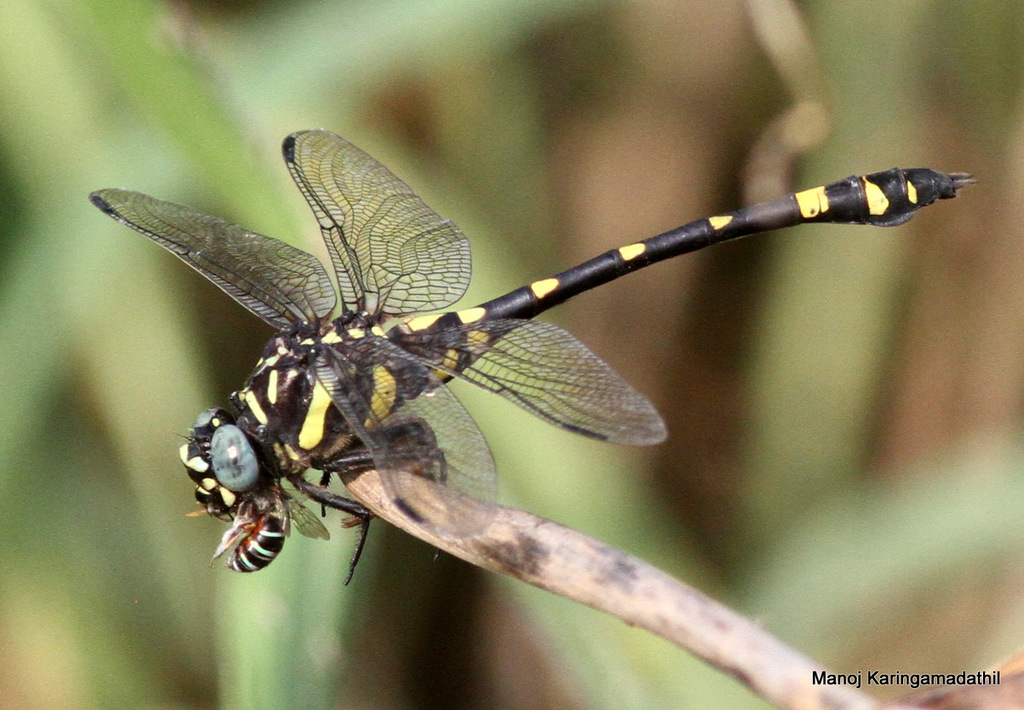
The Indian Common Clubtail is a large dragonfly with yellow and black markings and bluish-grey eyes. Its thorax is black with yellow or greenish-yellow stripes, and the abdomen is black with bright yellow spots. It is found throughout the Indomalayan region, often perching on bare twigs near ponds, tanks, and rivers where it breeds in both running and still water.
Source: Wikipedia
How to recognize it
The dragonfly’s body shows black on the thorax with yellow or greenish-yellow stripes and a black abdomen with bright yellow markings.
Source: Wikipedia
Size
It is a large species with a yellow and black color pattern and bluish-grey eyes.
Source: Wikipedia
Where it lives
It usually rests on bare twigs facing water and is common around ponds, tanks, and rivers. The species breeds in both flowing and still water bodies.
Source: Wikipedia
Where it comes from
Its distribution covers the entire Indomalayan region.
Source: Wikipedia
Questions people ask
What does the Indian Common Clubtail look like?
It is a large dragonfly with yellow and black coloration, bluish-grey eyes, and distinct black and yellow striping on the thorax and abdomen.
Source: Wikipedia
Where can I find Indian Common Clubtails?
They are common throughout the Indomalayan region, often perching on bare twigs near ponds, tanks, and rivers where they breed in both running and still water.
Source: Wikipedia
Same family (Gomphidae)

Sources
- Wikipedia: https://en.wikipedia.org/wiki/Ictinogomphus_rapax
Look it up elsewhere: GBIF · iNaturalist · BugGuide · Wikipedia
Text written 2026-10-22 from the sources above and checked sentence by sentence against them. Data fetched 2026-10-22.