 Bug FAQ
Two-spotted Grass Bug
Stenotus binotatus · Order: Hemiptera · Family: Miridae
Also called: Plant bug, Slender Crop Mirid, Timothy Grassbug
Source: Wikipedia
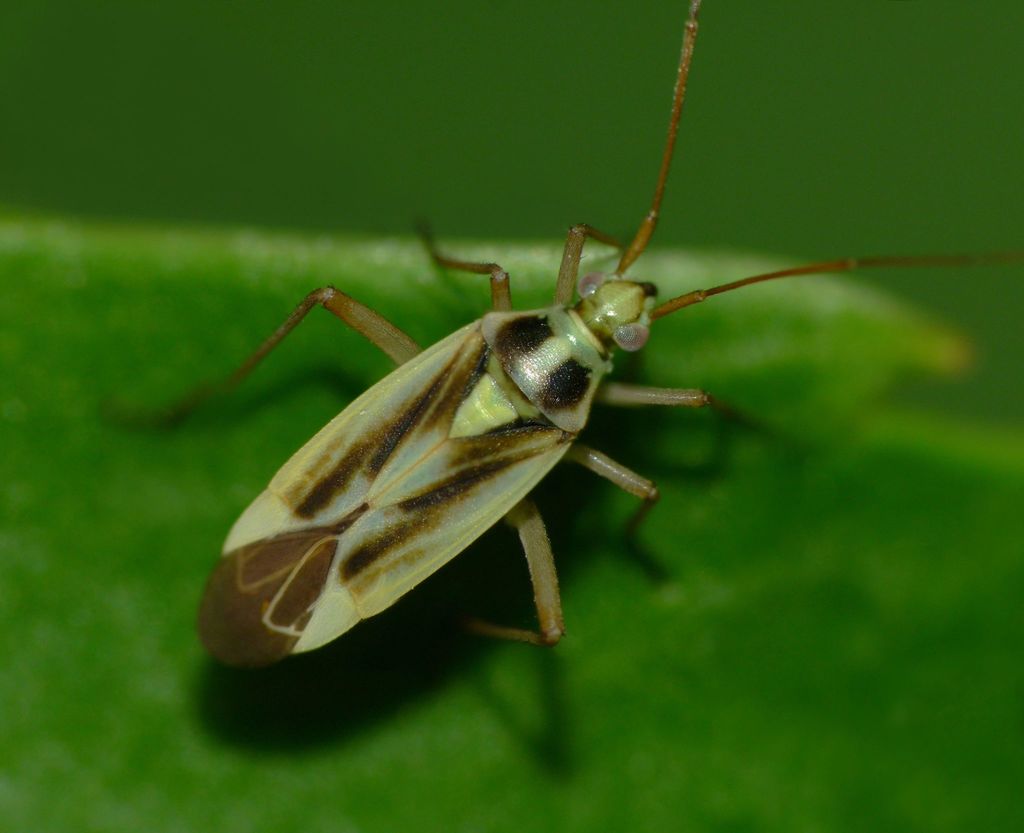
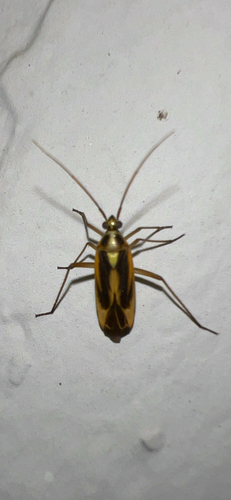
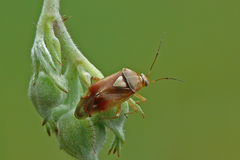
The two-spotted grass bug is a 6 to 7 mm yellowish plant bug with darker marks on its back and wings; males are mostly yellow while females are greener-yellow. It lives on grasses, especially timothy, and can become a pest of wheat and other crops because it feeds on the flower heads and produces an enzyme that breaks down gluten. The bug is native to the Palearctic region but is now common across northern and central North America, southern Canada, and much of New Zealand.
Source: Wikipedia
How to recognize it
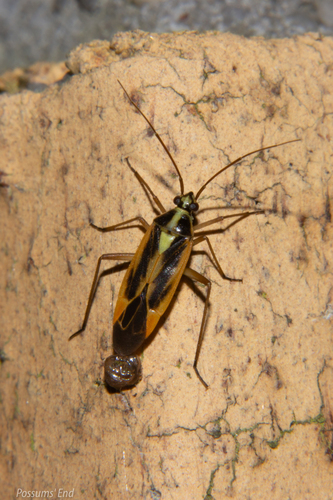
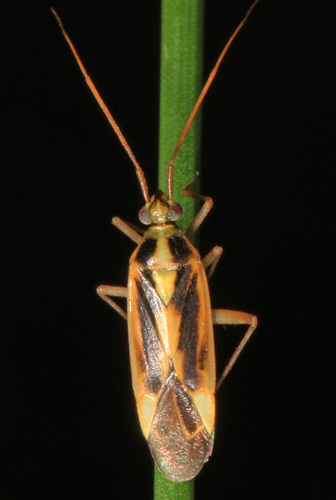
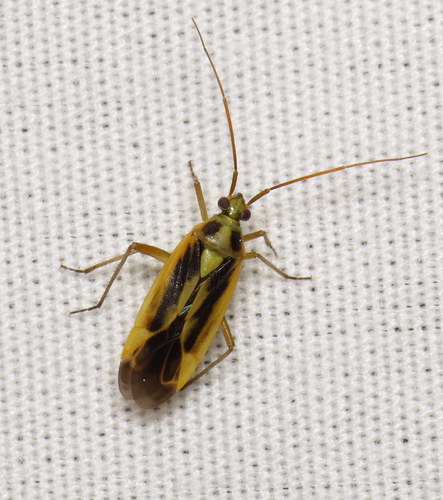
Males are mainly yellow with darker spots on the pronotum and forewings; females are greener-yellow with lighter markings. Overall length is about 6 to 7 mm and the body is yellowish with darker markings on the back and wings.
Source: Wikipedia
Is it a pest in the house?
It can be a pest of wheat and other grasses, and it produces an enzyme that breaks down gluten in the plants it eats.
Source: Wikipedia
Where it lives
It feeds on a variety of grasses and can become a pest of cultivated crops such as wheat. Both nymphs and adults eat the flower heads of grasses, especially timothy-grass.
Source: Wikipedia
What it eats
Both young and adult bugs feed on grass inflorescences, preferring timothy-grass. They also feed on various grasses and can damage wheat crops.
Source: Wikipedia
Life cycle
Adults are seen from June to September in the UK and from December to January in New Zealand.
Source: Wikipedia
When you see it
Active months are June-September in Britain and December-January in New Zealand.
Source: Wikipedia
Where it comes from
Originally from most of the Palearctic, it has spread to temperate regions worldwide. It is now common throughout northern and central United States, southern Canada, and widely distributed in New Zealand.
Source: Wikipedia
Where it is found in the US
Recorded in 42 of 51 states and DC. Most records: New York, Illinois, Minnesota, Pennsylvania, Vermont, Massachusetts, Wisconsin, Michigan.
Darker = more records. Counts are museum and citizen-science records, not population size.
Source: GBIF
Status: introduced in United States. Source: iNaturalist
Months it is reported in the US
Source: GBIF
More photos
Questions people ask
What crops can it damage?
It can damage wheat and other grass crops by feeding on their flower heads and breaking down gluten.
Source: Wikipedia
Where is this bug found?
It is native to the Palearctic but now occurs across northern and central North America, southern Canada, and most of New Zealand.
Source: Wikipedia
Same family (Miridae)
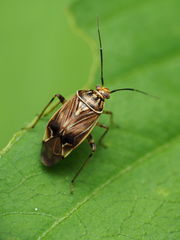 North American Tarnished Plant BugLygus lineolarisDamages trees, gardens or crops
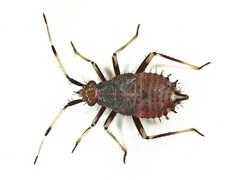 Red-spotted Plant BugDeraeocoris ruber
 Alfalfa Plant BugAdelphocoris lineolatusDamages trees, gardens or crops
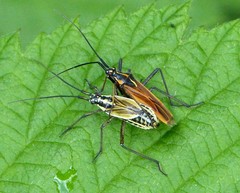 Meadow Plant BugLeptopterna dolabrataDamages trees, gardens or crops
 Four-lined Plant BugPoecilocapsus lineatusDamages trees, gardens or crops
 Lygus pratensisLygus pratensisDamages trees, gardens or crops
Sources
- Wikipedia: https://en.wikipedia.org/wiki/Stenotus_binotatus
Look it up elsewhere: GBIF · iNaturalist · BugGuide · ITIS · Wikipedia
Text written 2026-10-22 from the sources above and checked sentence by sentence against them. Data fetched 2026-10-22.