 Bug FAQ
Two-spined Grass Bug
Stenodema calcarata · Order: Hemiptera · Family: Miridae
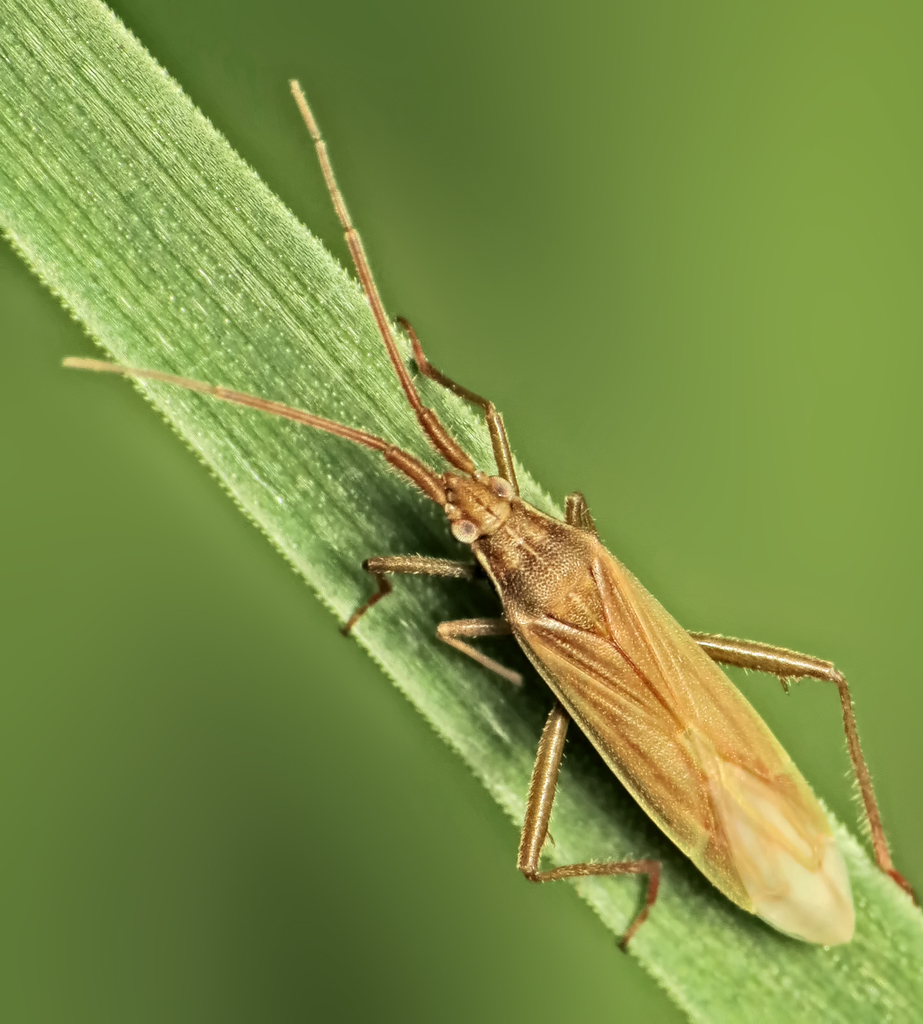
Adults are about 7 to 8 mm long. They live on many grasses, sedges and rushes across Europe and much of Asia.
Source: Wikipedia
How to recognize it
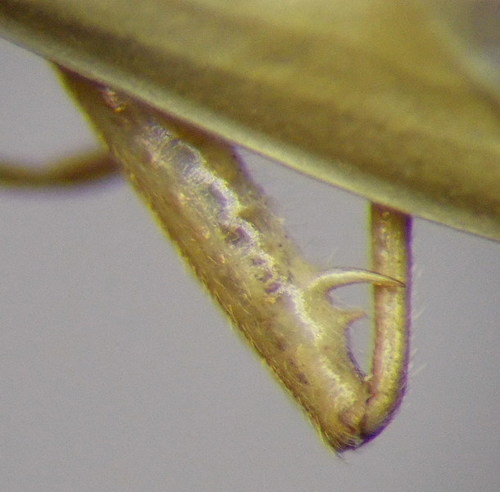
They have a lengthwise groove between the eyes.
Source: Wikipedia
Size
An adult measures 7 to 8 mm (0.28 to 0.31 in).
Source: Wikipedia
Where it lives
They are found on grasses such as Agrostis, Alopecurus, Festuca and Molinia, as well as sedges like Carex, Scirpus and Juncus.
Source: Wikipedia
What it eats
They feed on a variety of grasses, sedges and rushes.
Source: Wikipedia
Life cycle
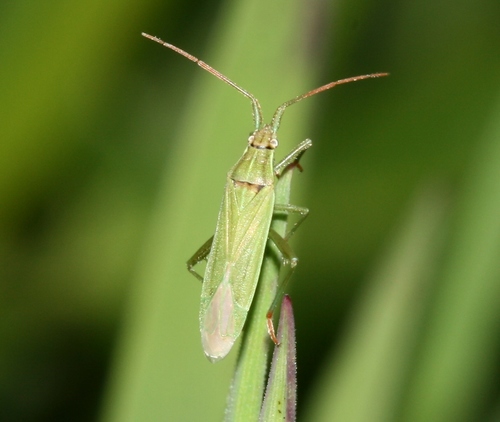
They hibernate in winter, become active in April, females turn green while males stay yellow or brown, and larvae appear by August.
Source: Wikipedia
When you see it
They hibernate through winter and emerge in April.
Source: Wikipedia
Where it is found in the US
Recorded in 2 of 51 states and DC. Most records: Florida, Pennsylvania.
Darker = more records. Counts are museum and citizen-science records, not population size.
Source: GBIF
More photos
Questions people ask
What plants does the two-spined grass bug live on?
It lives on many grasses, sedges and rushes such as Agrostis, Alopecurus, Festuca, Molinia, Carex, Scirpus and Juncus.
Source: Wikipedia
When does the two-spined grass bug become active?
It hibernates in winter and comes out in April.
Source: Wikipedia
Same family (Miridae)
 North American Tarnished Plant BugLygus lineolarisDamages trees, gardens or crops
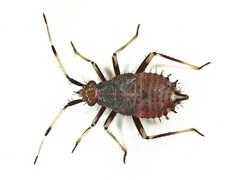 Red-spotted Plant BugDeraeocoris ruber
 Alfalfa Plant BugAdelphocoris lineolatusDamages trees, gardens or crops
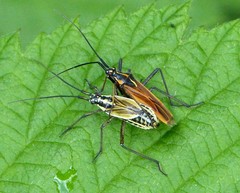 Meadow Plant BugLeptopterna dolabrataDamages trees, gardens or crops
 Four-lined Plant BugPoecilocapsus lineatusDamages trees, gardens or crops
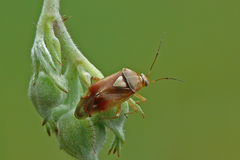 Lygus pratensisLygus pratensisDamages trees, gardens or crops
Sources
- Wikipedia: https://en.wikipedia.org/wiki/Stenodema_calcarata
Look it up elsewhere: GBIF · iNaturalist · BugGuide · Wikipedia
Text written 2026-10-23 from the sources above and checked sentence by sentence against them. Data fetched 2026-10-22.