 Bug FAQ
Two-marked harp ground beetle
Anisodactylus binotatus · Order: Coleoptera · Family: Carabidae
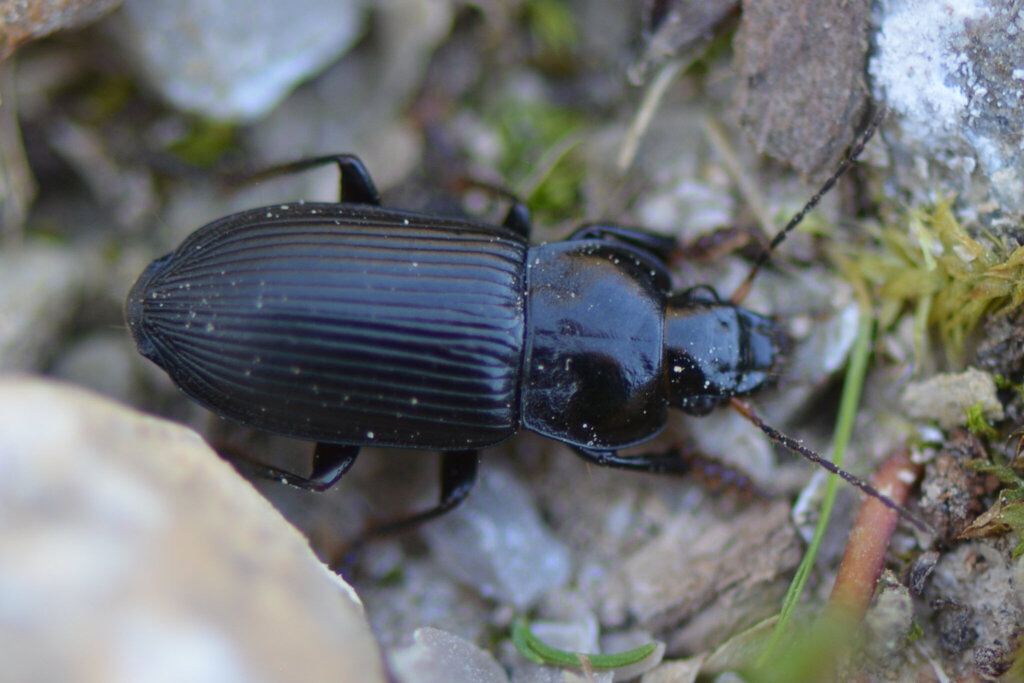
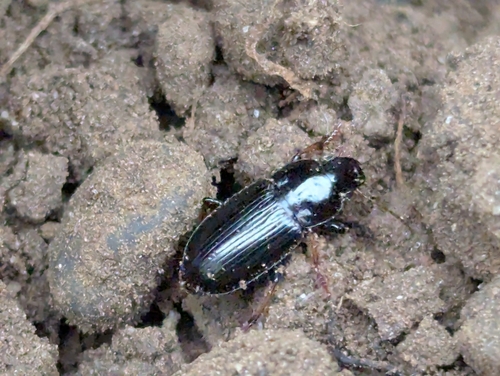
Anisodactylus binotatus is a small ground beetle about 10 to 12.7 mm long with a shiny black body and a distinctive red spot between the eyes on the frons. It lives under logs, stones, plant debris and in soil burrows, and is native to Europe but has been recorded worldwide. Larvae are carnivorous, eating small worms and molluscs, while adults add small seeds and strawberries to their diet.
Source: Wikipedia
How to recognize it
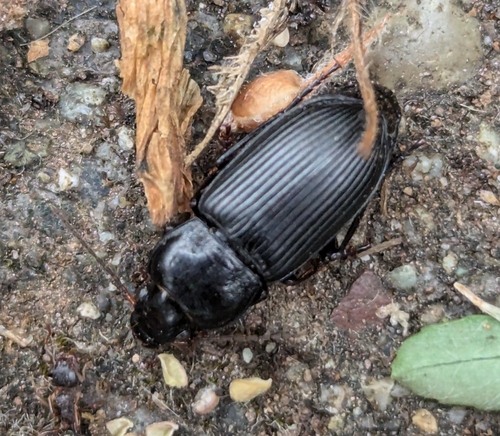
The beetle’s head, pronotum and femora are black with a polished shine, not metallic. A red spot on the frons between the eyes helps identify it.
Source: Wikipedia
Size
Adults measure between 10 and 12.7 mm in length.
Source: Wikipedia
Where it lives
It is found under logs, stones and plant debris. It also occurs in fields and soil burrows like many ground beetles.
Source: Wikipedia
What it eats
Larvae feed on small worms and molluscs. Adults are omnivorous, also eating small seeds and strawberries.
Source: Wikipedia
Life cycle
It likely has an annual life cycle with a new generation each year. Larvae develop over several months before emerging as adults.
Source: Wikipedia
When you see it
In New Zealand it is most reproductively active from September to April. Adults are mainly nocturnal but may be active on warm days.
Source: Wikipedia
Where it comes from
Anisodactylus binotatus is native to Europe. The species has been reported in other parts of the world.
Source: Wikipedia
Where it is found in the US
Recorded in 6 of 51 states and DC. Most records: Oregon, Washington, Utah, Idaho, Arizona, California.
Darker = more records. Counts are museum and citizen-science records, not population size.
Source: GBIF
Status: introduced in North America; introduced in United States; introduced in Canada. Source: iNaturalist
Months it is reported in the US
Source: GBIF
More photos
Questions people ask
How can I identify Anisodactylus binotatus?
Look for a 10 to 12.7 mm shiny black beetle with a polished sheen, a red spot between the eyes on the frons, and black coloration on the head, pronotum and femora.
Source: Wikipedia
What does Anisodactylus binotatus eat?
The larvae eat small worms and molluscs, while adults also consume small seeds and strawberries.
Source: Wikipedia
Where does this beetle live?
It lives under logs, stones, plant debris, in fields and soil burrows, and is native to Europe but found worldwide.
Source: Wikipedia
When are they most active?
Adults are mainly nocturnal, though they may be seen on warm days, and in New Zealand they reproduce most from September to April.
Source: Wikipedia
Same family (Carabidae)


Sources
- Wikipedia: https://en.wikipedia.org/wiki/Anisodactylus_binotatus
Look it up elsewhere: GBIF · iNaturalist · BugGuide · ITIS · Wikipedia
Text written 2026-10-29 from the sources above and checked sentence by sentence against them. Data fetched 2026-10-29.