 Bug FAQ
Two-form Bumble Bee Complex
Bombus bifarius · Order: Hymenoptera · Family: Apidae
Also called: Black-notched Bumble Bee, Colorado Black-notched Bumble Bee, Two Form Bumble Bee
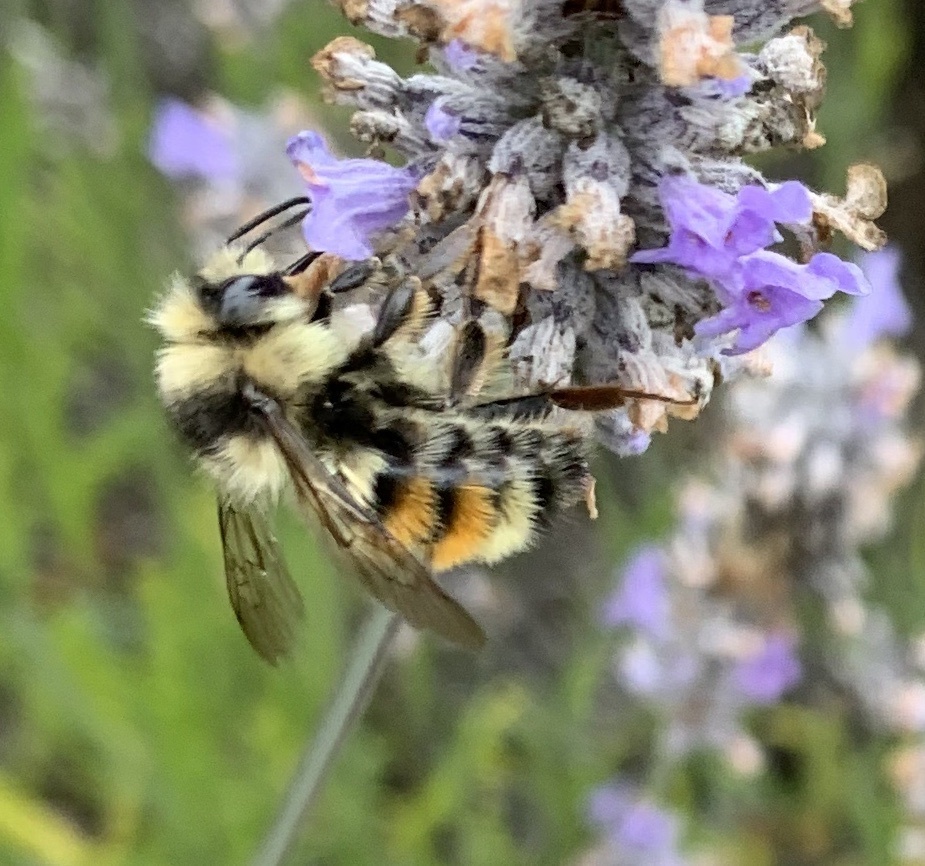
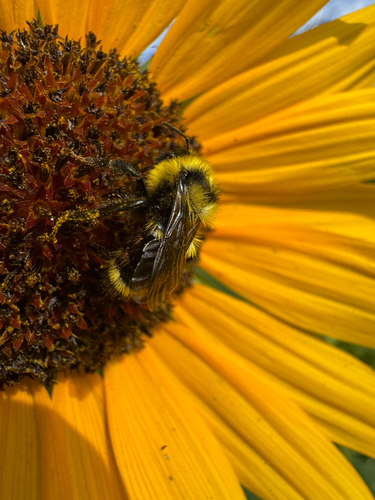
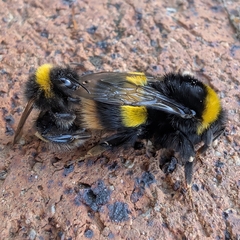
Workers are 8 to 14 mm long, queens 15 to 19 mm, and males 8 to 13 mm. Their faces have yellow or white hair, sometimes with black on the top of the head, and the lower third of the thorax is also black.
Source: Wikipedia
How to recognize it
Face hair is yellow or white, occasionally black on the top of the head; the lower third of the thorax is black.
Source: Wikipedia
Size
Workers measure 8 to 14 mm, queens 15 to 19 mm, and males 8 to 13 mm.
Source: Wikipedia
Lookalikes
What was called the two-form bumblebee actually includes a cryptic sister species, Bombus vancouverensis; true B. bifarius only has a red form. Bombus bifarius belongs to the subgenus Pyrobombus.
Source: Wikipedia
Where it is found in the US
Recorded in 21 of 51 states and DC. Most records: California, Colorado, Oregon, Idaho, Washington, Utah, Montana, Wyoming.
Darker = more records. Counts are museum and citizen-science records, not population size.
Source: GBIF
Status: native in North America; native in United States; native in Canada. Source: iNaturalist
Months it is reported in the US
Source: GBIF
More photos
Questions people ask
How can I tell if a bumblebee is Bombus bifarius?
Look for yellow or white facial hair (sometimes black on top) and a black band on the lower third of the thorax; workers are 8 to 14 mm long.
Source: Wikipedia
Same family (Apidae)


Sources
- Wikipedia: https://en.wikipedia.org/wiki/Bombus_bifarius
Look it up elsewhere: GBIF · iNaturalist · BugGuide · ITIS · Wikipedia
Text written 2026-10-23 from the sources above and checked sentence by sentence against them. Data fetched 2026-10-23.