 Bug FAQ
Turbine Cylindrical Weevil
Larinus turbinatus · Order: Coleoptera · Family: Curculionidae
Also called: Weevil
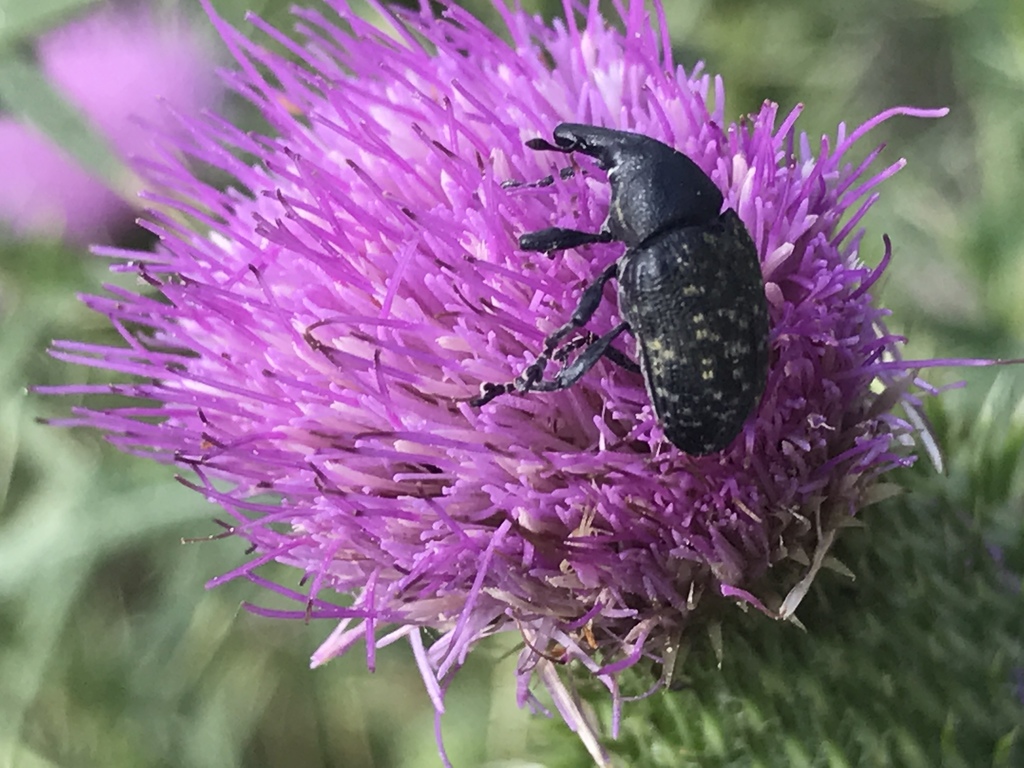
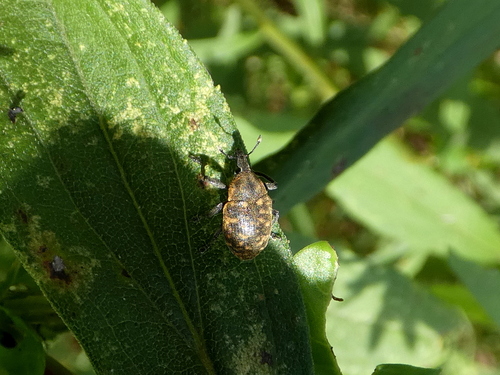
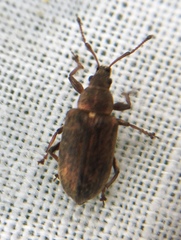
The turbine cylindrical weevil is a small, oval beetle about 4 to 9 mm long with a black body covered in gray hairs that look yellowish from secretions and pollen. It lives on warm, open grasslands and meadows where thistles grow, and the adults feed on the flowers of several thistle species.
Source: Wikipedia
How to recognize it
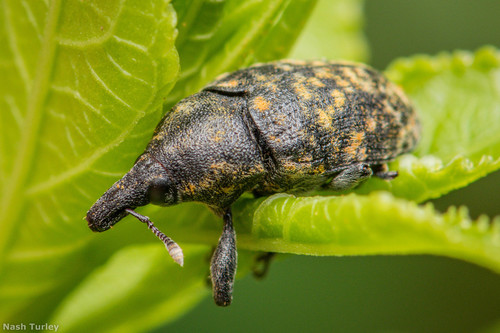
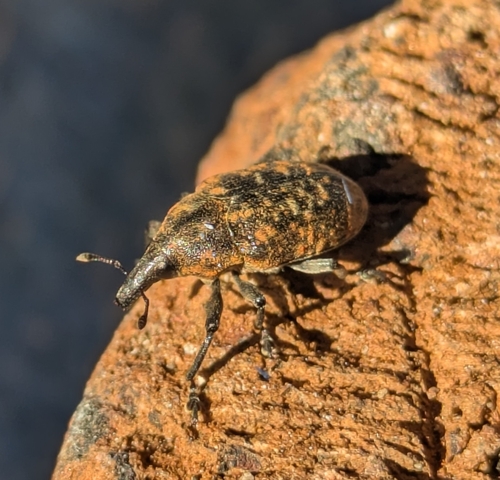
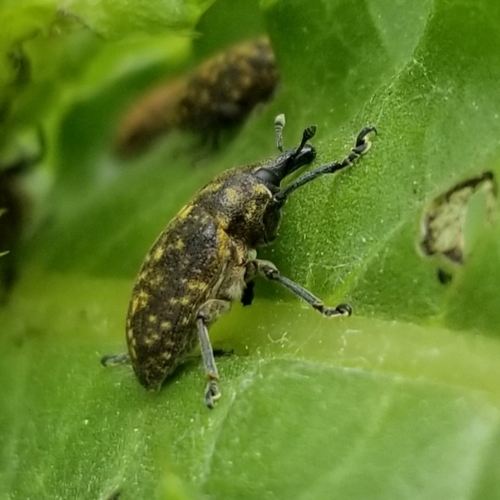
Adults have a robust, oval, black shape with many gray setae that appear yellowish because of a secretion and pollen; females have a darker head and rostrum than males.
Source: Wikipedia
Size
They range from about 4 mm to 9 mm in length.
Source: Wikipedia
Where it lives
They prefer warm, open slopes, grasslands, wet meadows and pastures where thistles are present.
Source: Wikipedia
What it eats
Adults feed on the flowers of thistles in the genera Carduus and Cirsium, especially marsh, creeping, musk and cabbage thistles, and are sometimes seen on Silybum, Onopordum and Centaurea.
Source: Wikipedia
Life cycle
Females lay five to six eggs each day on individual flower buds, and the larvae pupate inside the thistle blossom.
Source: Wikipedia
When you see it
These weevils are active during the day.
Source: Wikipedia
Lookalikes
They can be confused with the similarly sized Larinus carlinae.
Source: Wikipedia
Where it is found in the US
Recorded in 18 of 51 states and DC. Most records: Pennsylvania, Maryland, New York, Virginia, Wisconsin, Ohio, New Jersey, Delaware.
Darker = more records. Counts are museum and citizen-science records, not population size.
Source: GBIF
Status: introduced in North America; introduced in Canada; introduced in United States. Source: iNaturalist
Months it is reported in the US
Source: GBIF
More photos
Questions people ask
What plants do turbine cylindrical weevils eat?
They feed on thistles such as marsh thistle, creeping thistle, musk thistle and cabbage thistle, and occasionally on related plants like Silybum, Onopordum and Centaurea.
Source: Wikipedia
Where are these weevils likely to be found?
Look for them on warm, open grasslands, meadows and pastures where thistles grow.
Source: Wikipedia
How can I tell this weevil apart from similar species?
It has a black, oval body with gray hairs that look yellowish, and females have a darker head and rostrum than males; it is similar in size to Larinus carlinae.
Source: Wikipedia
Same family (Curculionidae)
 Green Immigrant Leaf WeevilPolydrusus formosusDamages trees, gardens or crops
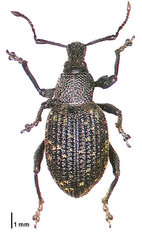 Black Vine WeevilOtiorhynchus sulcatusDamages trees, gardens or crops
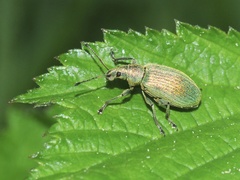 Nettle weevilPhyllobius pomaceusDamages trees, gardens or crops
 Asian Oak WeevilCyrtepistomus castaneusDamages trees, gardens or crops
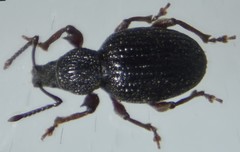 Strawberry Root WeevilOtiorhynchus ovatusDamages trees, gardens or crops
 Common Leaf WeevilPhyllobius pyriDamages trees, gardens or crops
Sources
- Wikipedia: https://en.wikipedia.org/wiki/Larinus_turbinatus
Look it up elsewhere: GBIF · iNaturalist · BugGuide · Wikipedia
Text written 2026-10-22 from the sources above and checked sentence by sentence against them. Data fetched 2026-10-22.