 Bug FAQ
Trosia obsolescens
Trosia obsolescens · Order: Lepidoptera · Family: Megalopygidae
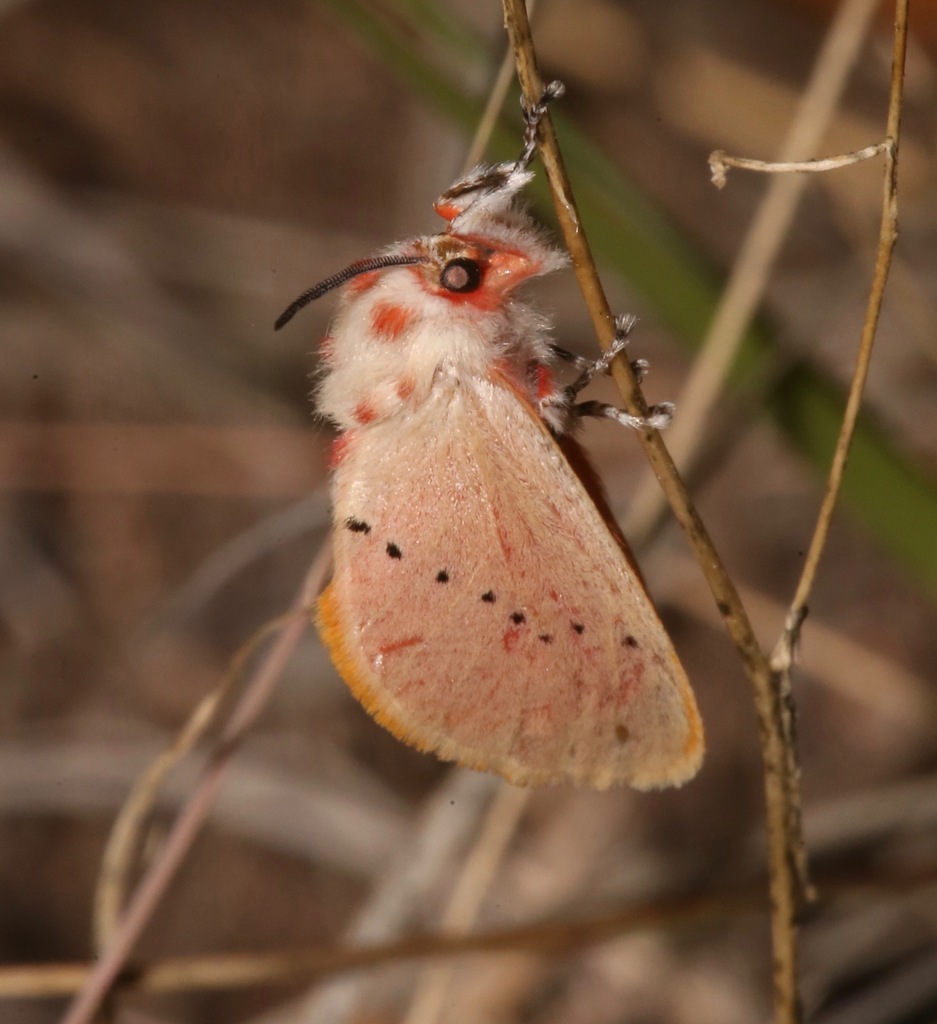
The moth has a wingspan of about 34 mm and shows reddish head, abdomen and legs with black-tarsal tips spotted white. Its forewings are greenish-yellow with a row of black spots, while the hindwings and underside are roseate. It lives in rainforests and cloud-forests from 300 to 1 700 m altitude, feeds on the plant Byrsonima coccolobifolia, and has been recorded from South America up into North America.
Source: Wikipedia
How to recognize it
The head, abdomen and legs are reddish, the tarsi are black with white spots. The collar and thorax are yellow-buff, the thorax bearing red spots. Forewings are greenish-yellow with a post-medial row of black spots. Hindwings are roseate, and the underside is a dull roseate colour.
Source: Wikipedia
Size
The wingspan measures roughly 34 mm (1.3 in).
Source: Wikipedia
Where it lives
It inhabits rainforests and cloud-forests at elevations between 300 and 1 700 m.
Source: Wikipedia
What it eats
The larvae feed on the host plant Byrsonima coccolobifolia.
Source: Wikipedia
Where it comes from
Observations show it occurs from South America up into North America. Specifically, it has been recorded in Colombia, Venezuela, Ecuador, Brazil and Peru.
Source: Wikipedia
Where it is found in the US
Recorded in 1 of 51 states and DC. Most records: Arizona.
Darker = more records. Counts are museum and citizen-science records, not population size.
Source: GBIF
Months it is reported in the US
Source: GBIF
More photos
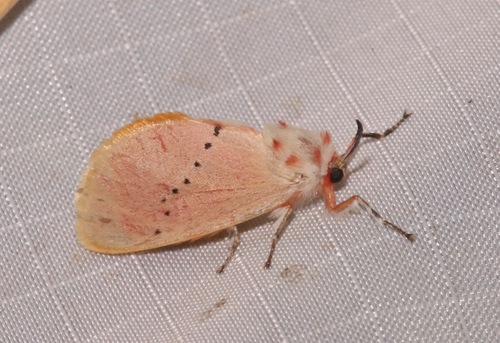
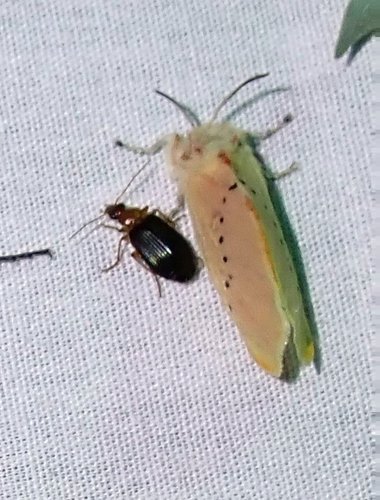
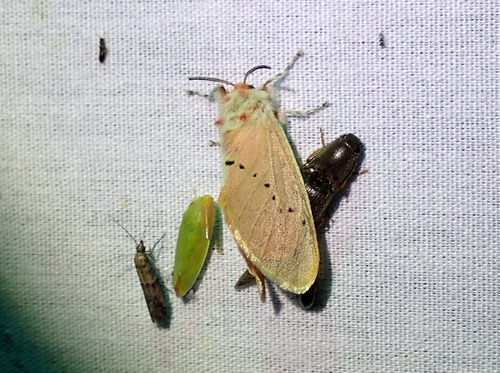
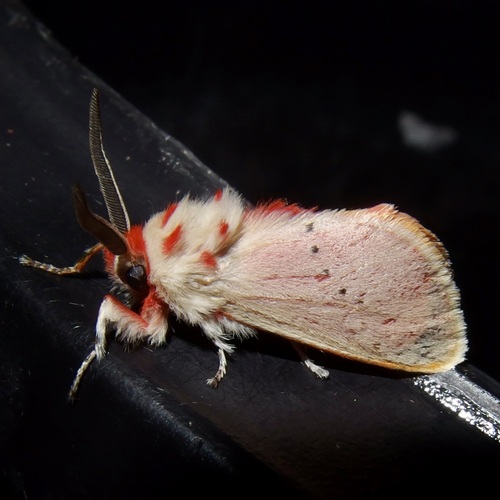
Same family (Megalopygidae)
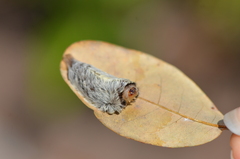

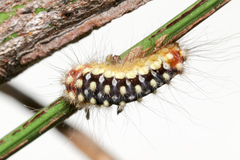
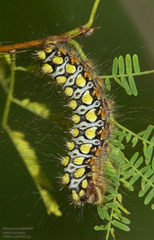


Sources
- Wikipedia: https://en.wikipedia.org/wiki/Trosia_dimas
Look it up elsewhere: GBIF · iNaturalist · BugGuide · Wikipedia
Text written 2026-10-29 from the sources above and checked sentence by sentence against them. Data fetched 2026-10-29.