 Bug FAQ
Southern Flannel Moth
Megalopyge opercularis · Order: Lepidoptera · Family: Megalopygidae
Also called: Asp Caterpillar, puss caterpillar
Source: Wikipedia, extension.msstate.edu
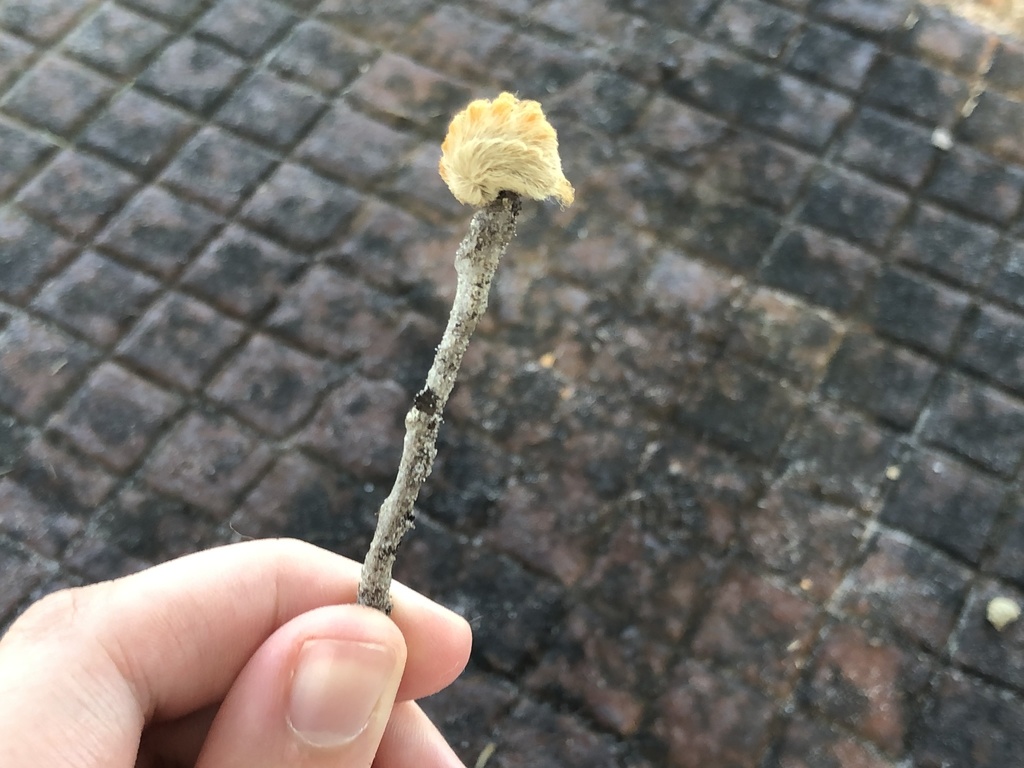
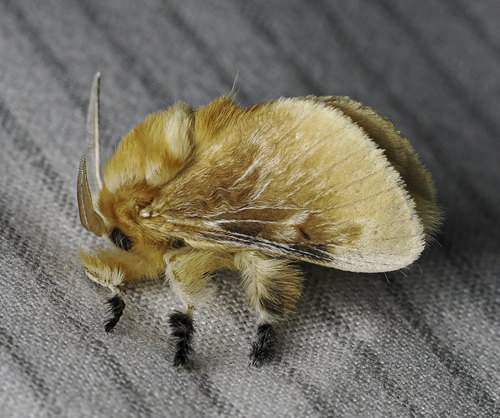
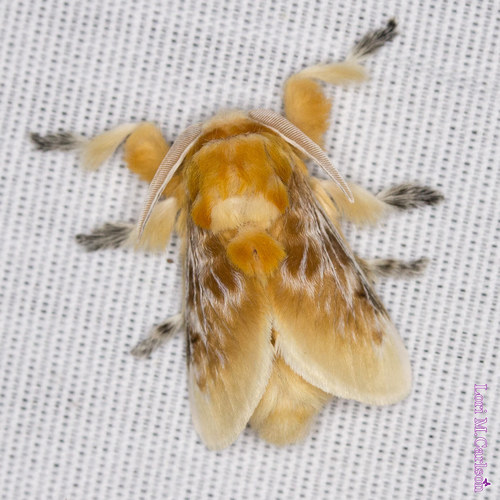
The inch-long larva is covered in long, fluffy hairs that hide hollow, venom-filled spines, and the adult moth is fuzzy orange to yellow with hairy legs. These caterpillars feed on many garden and shade trees and can cause painful stings that need prompt treatment.
Source: Wikipedia, extension.msstate.edu
How to recognize it
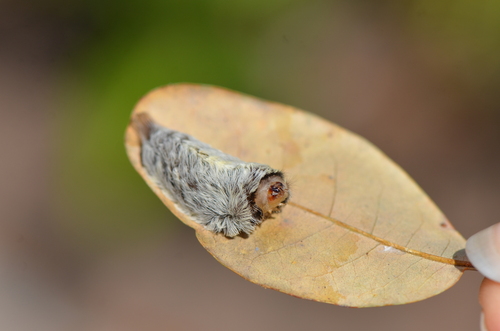
The larva is about one inch long, covered in long hair-like setae that make it look like a tiny Persian cat, with a pointed tail of hairs and a head tucked under the body.
Source: Wikipedia, extension.msstate.edu
Size
The larva grows to about an inch in length and is densely covered in long hairs. The cocoons range from 1.3 to 2.0 cm in size.
Source: Wikipedia, extension.msstate.edu
Is it a pest in the house?
The caterpillar is considered dangerous because of its venomous spines. It is widespread throughout its range in the eastern US, the South, Mexico and parts of Central and South America. It feeds on many plants, including oaks, hardwoods, fruit trees and shrubs.
Source: Wikipedia, extension.msstate.edu
Does it bite or sting?
The caterpillar is dangerous because of its venomous spines. Stings are among the most painful of any insect in the region. The venom is delivered from hollow spines hidden beneath longer hairs and should be treated quickly.
Source: Wikipedia, extension.msstate.edu
How to get rid of it
First-aid removal of spines can be done with cellophane tape. Remedies such as ice packs, antihistamines, baking soda, hydrocortisone cream, comfrey juice and calamine lotion have variable success. Heavy infestations can be sprayed with pyrethroid insecticides like bifenthrin, cyfluthrin, gamma-cyhalothrin or permethrin. Dead caterpillars can still sting, so handle them carefully.
Source: Wikipedia, extension.msstate.edu
Where it lives
It is found on oak, elm, wild plum, roses, ivy and many other garden plants.
Source: Wikipedia
Life cycle
There are two broods, one in summer and one in fall. Late-stage larvae may stay in their cocoons through winter and emerge as adults in late spring.
Source: Wikipedia
When you see it
The species produces a summer brood and a fall brood. Late larvae can overwinter in cocoons and emerge in spring.
Source: Wikipedia
Where it comes from
It occurs throughout the eastern United States from southeastern Virginia to Florida, across the southern states, and into Mexico, Central and South America.
Source: Wikipedia
Lookalikes
It differs from its relative M. crispata. Middle-instar larvae look messier and lack the distinctive tail. Some hairy caterpillars lack spines but their hairs can still irritate sensitive skin.
Source: Wikipedia, extension.msstate.edu
Where it is found in the US
Recorded in 18 of 51 states and DC. Most records: Texas, Florida, Louisiana, North Carolina, Georgia, Alabama, South Carolina, Arizona.
Darker = more records. Counts are museum and citizen-science records, not population size.
Source: GBIF
Months it is reported in the US
Source: GBIF
More photos
Questions people ask
How do I treat a sting from a puss caterpillar?
Remove any visible spines with cellophane tape and apply ice, antihistamine, baking soda, hydrocortisone cream, comfrey juice or calamine lotion; seek medical help quickly because the venom can cause severe pain.
Source: Wikipedia
When are puss caterpillars active?
They have two broods, one in summer and another in fall, and late-stage larvae may overwinter in cocoons and emerge in spring.
Source: Wikipedia
What do puss caterpillars look like?
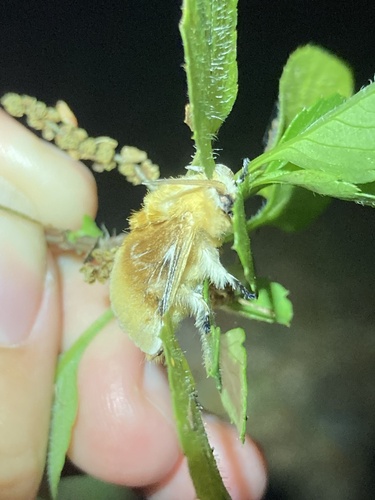
The larvae are about an inch long, covered in long fluffy hairs that hide a pointed tail of hairs and a head tucked beneath the body; adults are fuzzy orange to yellow with hairy legs and black fuzzy feet.
Source: Wikipedia, extension.msstate.edu
Same family (Megalopygidae)

Sources
- Wikipedia: https://en.wikipedia.org/wiki/Megalopyge_opercularis
- extension.msstate.edu: https://extension.msstate.edu/newsletters/bugs-eye-view/2021/puss-caterpillar-vol-7-no-19
Look it up elsewhere: GBIF · iNaturalist · BugGuide · Wikipedia
Text written 2026-10-23 from the sources above and checked sentence by sentence against them. Data fetched 2026-10-23.