 Bug FAQ
Trivial plant bug
Closterotomus trivialis · Order: Hemiptera · Family: Miridae
Source: Wikipedia
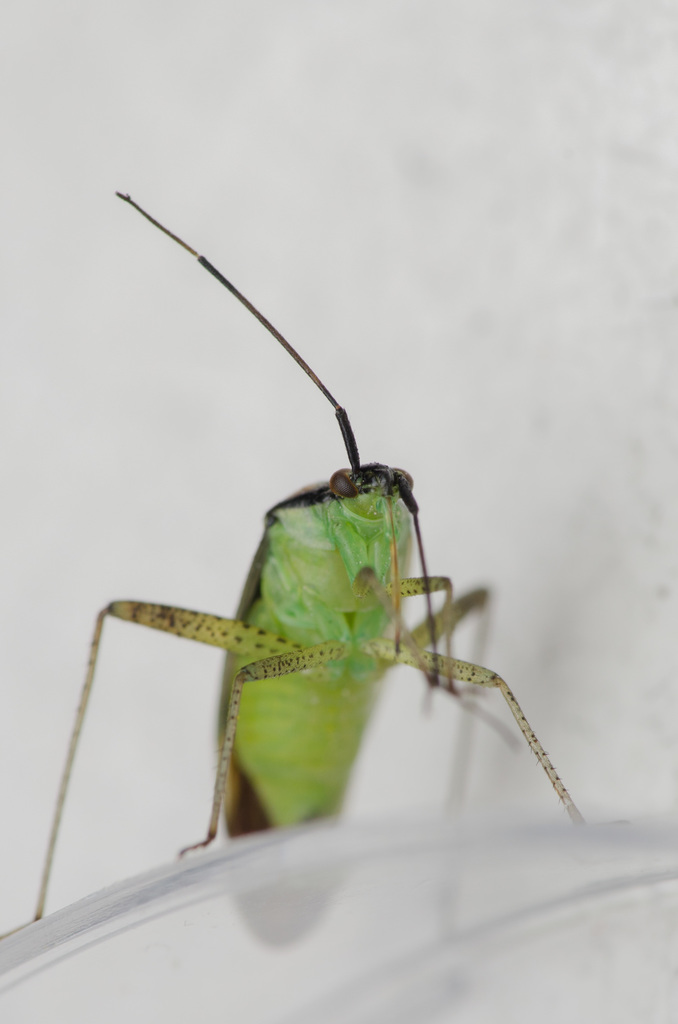
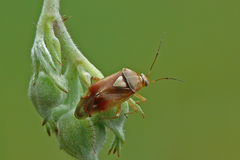
Adults are 6.6 to 7.9 mm long and females are yellow-green while males can be red-black, with distinctive black spots on the pronotum. They are found in Mediterranean countries such as Italy, Greece, Portugal, Spain and the former Yugoslavia.
Source: Wikipedia
Size
The bug measures about 6.6 to 7.9 mm (0.26 to 0.31 in) in length.
Source: Wikipedia
Where it lives
It occurs mainly in Italy, Greece, Portugal, Spain and the former Yugoslavia.
Source: Wikipedia
Life cycle
The species has one generation per year, overwinters as eggs in bark cracks, and females lay eggs at the end of spring.
Source: Wikipedia
When you see it
Eggs are laid at the end of spring and hatch in late winter to early spring.
Source: Wikipedia
Where it comes from
Its range is centered on the Mediterranean basin, especially Italy, Greece, Portugal, Spain and Yugoslavia.
Source: Wikipedia
Lookalikes
It belongs to the plant-bug family Miridae, subfamily Mirinae.
Source: Wikipedia
Questions people ask
Same family (Miridae)
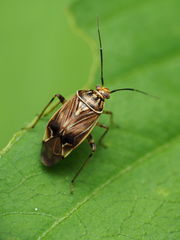 North American Tarnished Plant BugLygus lineolarisDamages trees, gardens or crops
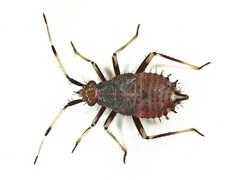 Red-spotted Plant BugDeraeocoris ruber
 Alfalfa Plant BugAdelphocoris lineolatusDamages trees, gardens or crops
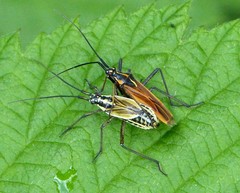 Meadow Plant BugLeptopterna dolabrataDamages trees, gardens or crops
 Four-lined Plant BugPoecilocapsus lineatusDamages trees, gardens or crops
 Lygus pratensisLygus pratensisDamages trees, gardens or crops
Sources
- Wikipedia: https://en.wikipedia.org/wiki/Closterotomus_trivialis
Look it up elsewhere: GBIF · iNaturalist · BugGuide · Wikipedia
Text written 2026-10-22 from the sources above and checked sentence by sentence against them. Data fetched 2026-10-22.