 Bug FAQ
Trinidad bat-cave roach
Eublaberus distanti · Order: Blattodea · Family: Blaberidae
Also called: Four-spot Roach

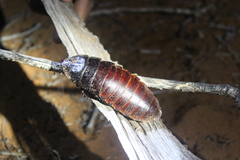
Adults are about 6.4 cm long, with males smaller but having longer wings than females; both sexes have wings but cannot fly. They live mainly in dry, guano-rich cave areas but can also be found in rotting logs, leaf litter, epiphytes, and tree hollows that house bats. These cockroaches are scavengers, feeding on any animal or plant material, especially fresh bat guano that falls at night.
Source: Wikipedia
How to recognize it
Nymphs turn dark brown and display six yellow spots along each side, while adults have wings but do not fly.
Source: Wikipedia
Size
Males are generally smaller than females, have longer wings, and a smaller rear sternite.
Source: Wikipedia
Where it lives
In Trinidad they prefer relatively dry, guano-rich cave areas, but are also found in rotting logs, decaying litter, epiphytes, and tree hollows that house bats. Caves with abundant guano often support huge populations of a few cockroach species that exploit this rich food source.
Source: Wikipedia
What it eats
They are scavengers, eating any animal or vegetable matter they encounter, especially the energy-rich parts of food. At night they wait buried under guano until bats return, then emerge to consume fresh guano droppings.
Source: Wikipedia
Life cycle
A single cave chamber once housed more than 43,000 individuals.
Source: Wikipedia
Lookalikes
A newly described ectoparasitic mite, Blaberpolipus cavernicola, has been found on specimens of this cockroach.
Source: Wikipedia
Where it is found in the US
Recorded in 2 of 51 states and DC. Most records: Arizona, South Carolina.
Darker = more records. Counts are museum and citizen-science records, not population size.
Source: GBIF
Questions people ask
What do Trinidad bat-cave roach nymphs look like?
Nymphs turn dark brown and have six yellow spots along each side.
Source: Wikipedia
Where are these roaches found?
They live in dry, guano-rich caves and also in rotting logs, leaf litter, epiphytes, and tree hollows that house bats.
Source: Wikipedia
What do they eat?
They scavenge on any animal or plant material and especially feed on fresh bat guano that falls at night.
Source: Wikipedia
Same family (Blaberidae)


Sources
- Wikipedia: https://en.wikipedia.org/wiki/Eublaberus_distanti
Look it up elsewhere: GBIF · iNaturalist · BugGuide · Wikipedia
Text written 2026-10-23 from the sources above and checked sentence by sentence against them. Data fetched 2026-10-23.