 Bug FAQ
Surinam Cockroach
Pycnoscelus surinamensis · Order: Blattodea · Family: Blaberidae
Also called: Greenhouse Cockroach
Source: Wikipedia
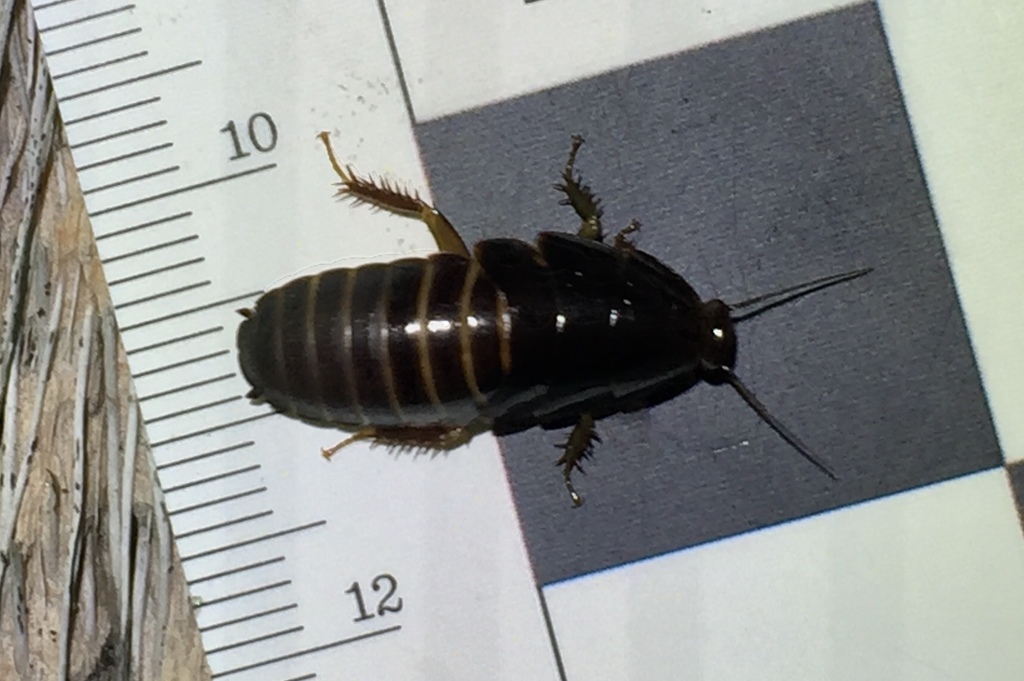
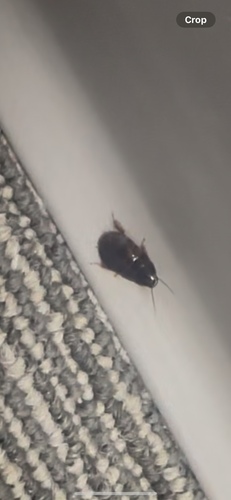
Adults are about 18 to 25 mm long and have a pale white band on the front edge of the pronotum. They live in loose soil, compost, mulch and other debris near human structures and can become a problem in gardens and heated greenhouses where they feed on soft plant parts. The species reproduces by thelytokous parthenogenesis, giving birth to live female nymphs, and it can act as an intermediate host for eye-worm roundworms that infect chickens and other birds.
Source: Wikipedia
How to recognize it
A pale white band runs along the front edge of the pronotum.
Source: Wikipedia
Is it a pest in the house?
It is only occasionally found inside homes and is not a common indoor pest. Infestations usually arrive via potted plants or mulch used for those plants.
Source: Wikipedia
How to get rid of it
Indoor infestations can be treated with sprays or granules applied to potted plants. Outside, treat wood piles, mulch, and foundation plantings and consider a residual barrier spray around the house.
Source: Wikipedia
Where it lives
They burrow in loose soil, humus, compost piles, lawn thatch, and hide under rocks, rotten wood, trash or other debris. They are peridomestic, occurring mainly near human buildings or crops.
Source: Wikipedia
What it eats
In tropical gardens and heated greenhouses they feed on the softer parts of plants, causing damage. They serve as intermediate hosts for the eye-worm roundworms Oxyspirura mansoni and O. parvorum.
Source: Wikipedia
Life cycle
Reproduction is thelytokous parthenogenesis, producing almost exclusively female clones. Females give birth to live nymphs after carrying the ootheca internally until the young hatch, usually at night. At least 21 diploid clones have arisen independently, showing repeated evolution of this asexual reproduction.
Source: Wikipedia
When you see it
The cockroach is found mainly near human structures throughout the year.
Source: Wikipedia
Where it comes from
The species originated in the Indomalayan region.
Source: Wikipedia
Lookalikes
Earlier taxonomy split the species into sexual and asexual forms, with the sexual form once called P. indicus.
Source: Wikipedia
Where it is found in the US
Recorded in 30 of 51 states and DC. Most records: Texas, Florida, Louisiana, California, Hawaii, Arizona, Alabama, Georgia.
Darker = more records. Counts are museum and citizen-science records, not population size.
Source: GBIF
Status: introduced in North America; introduced in United States. Source: iNaturalist
Months it is reported in the US
Source: GBIF
More photos
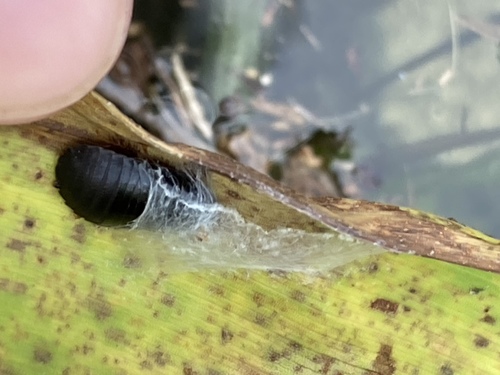
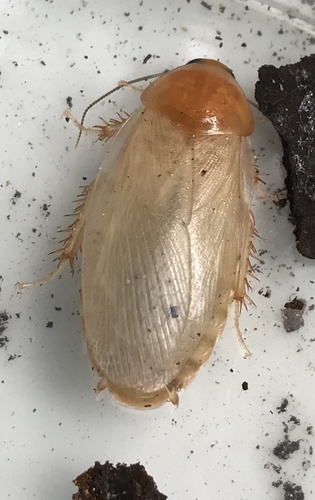
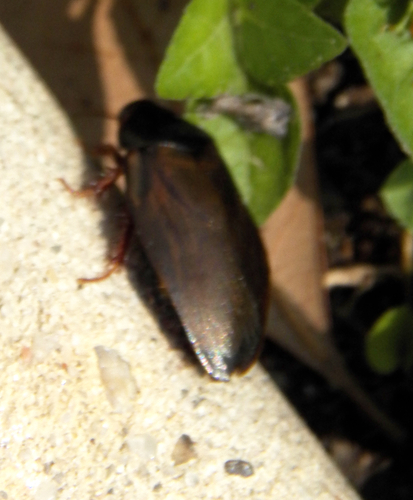
Questions people ask
Do Surinam cockroaches bite or sting?
The concern is poultry: they carry eye worms that infect chickens, turkeys and other fowl.
Source: Wikipedia
Are they a garden pest?
Yes, they feed on soft plant parts and can become a serious problem in gardens and heated greenhouses.
Source: Wikipedia
How can I get rid of them indoors?
Treat infested potted plants with insecticidal sprays or granules.
Source: Wikipedia
Same family (Blaberidae)



Sources
- Wikipedia: https://en.wikipedia.org/wiki/Surinam_cockroach
Look it up elsewhere: GBIF · iNaturalist · BugGuide · ITIS · Wikipedia
Text written 2026-10-22 from the sources above and checked sentence by sentence against them. Data fetched 2026-10-22.