 Bug FAQ
Giant Cave Cockroach
Blaberus giganteus · Order: Blattodea · Family: Blaberidae
Also called: Caribbean giant cockroach, giant cockroach
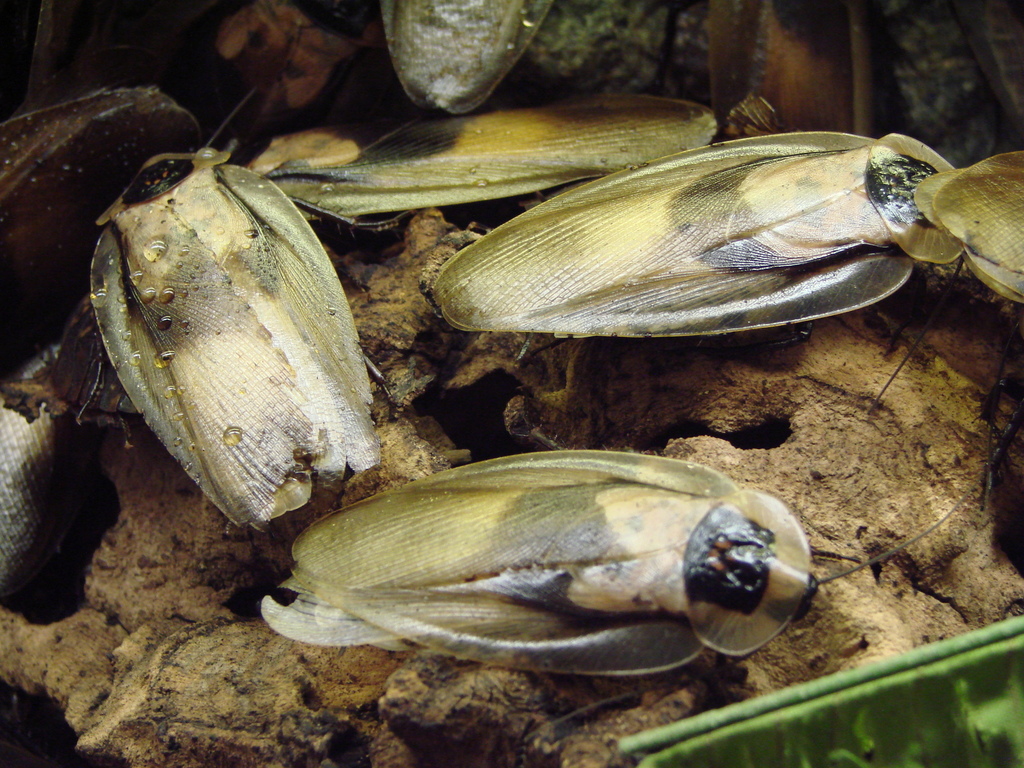
Giant cave cockroaches can grow up to about 10 cm long and have a wingspan near 15 cm. They live in moist, dark places such as caves, tree hollows and rock cracks, often near bat colonies. These nocturnal omnivores mainly eat decaying plant material but will also take sweets, meat and starches.
Source: Wikipedia
How to recognize it
Their bodies are brown with black markings and both sexes have paired cerci on the last abdominal segment; males also have tiny hair-like styli.
Source: Wikipedia
Size
Males reach up to 7.5 cm and females up to 10 cm in length, with some reports of a maximum of 9 cm. Wingspan is typically around 15 cm.
Source: Wikipedia
Where it lives
They prefer high-moisture, low-light habitats such as caves, tree hollows and rock cracks. They are often found in bat roosts, both in caves and in hollow dung.
Source: Wikipedia
What it eats
They are nocturnal omnivores that mainly scavenge decaying plant material. They also like sweets, meats and starches.
Source: Wikipedia
Life cycle
They undergo gradual metamorphosis with egg, nymph and adult stages. Adults can live up to about 20 months depending on conditions.
Source: Wikipedia
When you see it
Females release the ootheca so that hatching nymphs can break free.
Source: Wikipedia
Where it comes from
Native to the warm Neotropical region, they occur in Mexico, Central and South America, the Caribbean and nearby islands.
Source: Wikipedia
Where it is found in the US
Recorded in 3 of 51 states and DC. Most records: Michigan, Ohio, South Carolina.
Darker = more records. Counts are museum and citizen-science records, not population size.
Source: GBIF
More photos
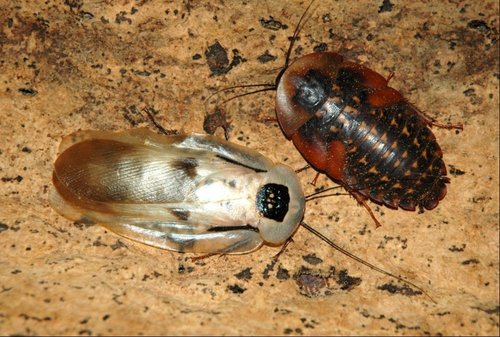
Same family (Blaberidae)




Sources
- Wikipedia: https://en.wikipedia.org/wiki/Blaberus_giganteus
Look it up elsewhere: GBIF · iNaturalist · BugGuide · ITIS · Wikipedia
Text written 2026-10-23 from the sources above and checked sentence by sentence against them. Data fetched 2026-10-22.