 Bug FAQ
Tricolor Buckmoth
Hemileuca tricolor · Order: Lepidoptera · Family: Saturniidae
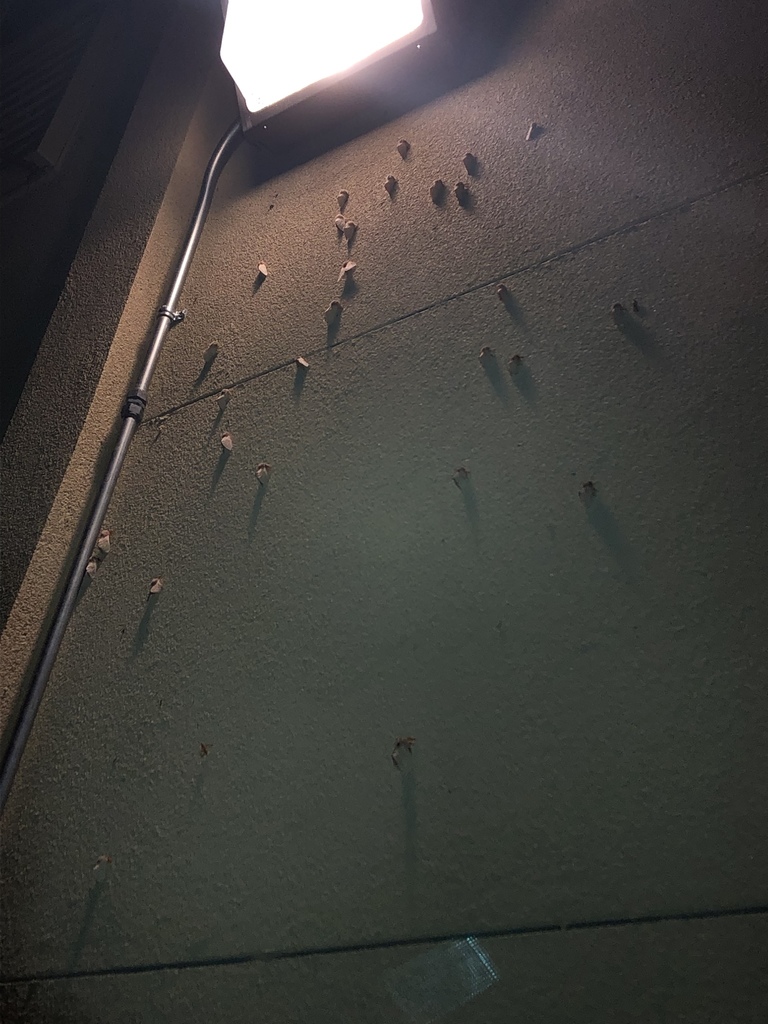
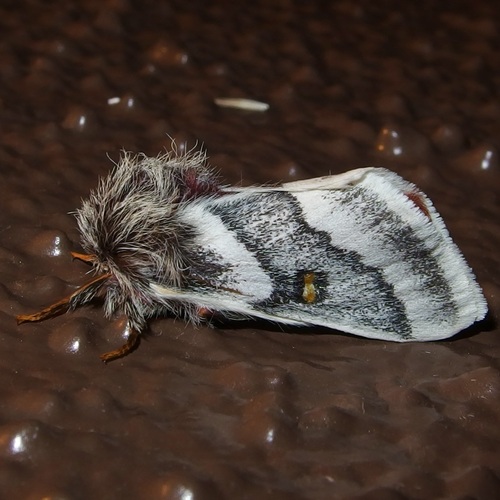
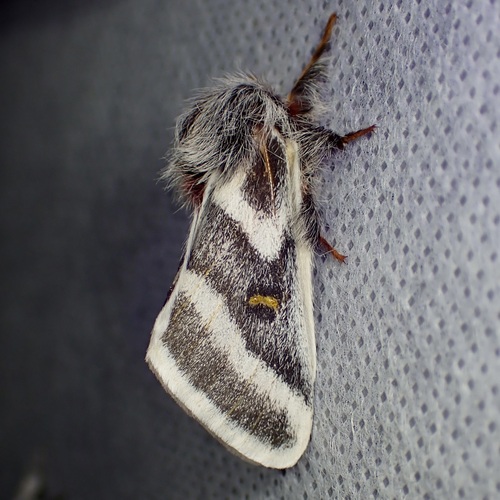
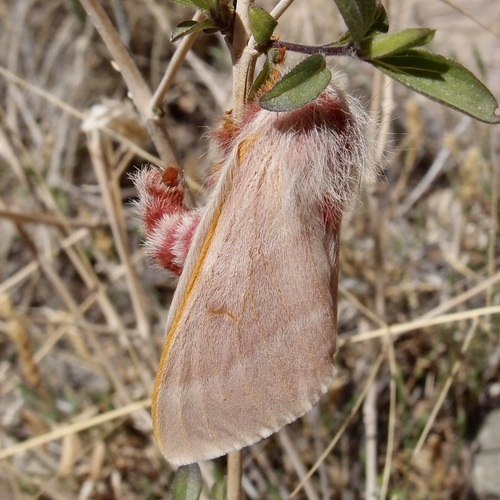
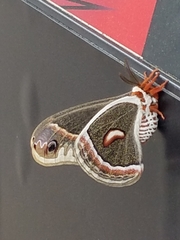
The three-spotted buck moth has a wingspan of about 5 to 8 cm and gray forewings marked with white bands and a central yellow or orange eyespot. Eggs are laid on host plants in July, the caterpillars feed on palo verde and mesquite, then pupate and overwinter, emerging as adults from January to April.
Source: Wikipedia
How to recognize it
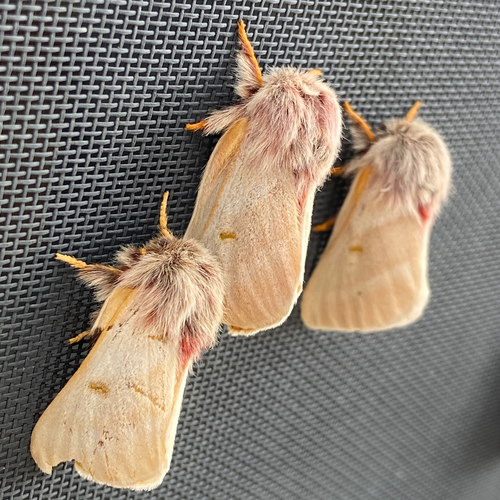
The forewing is gray with three white bands and a central yellow or orange eyespot. Male hindwings are white, while female hindwings range from white to dull brown.
Source: Wikipedia
Size
The wingspan ranges from 2 ⅛ to 3 ⅛ inches (5.2 to 7.8 cm).
Source: Wikipedia
What it eats
Caterpillars feed on littleleaf palo verde, mesquite, and catclaw mesquite. Adult moths do not feed.
Source: Wikipedia
Life cycle
Eggs are laid on host plants and hatch in July; larvae feed until they pupate. Pupae overwinter and adults emerge from January to April, with one flight per year.
Source: Wikipedia
When you see it
Adults are on the wing from January through April.
Source: Wikipedia
Where it is found in the US
Recorded in 3 of 51 states and DC. Most records: Arizona, Kansas, California.
Darker = more records. Counts are museum and citizen-science records, not population size.
Source: GBIF
Months it is reported in the US
Source: GBIF
More photos
Questions people ask
When are adult three-spotted buck moths active?
Adults fly from January to April each year.
Source: Wikipedia
Same family (Saturniidae)


Sources
- Wikipedia: https://en.wikipedia.org/wiki/Tricolor_buckmoth
Look it up elsewhere: GBIF · iNaturalist · BugGuide · ITIS · Wikipedia
Text written 2026-10-26 from the sources above and checked sentence by sentence against them. Data fetched 2026-10-26.