 Bug FAQ
Cecropia Moth
Hyalophora cecropia · Order: Lepidoptera · Family: Saturniidae
Also called: Cecropia Silkmoth
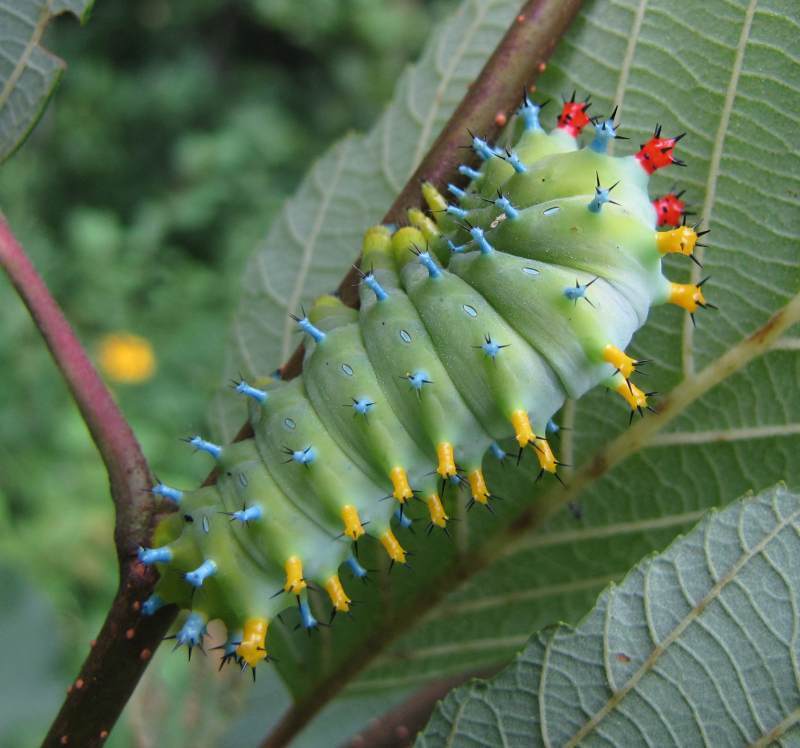
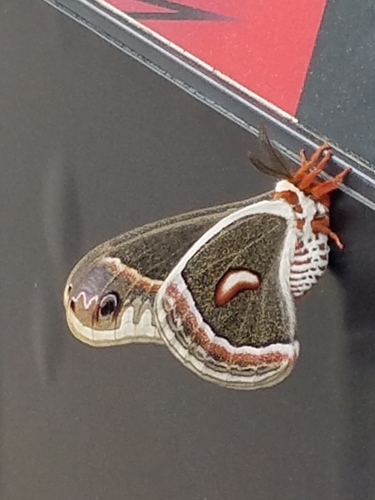
Adult cecropia moths have a wingspan of about 5 to 7 inches (130 to 180 mm) and are among the largest moths in North America. Their wings are brownish with red near the forewing base and feature crescent-shaped red spots with whitish centers, larger on the hindwings. They live in eastern North America, extending west to Washington and north into most Canadian provinces.
Source: Wikipedia
How to recognize it
The forewings are brownish with red near the base, and all wings have crescent-shaped red spots with whitish centers that are larger on the hindwings.
Source: Wikipedia
Size
Females can have a wingspan from 5 to 7 inches (13 to 18 cm) or more. Adults usually measure about 5 to 7 inches (130 to 180 mm) across.
Source: Wikipedia
Where it lives
They are found mainly across eastern North America, reaching as far west as Washington and into most Canadian provinces.
Source: Wikipedia
What it eats
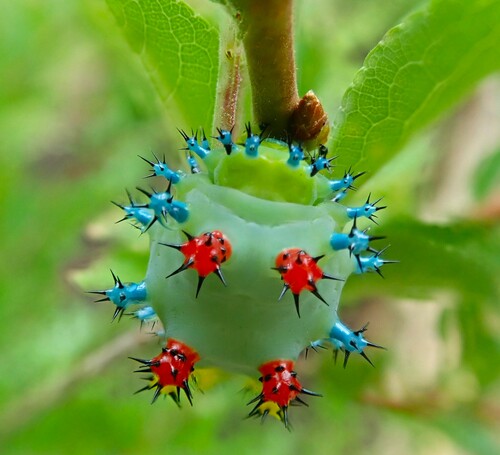
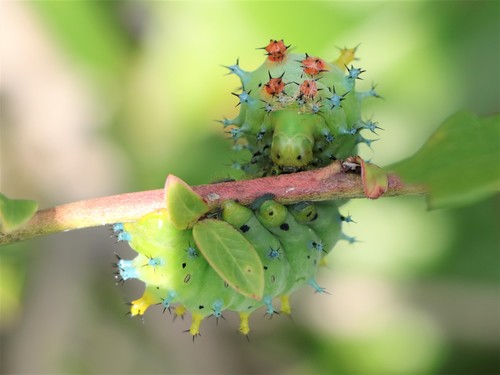
Cecropia moth caterpillars commonly eat maple leaves but will also feed on cherry, birch, apple, and many other trees and shrubs.
Source: Wikipedia
Life cycle
Adults lack functional mouthparts and a digestive system, so they live only about two weeks. The species produces one generation per year.
Source: Wikipedia
When you see it
Adults emerge in the first two weeks of warm weather in early summer.
Source: Wikipedia
Where it comes from
Their range covers eastern North America, extending west to Washington and north into most Canadian provinces.
Source: Wikipedia
Where it is found in the US
Recorded in 45 of 51 states and DC. Most records: Minnesota, Pennsylvania, New York, Texas, Ohio, Michigan, Vermont, Massachusetts.
Darker = more records. Counts are museum and citizen-science records, not population size.
Source: GBIF
Status: native in North America; native in United States; native in Canada. Source: iNaturalist
Months it is reported in the US
Source: GBIF
More photos

Questions people ask
Are cecropia moth caterpillars a problem for trees?
Caterpillars feed on a variety of trees such as maple, birch, and apple, but the evidence does not state they cause serious damage.
Source: Wikipedia
When can I expect to see adult cecropia moths?
Adults appear in early summer, during the first two weeks of warm weather.
Source: Wikipedia
Same family (Saturniidae)


Sources
- Wikipedia: https://en.wikipedia.org/wiki/Hyalophora_cecropia
Look it up elsewhere: GBIF · iNaturalist · BugGuide · ITIS · Wikipedia
Text written 2026-10-22 from the sources above and checked sentence by sentence against them. Data fetched 2026-10-22.