 Bug FAQ
Imperial Moth
Eacles imperialis · Order: Lepidoptera · Family: Saturniidae
Source: Wikipedia

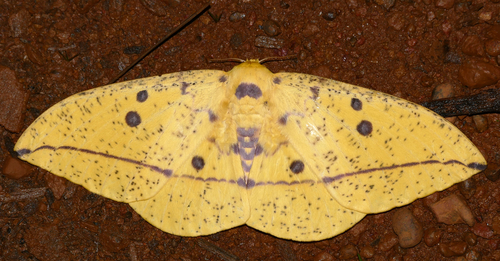
Adult imperial moths have a wingspan of about 3 to 7 inches and are mostly yellow with red, brown and purple blotches. They are common in eastern North America, from the Mid-Atlantic to the Deep South, living in forests, rural and suburban areas. There is one generation per year; adults emerge in late summer and mate once annually.
Source: Wikipedia
Size
The wingspan of an adult ranges from about 80 mm to 175 mm (roughly 3 inches to nearly 7 inches).
Source: Wikipedia
Where it lives
They are found in forested, rural and suburban habitats across the Mid-Atlantic, Appalachia, Ohio Valley and Deep South.
Source: Wikipedia
What it eats
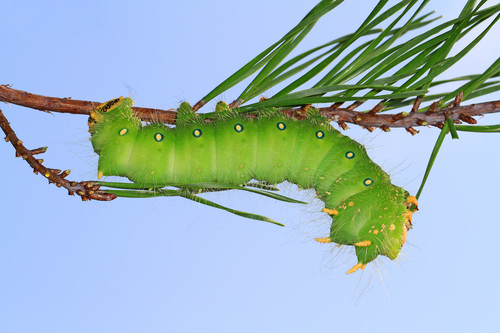
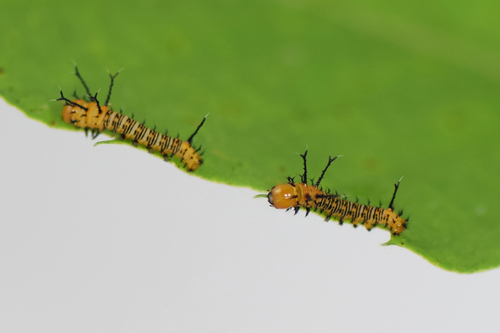
Larvae feed on the leaves of pine, maple, oak, sweetgum and sassafras trees. Young larvae are small, orange with black bands and spines; later instars grow to 75 to 100 mm and show color variations from dark brown to green with distinctive spiracle patches.
Source: Wikipedia
Life cycle
The species produces a single brood each year. Larvae may eat their shed exoskeletons for extra protein.
Source: Wikipedia
When you see it
Adults emerge once a year to mate, usually in late summer; in southern areas a few may appear in spring or early summer.
Source: Wikipedia
Where it comes from
Their range extends from central Argentina in South America up through Canada in North America.
Source: Wikipedia
Lookalikes
In northern parts of its range the moth may require specific habitats such as coastal or montane pine barrens, which are becoming fragmented.
Source: Wikipedia
Where it is found in the US
Recorded in 37 of 51 states and DC. Most records: North Carolina, Virginia, Florida, Texas, Ohio, Georgia, Pennsylvania, Maryland.
Darker = more records. Counts are museum and citizen-science records, not population size.
Source: GBIF
Status: native in North America; native in United States; native in Canada. Source: iNaturalist
Months it is reported in the US
Source: GBIF
More photos
Questions people ask
Are imperial moths a problem for my garden?
Their larvae can feed on several common trees and shrubs, so they may cause some damage to those plants.
Source: Wikipedia
Same family (Saturniidae)


Sources
- Wikipedia: https://en.wikipedia.org/wiki/Eacles_imperialis
Look it up elsewhere: GBIF · iNaturalist · BugGuide · ITIS · Wikipedia
Text written 2026-10-22 from the sources above and checked sentence by sentence against them. Data fetched 2026-10-22.