 Bug FAQ
Transverse-banded Tiger Beetle
Cicindela calligramma · Order: Coleoptera · Family: Carabidae
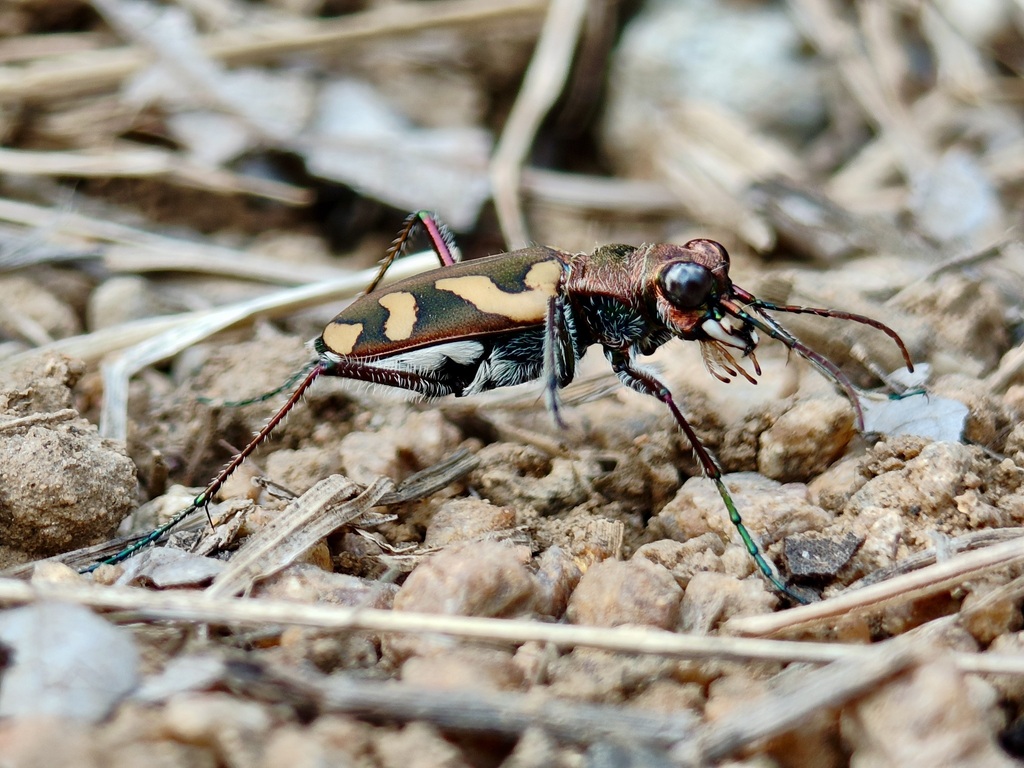
It lives on the ground in thin forest and is active from May through November, with males often staying mounted on females after mating.
Source: Wikipedia
How to recognize it
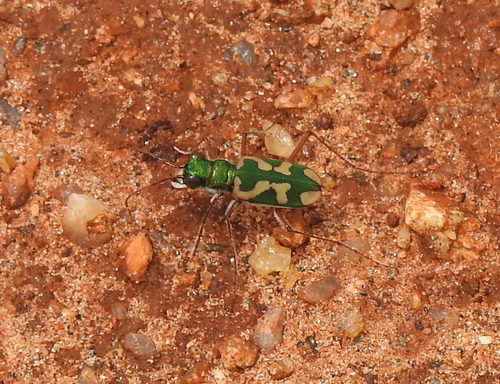
Its body is green or coppery brown with three prominent yellowish bands, and the ground colour can vary a lot.
Source: Wikipedia
Size
Adults measure between 13 and 16 mm in length.
Source: Wikipedia
When you see it
They are active from May to November, and males often guard mates by staying mounted after copulation.
Source: Wikipedia
Where it comes from
This species is endemic to peninsular India and Sri Lanka.
Source: Wikipedia
More photos
Questions people ask
When are transverse-banded tiger beetles active?
They are active from May through November, and males often stay mounted on females after mating.
Source: Wikipedia
Where does this beetle live?
It lives on the ground in thin forest and is native to peninsular India and Sri Lanka.
Source: Wikipedia
How can I tell it apart from similar beetles?
It has a green or coppery-brown body with three yellowish bands, while the similar Cicindela guttata has hairs only on the lower cheeks.
Source: Wikipedia
Same family (Carabidae)


Sources
- Wikipedia: https://en.wikipedia.org/wiki/Cicindela_calligramma
Look it up elsewhere: GBIF · iNaturalist · BugGuide · Wikipedia
Text written 2026-10-23 from the sources above and checked sentence by sentence against them. Data fetched 2026-10-23.