 Bug FAQ
Tobacco Stalk Borer
Trichobaris mucorea · Order: Coleoptera · Family: Curculionidae
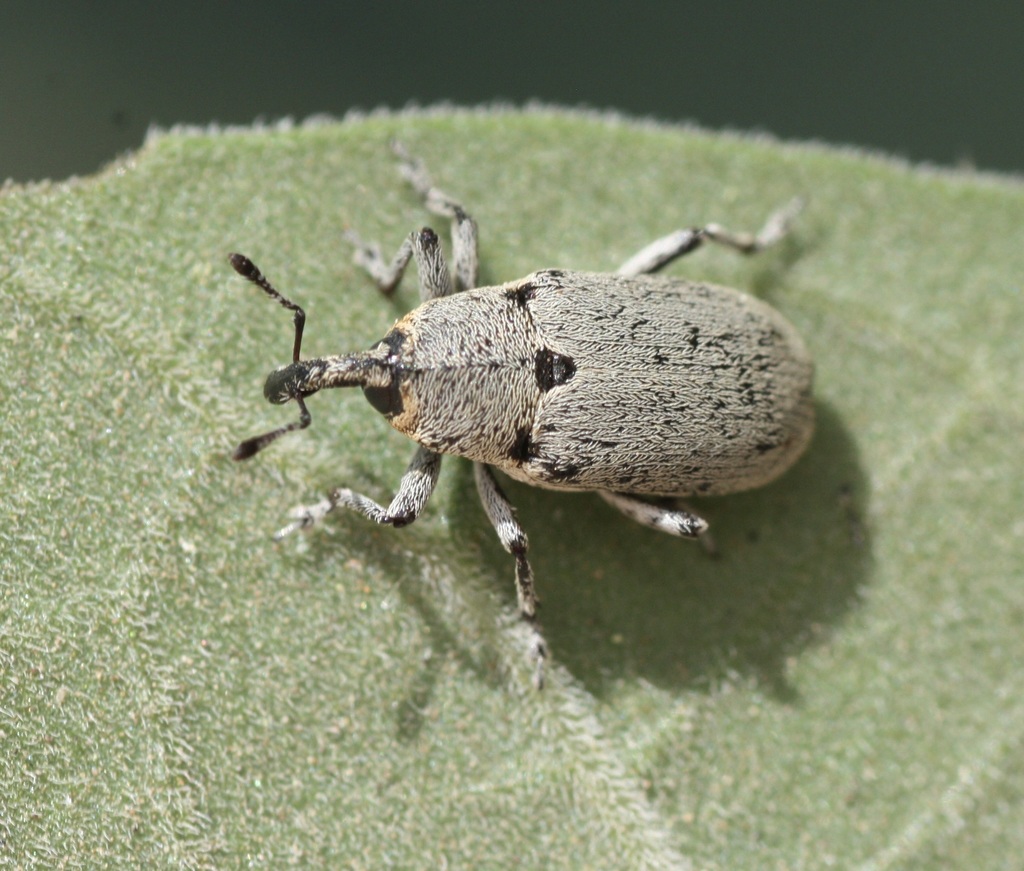
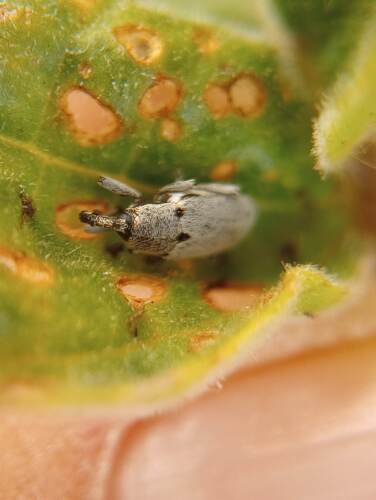
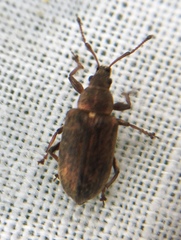
The tobacco stalk borer is a flower weevil in the Curculionidae family that lives in North America. It spends most of its life hidden inside the stems of wild tobacco, where it eats the pith.
Source: Wikipedia
How to recognize it
Trichobaris mucorea is a species of flower weevil belonging to the Curculionidae family.
Source: Wikipedia
Is it a pest in the house?
The borer is linked to the wild tobacco plant Nicotiana attenuata, completing its development inside the stem.
Source: Wikipedia
Where it lives
This beetle is found across North America.
Source: Wikipedia
What it eats
It feeds on the pith inside the stems of its host plant.
Source: Wikipedia
Life cycle
From egg to adult, it lives concealed within the stem of the plant.
Source: Wikipedia
Where it comes from
Its native range includes North America.
Source: Wikipedia
Where it is found in the US
Recorded in 6 of 51 states and DC. Most records: Arizona, California, Kansas, New Mexico, Texas, Utah.
Darker = more records. Counts are museum and citizen-science records, not population size.
Source: GBIF
Months it is reported in the US
Source: GBIF
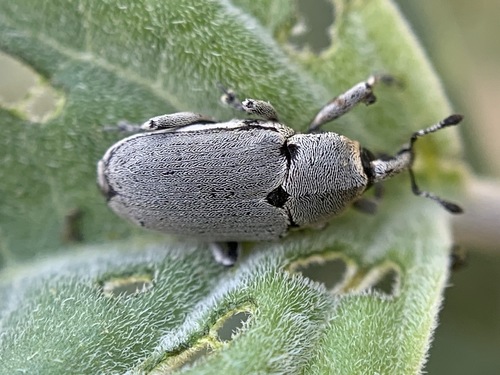
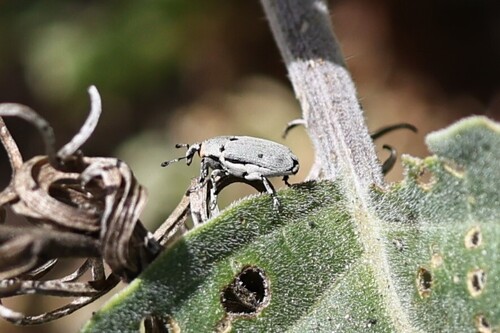
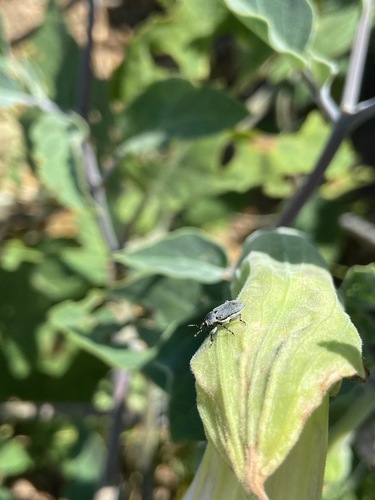
More photos
Questions people ask
What plant does the tobacco stalk borer affect?
It is associated with the wild tobacco plant, where it lives and feeds inside the stem.
Source: Wikipedia
Same family (Curculionidae)
 Green Immigrant Leaf WeevilPolydrusus formosusDamages trees, gardens or crops
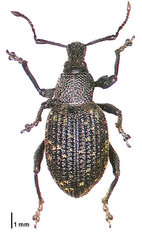 Black Vine WeevilOtiorhynchus sulcatusDamages trees, gardens or crops
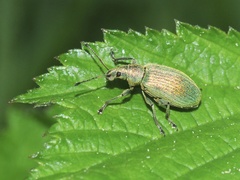 Nettle weevilPhyllobius pomaceusDamages trees, gardens or crops
 Asian Oak WeevilCyrtepistomus castaneusDamages trees, gardens or crops
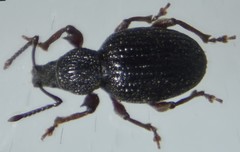 Strawberry Root WeevilOtiorhynchus ovatusDamages trees, gardens or crops
 Common Leaf WeevilPhyllobius pyriDamages trees, gardens or crops
Sources
- Wikipedia: https://en.wikipedia.org/wiki/Trichobaris_mucorea
Look it up elsewhere: GBIF · iNaturalist · BugGuide · ITIS · Wikipedia
Text written 2026-10-25 from the sources above and checked sentence by sentence against them. Data fetched 2026-10-25.