 Bug FAQ
Tiny Grass Blue
Zizula hylax · Order: Lepidoptera · Family: Lycaenidae
Also called: Dainty Grass-blue, Gaika Blue
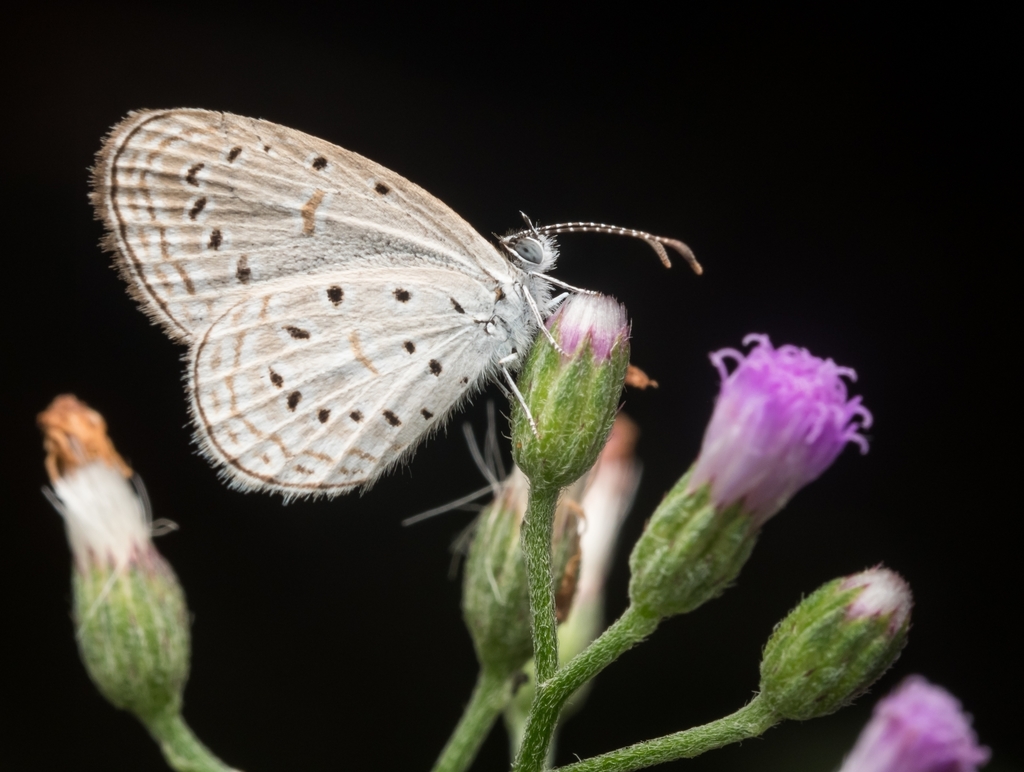
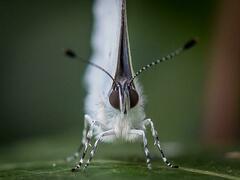
The tiny grass blue has a wingspan of about 1.5 cm (0.59 in) and the male’s upper side is a dull violet-blue that can look brighter in certain light. It lives in tropical and subtropical regions of Africa, Asia and Oceania, including places like India, Japan, the Philippines, Singapore, Eswatini and parts of Australia.
Source: Wikipedia
How to recognize it
Male upperside is dull violet-blue, becoming brighter violet in some lights.
Source: Wikipedia
Size
Adult wingspan is about 1.5 cm (0.59 in).
Source: Wikipedia
What it eats
Larvae feed on Acanthaceae plants such as Hygrophila auriculata and Phaulopsis dorsiflora.
Source: Wikipedia
Life cycle
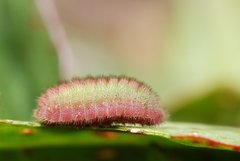
Eggs are pale green, round, flattened, about 0.5 mm in diameter, and are laid singly on buds and flowers. Caterpillars are about 0.7 cm long, green with a dark red line on the back and lighter side lines.
Source: Wikipedia
Where it comes from
Same distribution as habitat: tropical and subtropical Africa, Asia and Oceania.
Source: Wikipedia
More photos
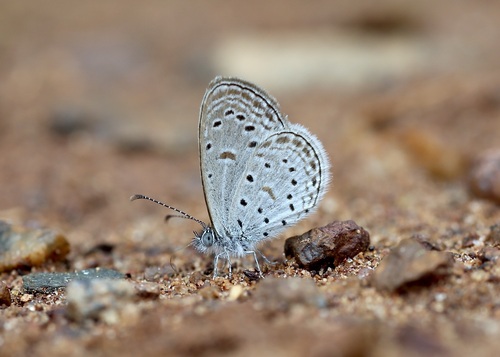
Questions people ask
What does the tiny grass blue look like?
Males have a dull violet-blue upper side that can appear brighter in certain light, and the adult’s wingspan is about 1.5 cm.
Source: Wikipedia
What do the caterpillars eat?
They feed on plants in the Acanthaceae family, such as Hygrophila auriculata and Phaulopsis dorsiflora.
Source: Wikipedia
Same family (Lycaenidae)

Sources
- Wikipedia: https://en.wikipedia.org/wiki/Zizula_hylax
Look it up elsewhere: GBIF · iNaturalist · BugGuide · Wikipedia
Text written 2026-10-22 from the sources above and checked sentence by sentence against them. Data fetched 2026-10-22.