 Bug FAQ
Tiger Fruit Chafer
Atrichelaphinis tigrina · Order: Coleoptera · Family: Scarabaeidae
Also called: Tiger Flower Chafer
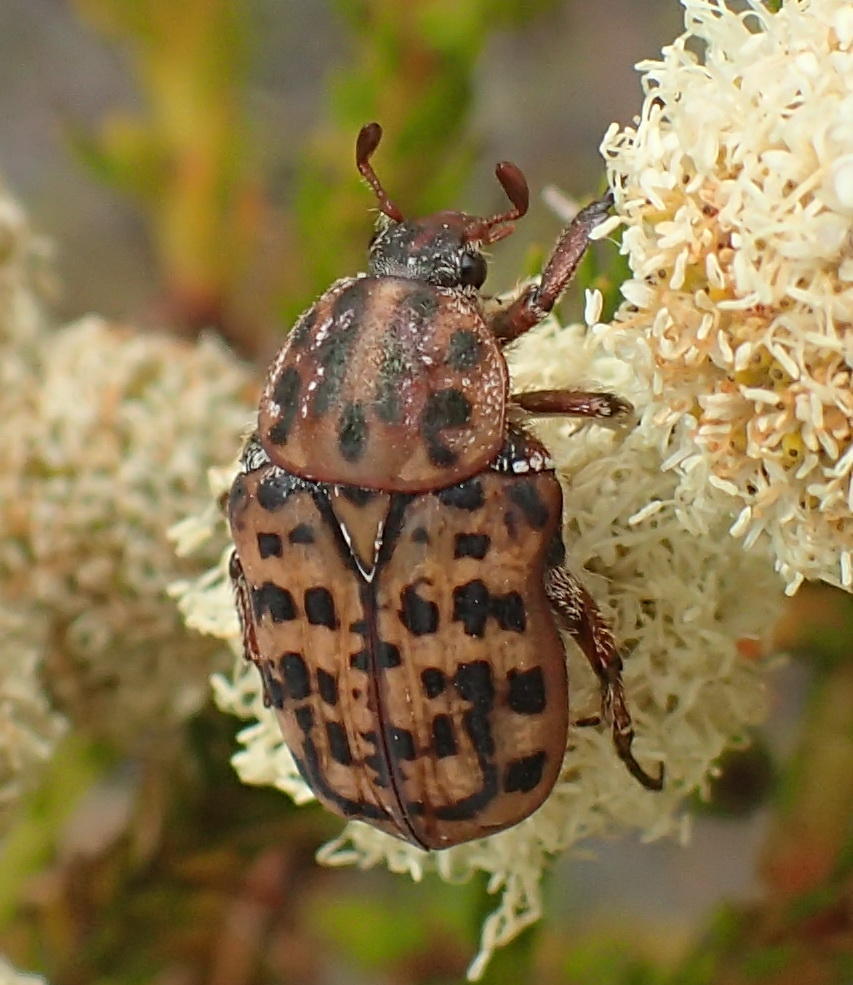
Adult tiger fruit chafers are 8.6 to 15.2 mm long for males and 9.6 to 15 mm for females. They have an orange-brown back with distinct black markings and often show white fuzzy spots on the pronotum, scutellum, and sometimes the elytra. These beetles feed on a wide range of flowers and fruits and are found in Angola, South Africa and Zimbabwe.
Source: Wikipedia
How to recognize it
The back is orange-brown, dull, with clear black marks especially on the head and pronotum. White, woolly spots often appear on the pronotum, scutellum and occasionally the elytra.
Source: Wikipedia
What it eats
It feeds on many kinds of flowers and fruits, from grasses up to large trees.
Source: Wikipedia
Where it comes from
Its native range includes Angola, South Africa and Zimbabwe.
Source: Wikipedia
Questions people ask
How big are tiger fruit chafers?
Males are 8.6 to 15.2 mm long and females 9.6 to 15 mm long.
Source: Wikipedia
What do tiger fruit chafers look like?
They have an orange-brown back with distinct black marks and often white fuzzy spots on the pronotum, scutellum and sometimes the elytra.
Source: Wikipedia
Where are tiger fruit chafers found?
They are found in Angola, South Africa and Zimbabwe.
Source: Wikipedia
What do tiger fruit chafers eat?
They feed on a wide variety of flowers and fruits, from grasses to large trees.
Source: Wikipedia
Same family (Scarabaeidae)
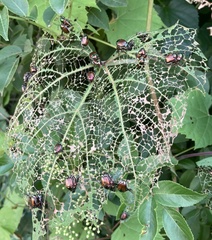 Japanese BeetlePopillia japonicaDamages trees, gardens or crops
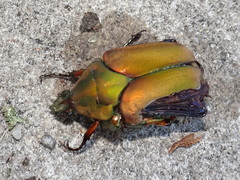 Common Green June BeetleCotinis nitidaDamages trees, gardens or crops
 Phyllophaga crinitaPhyllophaga crinitaDamages trees, gardens or crops
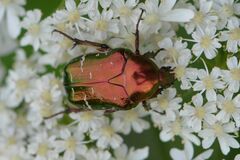 European Rose ChaferCetonia aurata
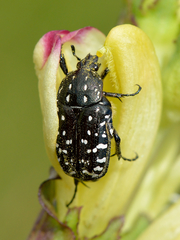 Mediterranean Spotted ChaferOxythyrea funestaDamages trees, gardens or crops
 Oriental BeetleExomala orientalisDamages trees, gardens or crops
Sources
- Wikipedia: https://en.wikipedia.org/wiki/Atrichelaphinis_tigrina
Look it up elsewhere: GBIF · iNaturalist · BugGuide · Wikipedia
Text written 2026-10-23 from the sources above and checked sentence by sentence against them. Data fetched 2026-10-23.