 Bug FAQ
Three-spined Grass Bug
Stenodema pilosa · Order: Hemiptera · Family: Miridae
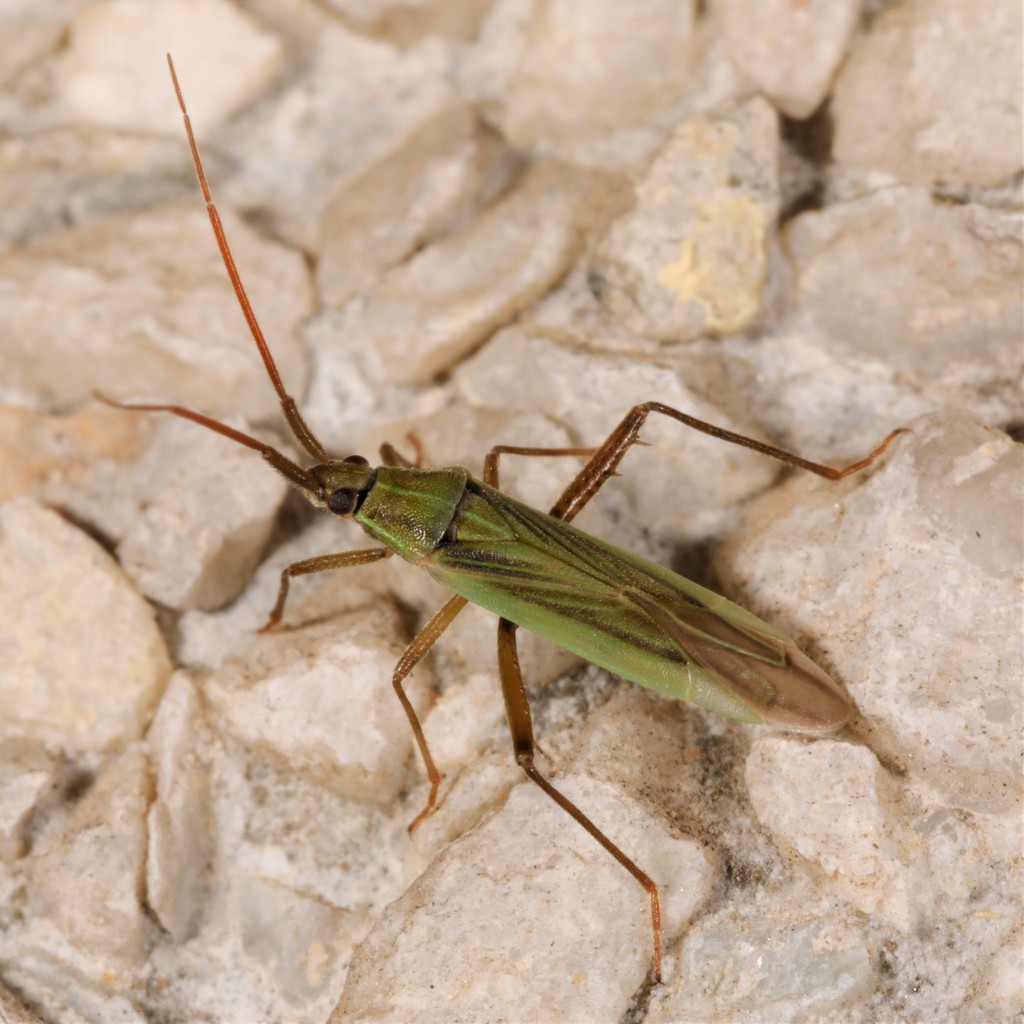
The three-spined grass bug is about 8 to 9 mm long and lives in grassy fields and wetlands across North America and Eurasia. Adults that overwinter emerge in April, produce two generations per year, and the second generation is finished by August.
Source: Wikipedia
How to recognize it
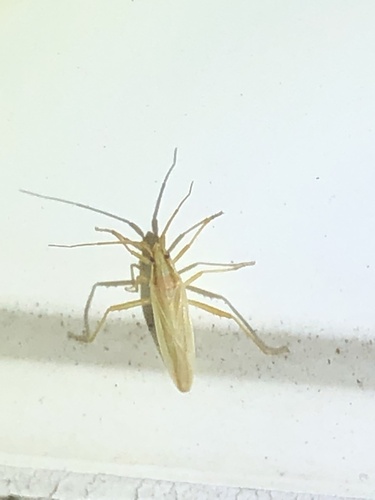
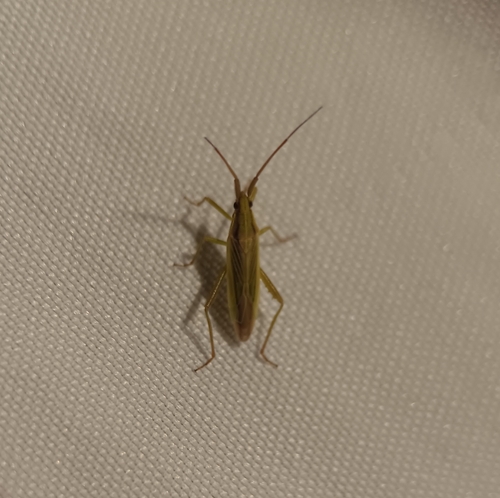
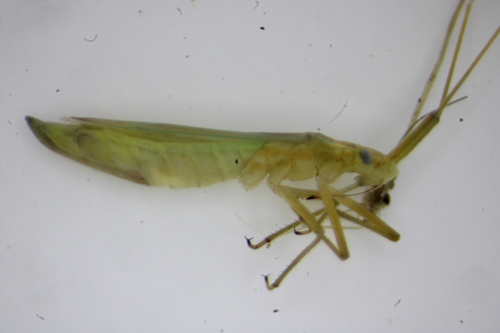
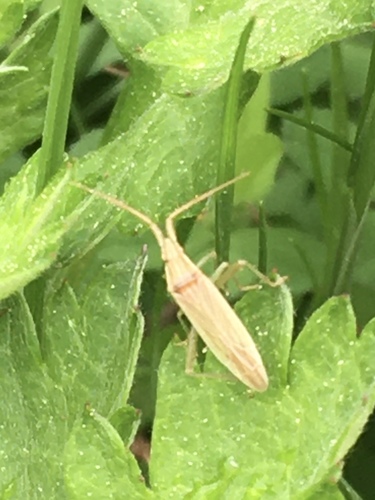
Overwintered adults are green with an orange-brown hourglass on the back, while later-season bugs are beige or tan; males tend to be darker than females.
Source: Wikipedia
Size
Adults measure roughly 8 to 9 mm in length.
Source: Wikipedia
Where it lives
They are commonly found in grassy fields and wetland areas.
Source: Wikipedia
Life cycle
There are two generations each year.
Source: Wikipedia
When you see it
Adults emerge in spring (April) and the second generation finishes by late summer (August).
Source: Wikipedia
Where it comes from
The species occurs across transcontinental North America and Eurasia.
Source: Wikipedia
Lookalikes
It can be distinguished from the similar S. calcarata, which has two femoral spurs.
Source: Wikipedia
Where it is found in the US
Recorded in 37 of 51 states and DC. Most records: New York, Massachusetts, Maryland, New Jersey, Pennsylvania, Connecticut, Ohio, Illinois.
Darker = more records. Counts are museum and citizen-science records, not population size.
Source: GBIF
Status: native in North America; native in Canada. Source: iNaturalist
Months it is reported in the US
Source: GBIF
More photos
Questions people ask
How can I tell the three-spined grass bug apart from similar bugs?
Look for the orange-brown hourglass marking on green overwintered adults or the beige/tan color of later bugs; males are usually darker, and unlike S. calcarata it lacks two femoral spurs.
Source: Wikipedia
When are three-spined grass bugs active?
They emerge in April after overwintering and produce two generations, with the second generation finishing by August.
Source: Wikipedia
Same family (Miridae)
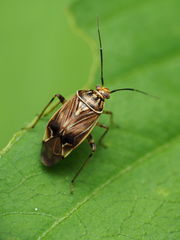 North American Tarnished Plant BugLygus lineolarisDamages trees, gardens or crops
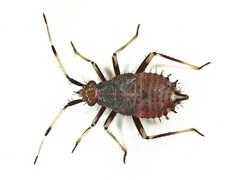 Red-spotted Plant BugDeraeocoris ruber
 Alfalfa Plant BugAdelphocoris lineolatusDamages trees, gardens or crops
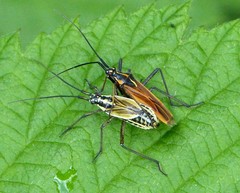 Meadow Plant BugLeptopterna dolabrataDamages trees, gardens or crops
 Four-lined Plant BugPoecilocapsus lineatusDamages trees, gardens or crops
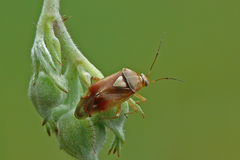 Lygus pratensisDamages trees, gardens or crops
Sources
- Wikipedia: https://en.wikipedia.org/wiki/Stenodema_pilosa
Look it up elsewhere: GBIF · iNaturalist · BugGuide · Wikipedia
Text written 2026-10-24 from the sources above and checked sentence by sentence against them. Data fetched 2026-10-24.