 Bug FAQ
Telea Hairstreak
Chlorostrymon telea · Order: Lepidoptera · Family: Lycaenidae
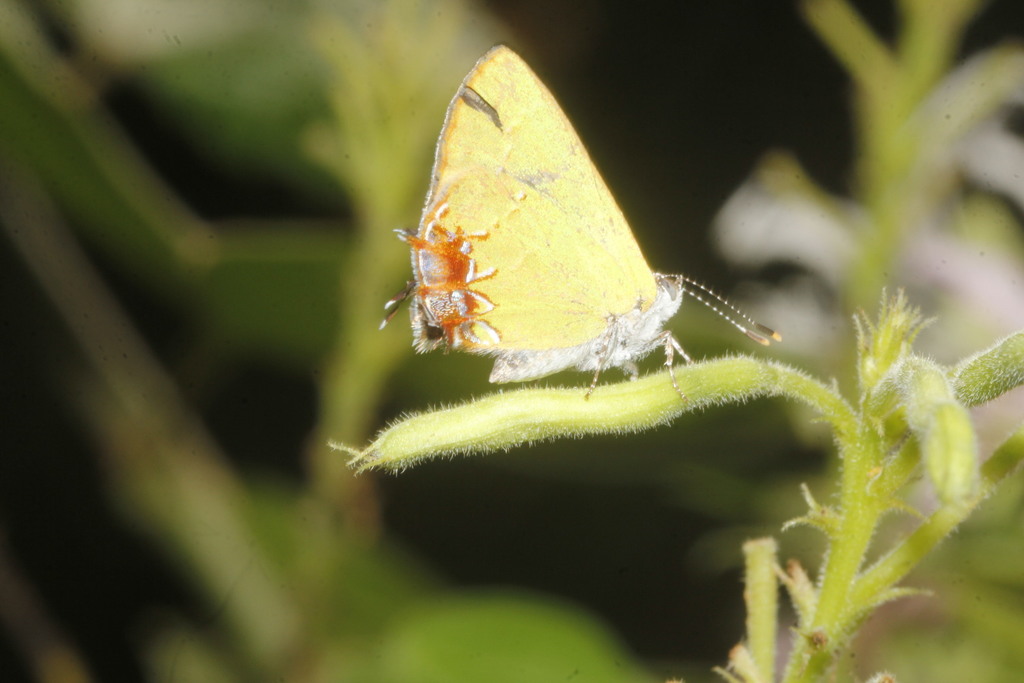
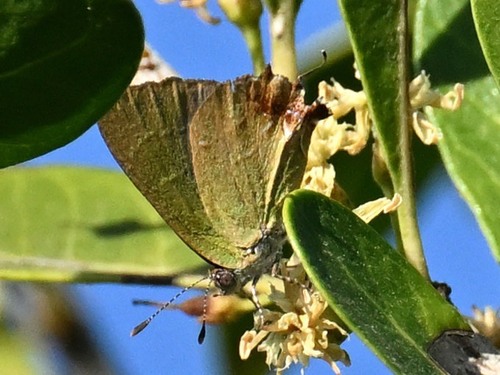
The telea hairstreak is a small butterfly with a wingspan of about 16 to 22 mm. It lives in stream valleys of semideciduous dry forests from southern Texas and Mexico down through Central and South America.
Source: Wikipedia
How to recognize it
Chlorostrymon telea, known as the telea hairstreak, belongs to the Lycaenidae family.
Source: Wikipedia
Size
Its wingspan ranges from 16 to 22 mm.
Source: Wikipedia
Where it lives
It inhabits stream valleys within semideciduous dry forests.
Source: Wikipedia
What it eats
Adults feed on flower nectar.
Source: Wikipedia
Life cycle
The species was first described by William Chapman Hewitson in 1868.
Source: Wikipedia
When you see it
In southern Texas adults are on the wing in June, while in Central America they appear from January through July.
Source: Wikipedia
Where it comes from
In the United States it occurs in southern Texas, and its range extends through Mexico, Central America, and into South America as far south as Uruguay and Chile.
Source: Wikipedia
Where it is found in the US
Recorded in 1 of 51 states and DC. Most records: Texas.
Darker = more records. Counts are museum and citizen-science records, not population size.
Source: GBIF
Months it is reported in the US
Source: GBIF
More photos
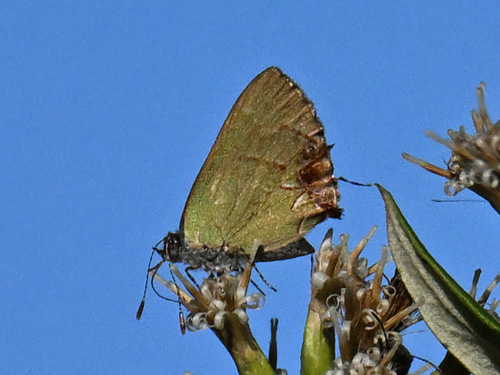
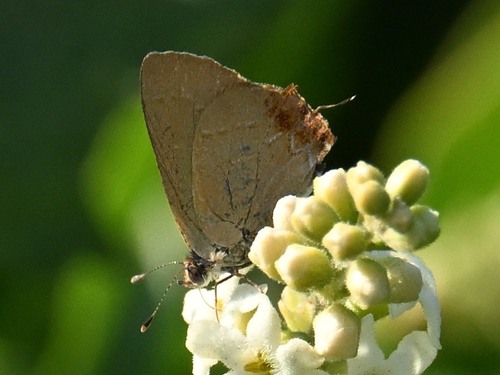
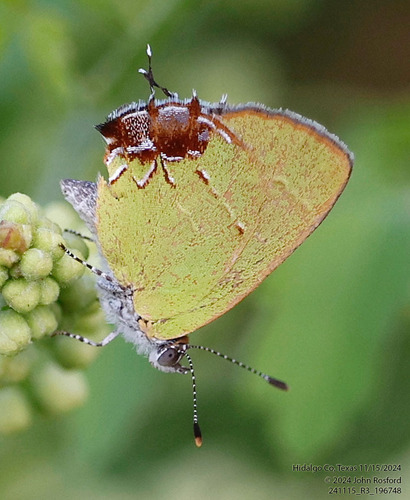
Questions people ask
When can I see adult telea hairstreaks?
In southern Texas they fly in June; in Central America they are active from January to July.
Source: Wikipedia
Same family (Lycaenidae)






Sources
- Wikipedia: https://en.wikipedia.org/wiki/Chlorostrymon_telea
Look it up elsewhere: GBIF · iNaturalist · BugGuide · ITIS · Wikipedia
Text written 2026-10-28 from the sources above and checked sentence by sentence against them. Data fetched 2026-10-28.