 Bug FAQ
Tawny Mole Cricket
Scapteriscus vicinus · Order: Orthoptera · Family: Gryllotalpidae
Also called: Mole cricket
Source: Wikipedia
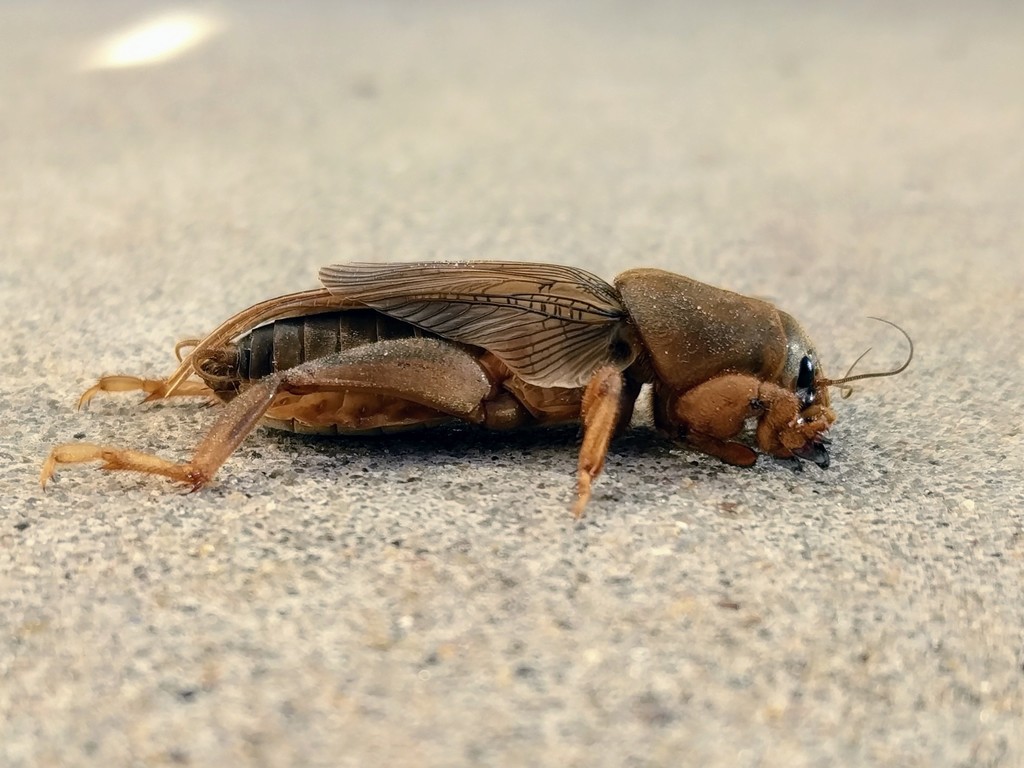
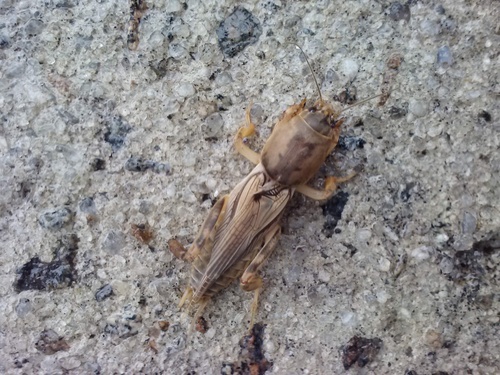
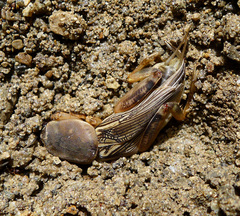
The tawny mole cricket is a medium-sized, yellowish-brown insect with a dark prothorax and two sharp claws on its forelegs. It lives in sandy soil, burrowing up to about 25 cm deep, and is active as an adult in spring and autumn in Florida. It feeds on plant roots and shoots, causing damage to gardens and crops, and its nymphs develop over several months through many molts.
Source: Wikipedia
Size
It is a medium-sized mole cricket.
Source: Wikipedia
How to get rid of it
Biological control using South American natural enemies was tried in Florida and was considered successful by 2004, after which the program ended.
Source: Wikipedia
Where it lives
It burrows in sandy soil, making galleries usually within the top 25 cm, depending on temperature and moisture.
Source: Wikipedia
What it eats
It is herbivorous, feeding on plant roots and young shoots, and its burrowing also harms plants.
Source: Wikipedia
Life cycle
In Florida, adults appear in spring and autumn, complete one life cycle in summer, and overwinter as large nymphs. Nymphs take several months to mature, undergoing eight to ten molts.
Source: Wikipedia
Where it comes from
It originates from South America.
Source: Wikipedia
Lookalikes
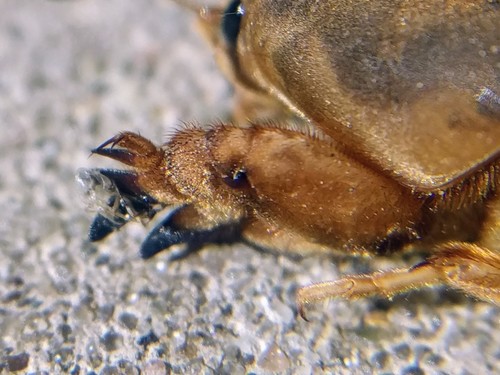
It can be told apart from the similar Neoscapteriscus borellii by the nearly touching claws at their base.
Source: Wikipedia
Where it is found in the US
Recorded in 10 of 51 states and DC. Most records: Florida, Texas, Georgia, South Carolina, Mississippi, Louisiana, Alabama, North Carolina.
Darker = more records. Counts are museum and citizen-science records, not population size.
Source: GBIF
Months it is reported in the US
Source: GBIF
More photos
Questions people ask
How can I tell this mole cricket apart from similar species?
Look at the foreleg claws; in this species they are almost touching at the base, unlike the widely separated claws of Neoscapteriscus borellii.
Source: Wikipedia
Same family (Gryllotalpidae)


Sources
- Wikipedia: https://en.wikipedia.org/wiki/Neoscapteriscus_vicinus
Look it up elsewhere: GBIF · iNaturalist · BugGuide · ITIS · Wikipedia
Text written 2026-10-22 from the sources above and checked sentence by sentence against them. Data fetched 2026-10-22.