 Bug FAQ
African Molecricket
Gryllotalpa africana · Order: Orthoptera · Family: Gryllotalpidae
Also called: African Mole Cricket
Source: Wikipedia
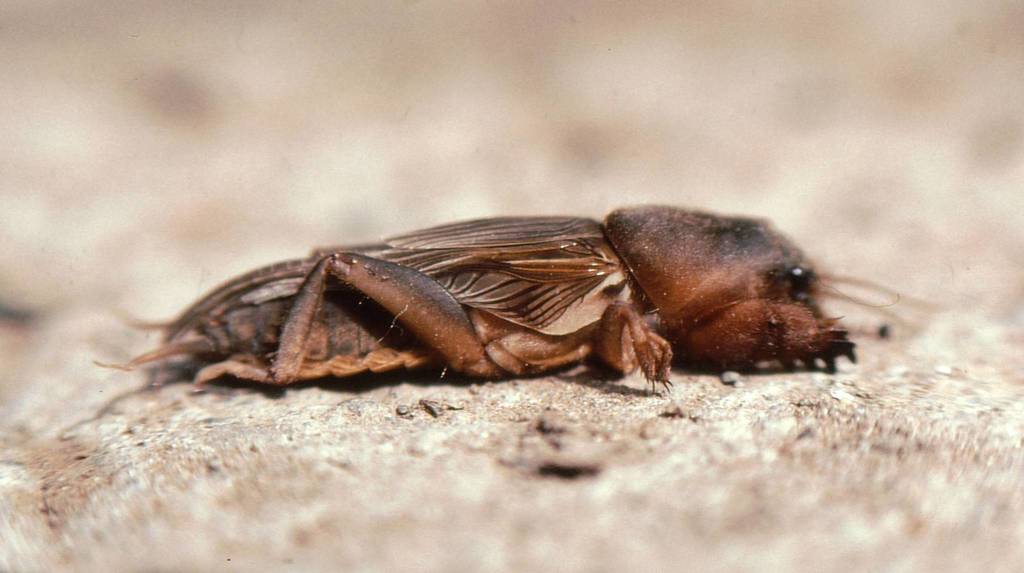
The African mole cricket lives underground and comes to the surface at night, mainly to mate. Males attract females by chirping, and the species is considered a pest in some regions.
Source: Wikipedia
Size
It is a small mole cricket.
Source: Wikipedia
Is it a pest in the house?
It is regarded as a pest in some regions.
Source: Wikipedia
Where it lives
It only comes above ground at night, mostly during the mating season.
Source: Wikipedia
What it eats
It is omnivorous, eating plant roots and other insects.
Source: Wikipedia
Life cycle
Males call females by chirping.
Source: Wikipedia
When you see it
Adults surface at night mainly during the mating season.
Source: Wikipedia
Where it comes from
It is native to Africa and also occurs in parts of Asia and southern Europe.
Source: Wikipedia
Months it is reported in the US
Source: GBIF
Questions people ask
Why do African mole crickets come out at night?
They surface at night mainly to mate.
Source: Wikipedia
How do male African mole crickets attract females?
Males produce chirping calls to draw females.
Source: Wikipedia
Same family (Gryllotalpidae)


Sources
- Wikipedia: https://en.wikipedia.org/wiki/Gryllotalpa_africana
Look it up elsewhere: GBIF · iNaturalist · BugGuide · ITIS · Wikipedia
Text written 2026-10-23 from the sources above and checked sentence by sentence against them. Data fetched 2026-10-23.