 Bug FAQ
Tachinid fly
Ormia ochracea · Order: Diptera · Family: Tachinidae
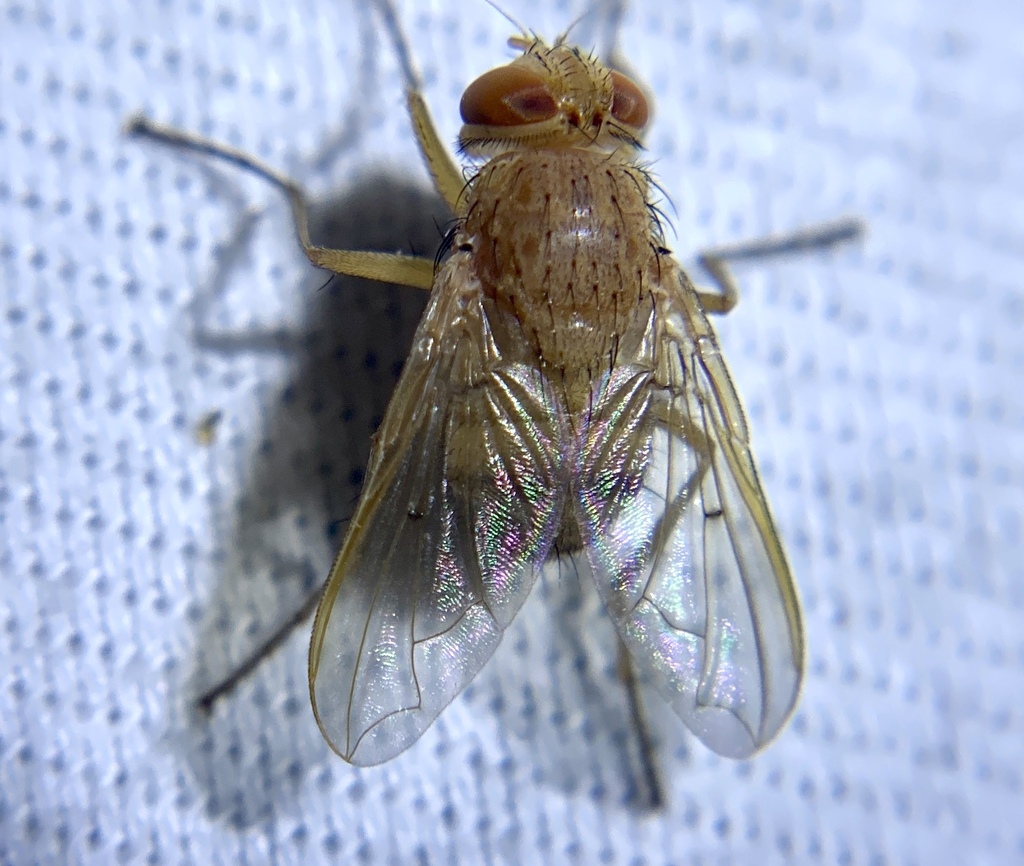
It is used in sound-localization research because it has complex ear structures inside its prothorax near the front legs. The larvae are parasitoids of several field cricket species.
Source: Wikipedia
How to recognize it
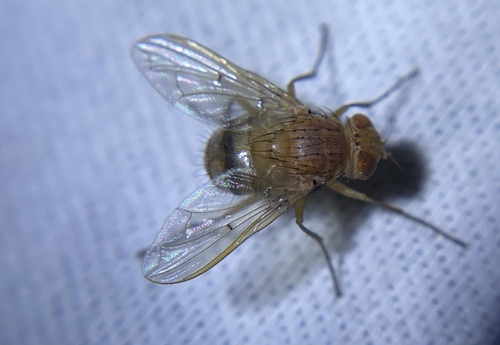
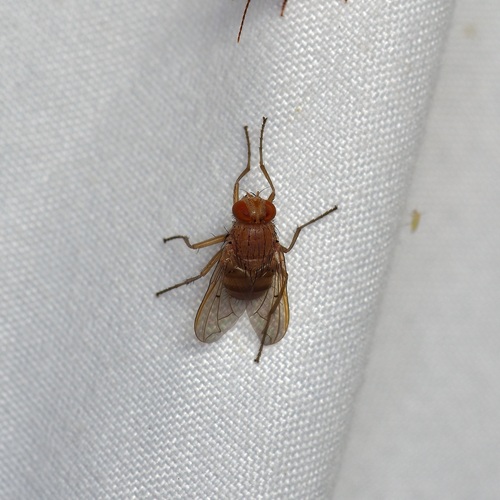
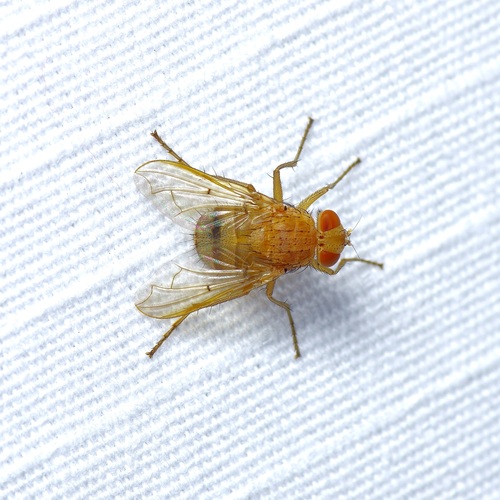
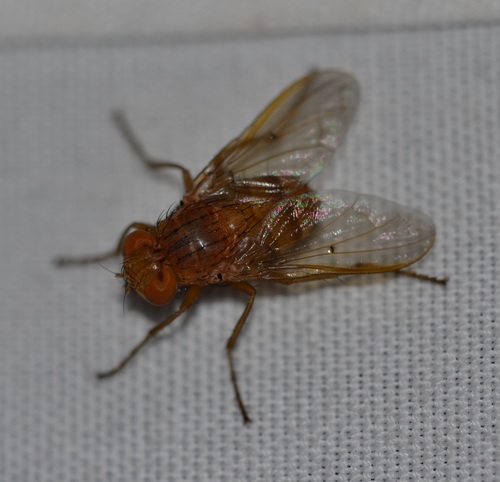
It is a small yellow fly that is active at night.
Source: Wikipedia
Size
Adults are small and yellow in color.
Source: Wikipedia
Where it lives
Its unique ear structures are located inside the prothorax near the bases of the front legs and are studied in sound-localization experiments.
Source: Wikipedia
What it eats
The species is a parasitoid of field crickets such as Gryllus integer, G. rubens, G. texensis and G. firmus.
Source: Wikipedia
Life cycle
Its life cycle consists of egg, larva, pupa and adult stages. Pupae emerge as adult flies about two weeks after leaving the host.
Source: Wikipedia
Where it is found in the US
Recorded in 9 of 51 states and DC. Most records: Texas, California, Arizona, Florida, Louisiana, Oklahoma, Hawaii, North Carolina.
Darker = more records. Counts are museum and citizen-science records, not population size.
Source: GBIF
Months it is reported in the US
Source: GBIF
More photos
Questions people ask
What does Ormia ochracea eat?
Its larvae parasitize field crickets such as Gryllus integer, G. rubens, G. texensis and G. firmus.
Source: Wikipedia
What is the life cycle of Ormia ochracea?
It goes through egg, larva, pupa and adult stages, with adults emerging about two weeks after the pupal stage.
Source: Wikipedia
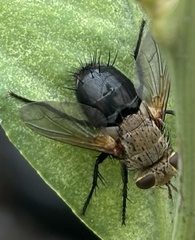
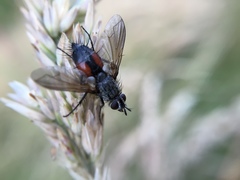
Same family (Tachinidae)


Sources
- Wikipedia: https://en.wikipedia.org/wiki/Ormia_ochracea
Look it up elsewhere: GBIF · iNaturalist · BugGuide · ITIS · Wikipedia
Text written 2026-10-28 from the sources above and checked sentence by sentence against them. Data fetched 2026-10-28.