 Bug FAQ
Table Mountain Beauty
Aeropetes tulbaghia · Order: Lepidoptera · Family: Nymphalidae
Also called: Mountain Pride
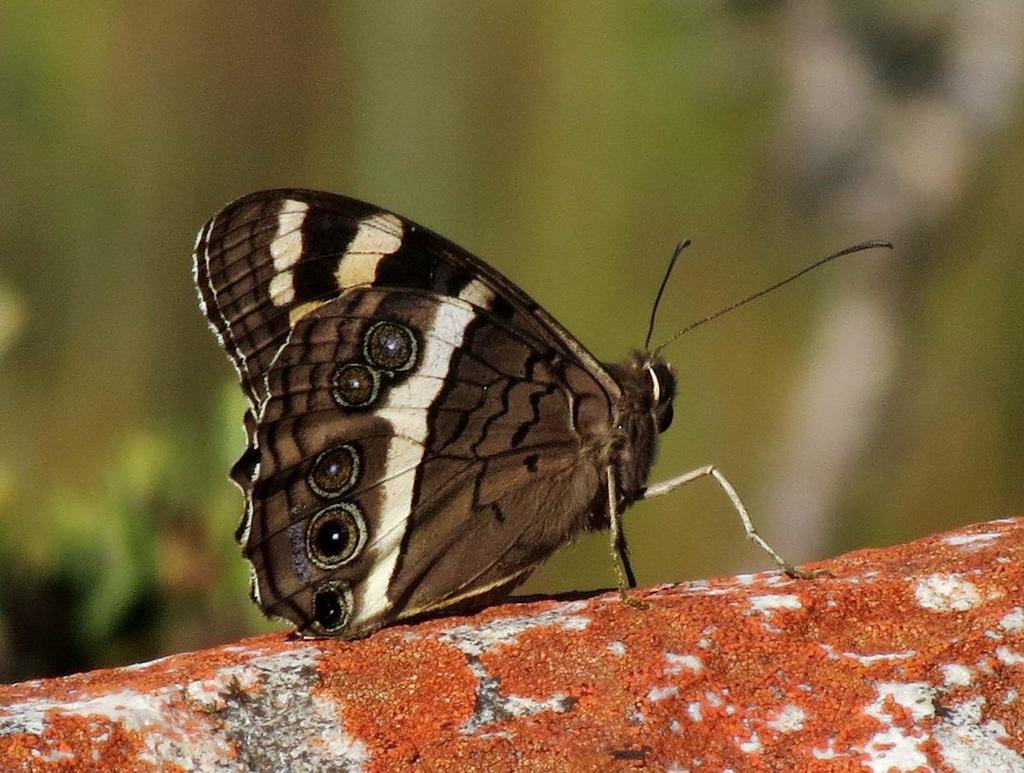
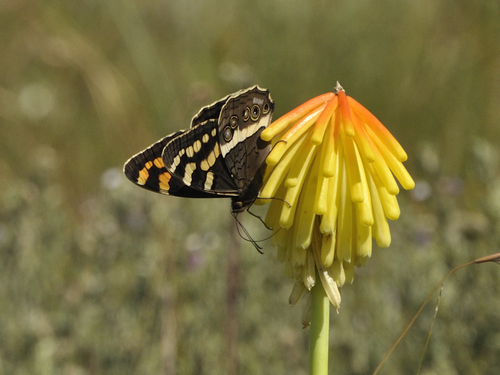
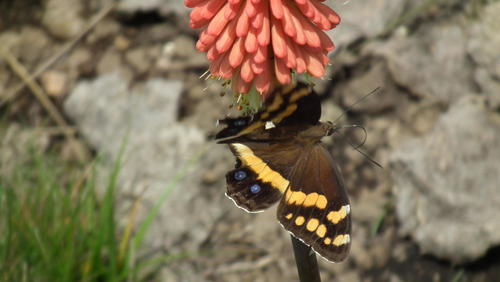
Males have a wingspan of about 70 to 78 mm and females 75 to 90 mm. They live on rocky, mountainous hillsides and often rest on the shady side of rocks or under overhanging stream banks. Adults feed on red or orange flowers and are the sole pollinators of two orchid species, while the larvae eat various grasses.
Source: Wikipedia
How to recognize it
Males and females look alike, but males are on average the smaller sex.
Source: Wikipedia
Size
Male wingspan ranges from 70 to 78 mm; females are larger, ranging from 75 to 90 mm.
Source: Wikipedia
Where it lives
They are commonly found on mountainous, rock-strewn hillsides and gullies.
Source: Wikipedia
What it eats
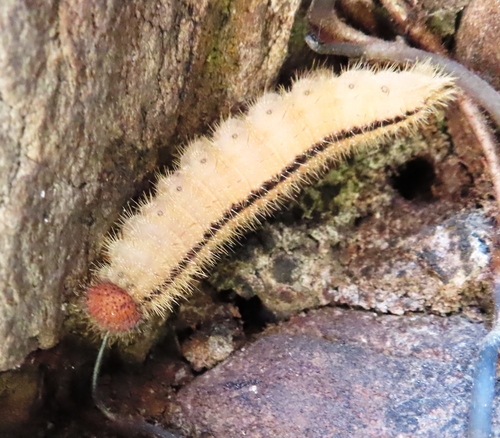
Caterpillars feed on various grasses such as Ehrharta erecta, Hyparrhenia hirta and Pennisetum clandestinum.
Source: Wikipedia
Life cycle
There is one generation each year.
Source: Wikipedia
When you see it
Adults are on the wing from November to April, with numbers peaking between December and March.
Source: Wikipedia
Where it comes from
They are native to southern Africa, occurring in South Africa, Lesotho, Eswatini and Zimbabwe.
Source: Wikipedia
More photos
Questions people ask
When can I see adult Table Mountain Beauties?
Adults fly during the southern summer, from November through April, especially from December to March.
Source: Wikipedia
Where does this butterfly live?
It lives on rocky, mountainous hillsides and gullies, often resting on the shady side of rocks or under overhanging stream banks.
Source: Wikipedia
Same family (Nymphalidae)






Sources
- Wikipedia: https://en.wikipedia.org/wiki/Aeropetes
Look it up elsewhere: GBIF · iNaturalist · BugGuide · Wikipedia
Text written 2026-10-23 from the sources above and checked sentence by sentence against them. Data fetched 2026-10-23.