 Bug FAQ
Swift Crab Spider
Mecaphesa celer · Order: Araneae · Family: Thomisidae
Also called: celer crab spider, crab spiders
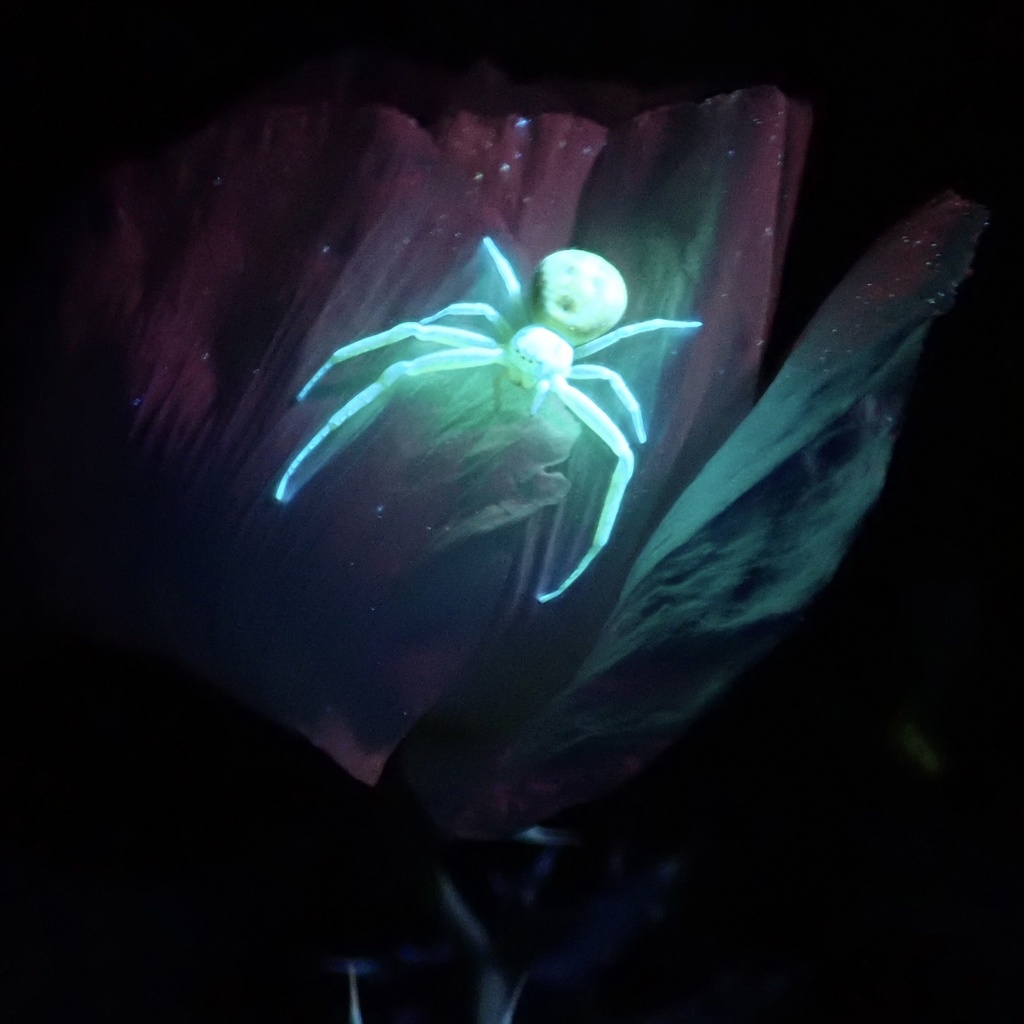
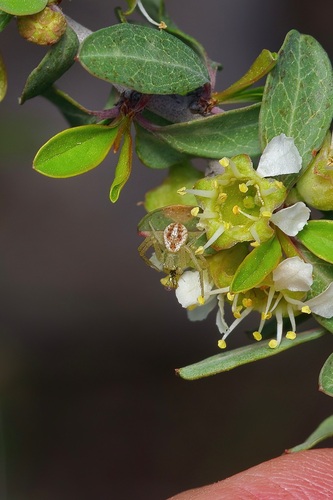
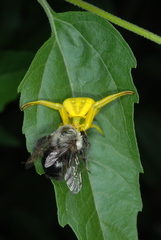
Males are about half the length of females and weigh less than one-tenth as much, often appearing darker with red leg bands. These spiders live on flowers, shrubs, and crop plants, where they catch insects that visit the blossoms.
Source: Wikipedia
How to recognize it
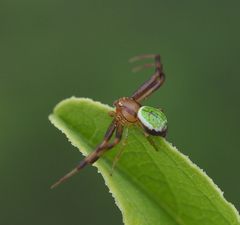
Males are darker than females and have red bands on their legs. Male abdomens are whiter with four or more brown spot pairs forming a V-shape.
Source: Wikipedia
Size
Males are roughly half the size of females and weigh less than one-tenth of a female’s mass.
Source: Wikipedia
Is it a pest in the house?
Because they eat flower-visiting insects, they can serve as useful biological control agents in agriculture. Thomisid spiders, including this species, provide important protection for farmers against crop loss.
Source: Wikipedia
Where it lives
They are commonly found on flowers and the upper parts of plants. They also frequent shrubs, bushes, small trees, and crops such as sorghum, cotton, and alfalfa.
Source: Wikipedia
What it eats
They feed on insects that visit flowering parts of plants. By preying on these insects, they help protect crops from pests like aphids.
Source: Wikipedia
Life cycle
Males mate more frequently than females.
Source: Wikipedia
Where it comes from
Mecaphesa celer is a Nearctic species widespread across North America.
Source: Wikipedia
Lookalikes
Males look similar to those of Mecaphesa dubia and Mecaphesa rothi, making identification difficult.
Source: Wikipedia
Where it is found in the US
Recorded in 37 of 51 states and DC. Most records: Texas, Colorado, Oklahoma, Florida, Wyoming, Minnesota, Arizona, Kansas.
Darker = more records. Counts are museum and citizen-science records, not population size.
Source: GBIF
Months it is reported in the US
Source: GBIF
More photos
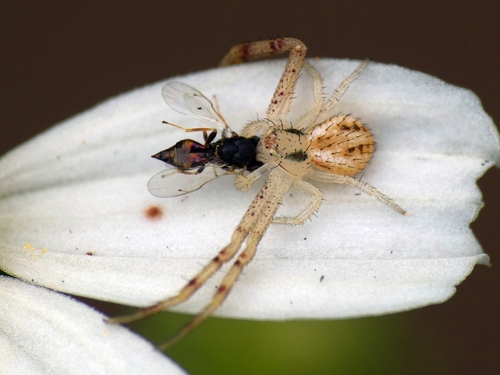
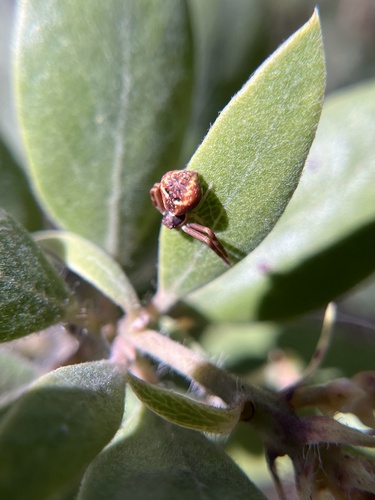
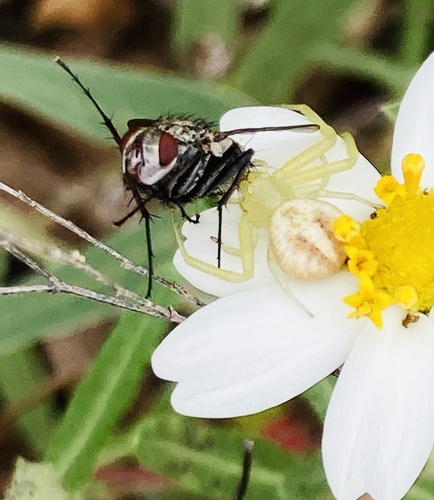
Questions people ask
How can I tell a male Mecaphesa celer from similar species?
Look for darker bodies, red leg bands, and a whiter abdomen with V-shaped brown spot rows; however, they resemble males of M. dubia and M. rothi, so identification can be tricky.
Source: Wikipedia
Do they help my garden?
Yes, they catch insects on flowers and can reduce pest numbers like aphids, benefiting crops and garden plants.
Source: Wikipedia
Where are Mecaphesa celer spiders found?
They are widespread across North America, often on flowers, shrubs, small trees, and crops such as sorghum, cotton, and alfalfa.
Source: Wikipedia
Same family (Thomisidae)

Sources
- Wikipedia: https://en.wikipedia.org/wiki/Mecaphesa_celer
Look it up elsewhere: GBIF · iNaturalist · BugGuide · ITIS · Wikipedia
Text written 2026-10-23 from the sources above and checked sentence by sentence against them. Data fetched 2026-10-23.