 Bug FAQ
Dubia Cockroach
Blaptica dubia · Order: Blattodea · Family: Blaberidae
Also called: Argentinian Wood Cockroach, Guyana Spotted Cockroach, Orange-spotted Cockroach
Source: Wikipedia

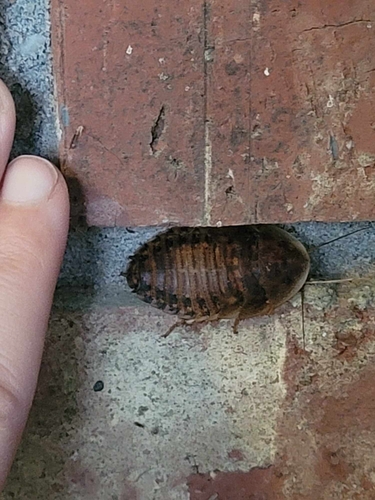
Dubia cockroaches are medium-sized, about 40 to 45 mm long, dark brown to black with a faint orange stripe that may only show in bright light. Males have full wings while females have only short wing stubs, and they give birth to live young, producing 20 to 40 nymphs each month under good conditions.
Source: Wikipedia
How to recognize it
Adults are dark brown to black with a lighter orange spot or stripe that is sometimes visible only in bright light. Males have full wings covering the body; females have tiny wing stubs about a quarter of their length.
Source: Wikipedia
Is it a pest in the house?
They do not jump, cannot climb smooth surfaces, move slowly, and rarely fly, making them easy to keep or breed. They are quiet and need tropical conditions, so escaped individuals are unlikely to establish in colder, drier homes.
Source: Wikipedia
Does it bite or sting?
They can cause allergic reactions in humans, though they produce relatively little odor.
Source: Wikipedia
Where it lives
Females give birth to live young after the eggs hatch inside them, producing 20 to 40 nymphs per month when conditions are favorable. They can trigger allergic reactions in people, though they emit less odor than many other cockroaches.
Source: Wikipedia
What it eats
Their gut contents reflect the nutrients of whatever they have eaten, providing essential nutrients not present in an empty gut.
Source: Wikipedia
Life cycle
Pregnancy lasts about 48 to 64 days at 26 °C with a 12-hour light/dark cycle. Adults can live up to two years, with females living slightly longer than males.
Source: Wikipedia
Where it comes from
They are native to southern South America, with records from Brazil, Argentina and Uruguay.
Source: Wikipedia
Where it is found in the US
Recorded in 11 of 51 states and DC. Most records: Michigan, South Carolina, Washington, California, Louisiana, Kansas, Massachusetts, Mississippi.
Darker = more records. Counts are museum and citizen-science records, not population size.
Source: GBIF
Months it is reported in the US
Source: GBIF
More photos

Questions people ask
How can I tell male and female dubia cockroaches apart?
Males have full wings covering their bodies, while females have only short wing stubs about a quarter of their length.
Source: Wikipedia
Where are dubia cockroaches originally from?
They are native to southern South America, especially Brazil, Argentina and Uruguay.
Source: Wikipedia
Same family (Blaberidae)



Sources
- Wikipedia: https://en.wikipedia.org/wiki/Blaptica_dubia
Look it up elsewhere: GBIF · iNaturalist · BugGuide · Wikipedia
Text written 2026-10-23 from the sources above and checked sentence by sentence against them. Data fetched 2026-10-23.