 Bug FAQ
Summer Harp Ground Beetle
Chlaenius aestivus · Order: Coleoptera · Family: Carabidae
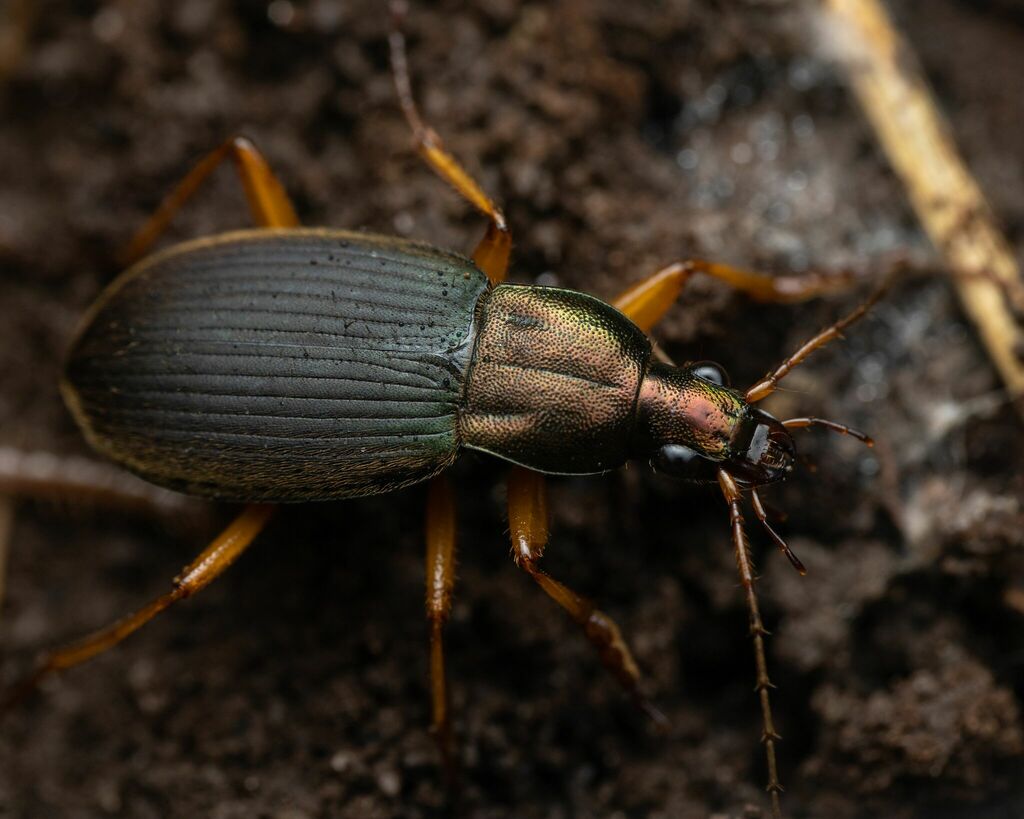
The Summer Harp Ground Beetle is a large ground beetle with orange legs, an iridescent thorax and head, and black elytra marked with grooves; the thorax is densely punctured. It lives in moist places like muddy bottomlands, often hiding under rocks, logs, or other debris during the day. Females lay eggs in mud cells that are attached to grasses.
Source: Wikipedia
How to recognize it
The beetle’s thorax and head shine with iridescence, a trait typical of its genus. Its black wing covers (elytra) have grooved lines, and the thorax is covered densely with small pits.
Source: Wikipedia
Size
It is a large species of ground beetle and has orange legs.
Source: Wikipedia
Where it lives
During daylight it is found under rocks, logs and other debris in moist, muddy bottomland areas.
Source: Wikipedia
Life cycle
Eggs are deposited in mud cells that are attached to grasses.
Source: Wikipedia
Lookalikes
It can be told apart from similar beetles by its antennae: the third segment is longer than the combined length of the first two and also longer than the fourth.
Source: Wikipedia
Where it is found in the US
Recorded in 28 of 51 states and DC. Most records: Virginia, Maryland, Alabama, Pennsylvania, New Jersey, New York, Kentucky, Delaware.
Darker = more records. Counts are museum and citizen-science records, not population size.
Source: GBIF
Status: native in North America; native in Canada. Source: iNaturalist
Months it is reported in the US
Source: GBIF
More photos
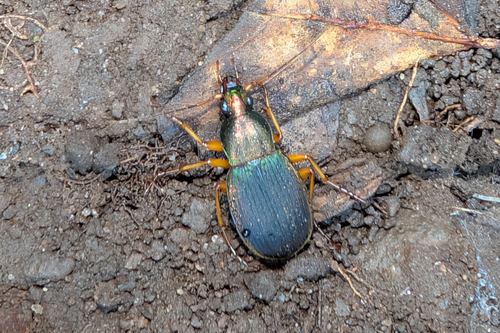
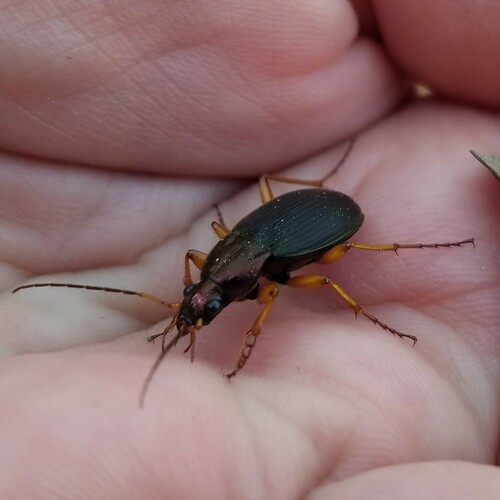
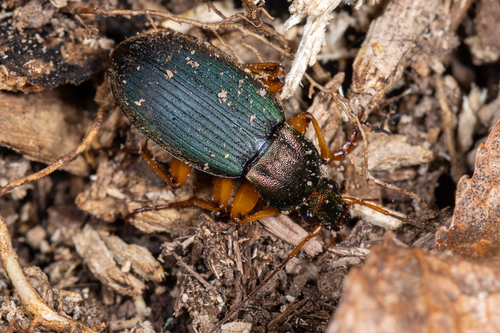
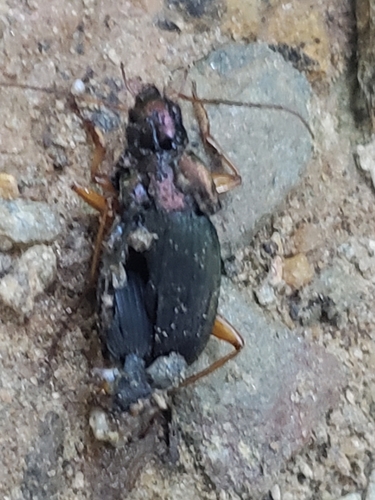
Same family (Carabidae)
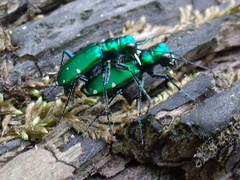

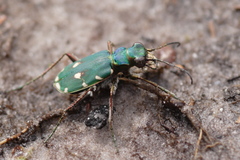

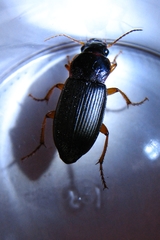
Sources
- Wikipedia: https://en.wikipedia.org/wiki/Chlaenius_aestivus
Look it up elsewhere: GBIF · iNaturalist · BugGuide · ITIS · Wikipedia
Text written 2026-10-23 from the sources above and checked sentence by sentence against them. Data fetched 2026-10-23.