 Bug FAQ
Summer Chafer
Amphimallon solstitiale · Order: Coleoptera · Family: Scarabaeidae
Also called: Midsummer Chafer, European June Beetle, Cliff Beetle
Source: Wikipedia
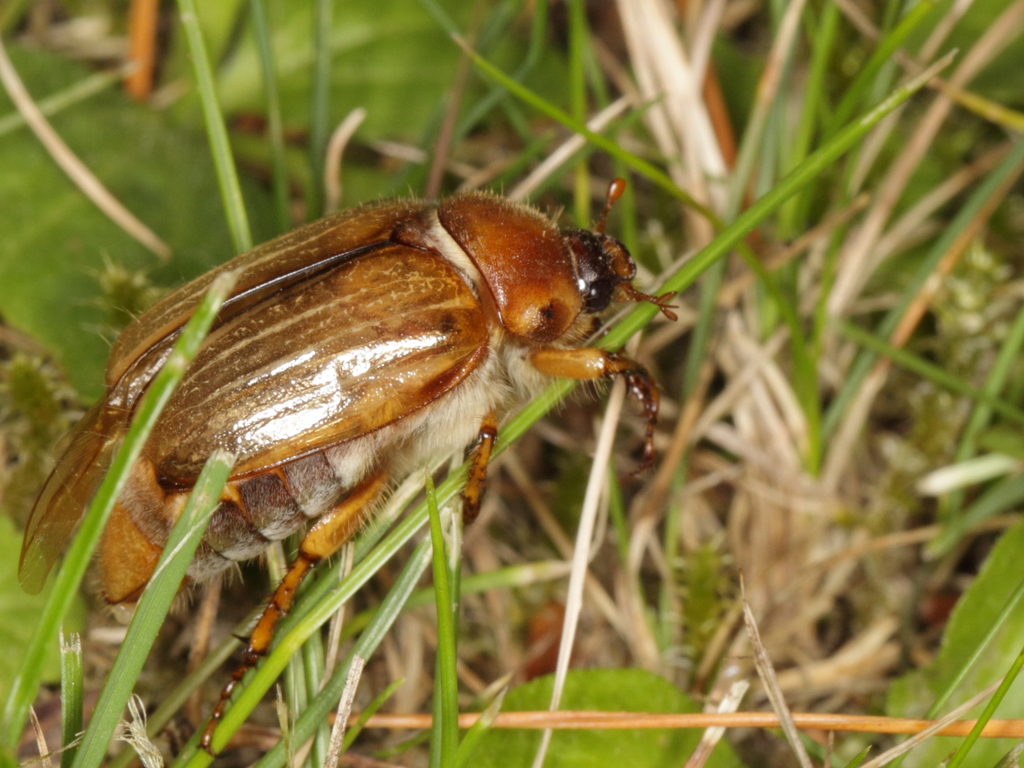
The summer chafer is a small beetle about 20 mm long that appears from June to August. It lives in meadows, hedgerows and gardens across Europe, Turkey, parts of East Asia and North America, feeding on plant roots and foliage. Adults are attracted to light and may enter homes, where they fly around lamps.
Source: Wikipedia
How to recognize it
It looks like a much smaller cockchafer.
Source: Wikipedia
Size
Adults are about 20 mm (0.79 in) long.
Source: Wikipedia
Is it a pest in the house?
Adults are attracted to light and may enter homes through open, lit windows, buzzing around lamps.
Source: Wikipedia
How to get rid of it
Various chemical and biological agents, including specific bacteria and entomopathogenic nematodes, are used to manage its populations.
Source: Wikipedia
Where it lives
It inhabits meadows, hedgerows and gardens.
Source: Wikipedia
What it eats
Both adults and larvae feed on plant material, especially roots and foliage.
Source: Wikipedia
Life cycle
The larva develops underground for two to three years, feeding on host-plant roots. Chemical and biological controls such as bacteria and nematodes have been developed against it.
Source: Wikipedia
When you see it
Adults are most commonly seen from June through August.
Source: Wikipedia
Where it comes from
Its range includes most of Europe, Turkey, parts of East Asia and North America.
Source: Wikipedia
Lookalikes
It resembles a cockchafer but is much smaller.
Source: Wikipedia
More photos

Questions people ask
Why are they in my house?
They are attracted to artificial light and can come in through open, lit windows or doors.
Source: Wikipedia
Are they harmful to my garden?
Yes, the larvae feed on plant roots and adults eat foliage, which can damage garden plants and trees.
Source: Wikipedia
How can I control them?
Chemical treatments and biological controls such as specific bacteria and entomopathogenic nematodes are available.
Source: Wikipedia
Same family (Scarabaeidae)
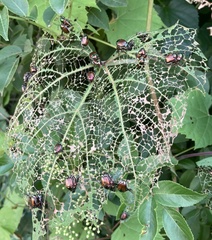 Japanese BeetlePopillia japonicaDamages trees, gardens or crops
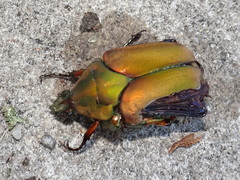 Common Green June BeetleCotinis nitidaDamages trees, gardens or crops
 Phyllophaga crinitaPhyllophaga crinitaDamages trees, gardens or crops
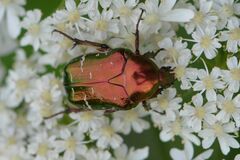 European Rose ChaferCetonia aurata
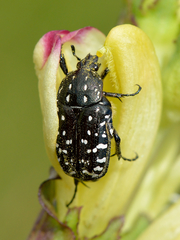 Mediterranean Spotted ChaferOxythyrea funestaDamages trees, gardens or crops
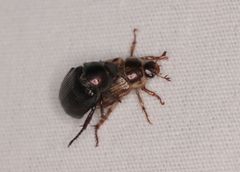 Oriental BeetleExomala orientalisDamages trees, gardens or crops
Sources
- Wikipedia: https://en.wikipedia.org/wiki/Amphimallon_solstitiale
Look it up elsewhere: GBIF · iNaturalist · BugGuide · Wikipedia
Text written 2026-10-22 from the sources above and checked sentence by sentence against them. Data fetched 2026-10-22.