 Bug FAQ
Striped Oak Bug
Rhabdomiris striatellus · Order: Hemiptera · Family: Miridae
Also called: Plant bug
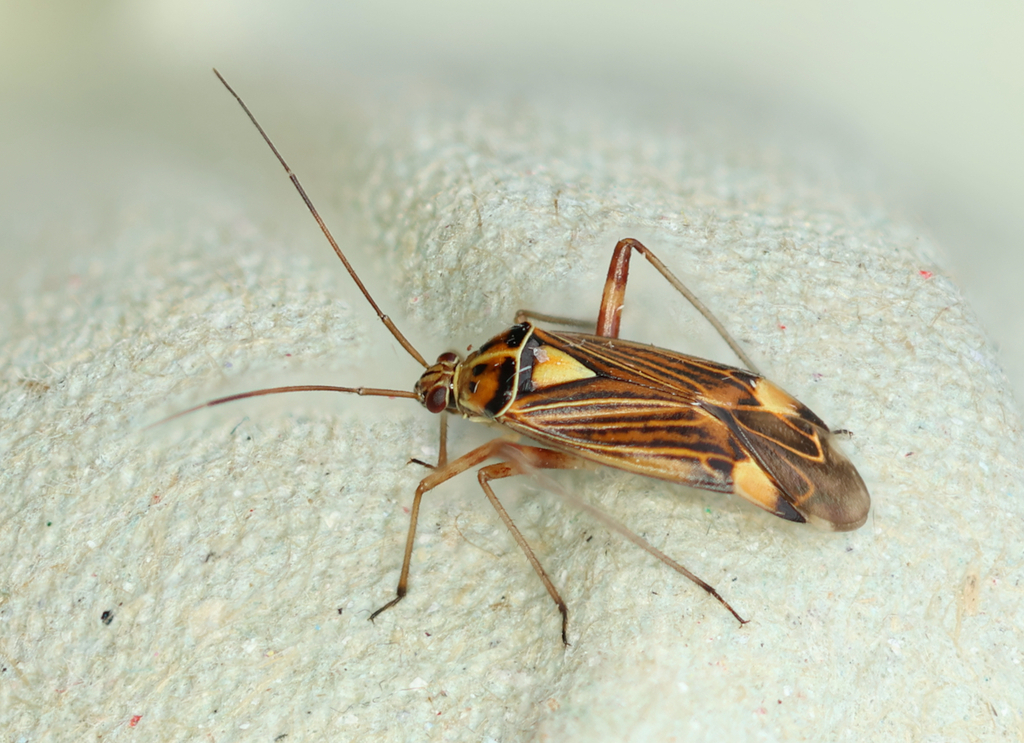
The striped oak bug is 7 to 9 mm long and its body is yellow to reddish-brown with yellow veins and dark wing stripes, though it can appear much darker. It lives on oak trees and is found across most of Europe and into western Asia, but not in the far north or Mediterranean south. Nymphs feed on flower and fruit juices, while adults hunt aphids and other insect larvae.
Source: Wikipedia
How to recognize it
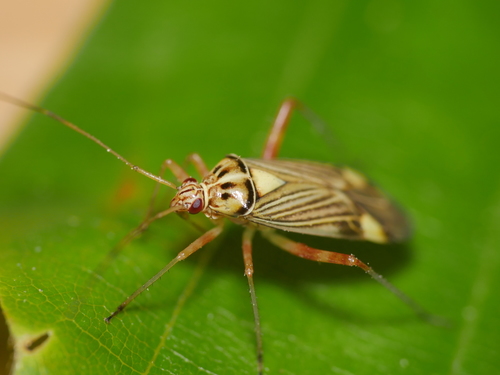
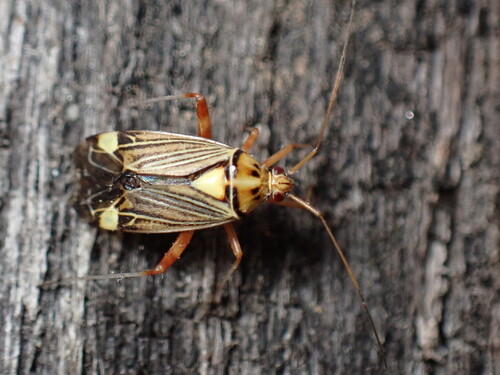
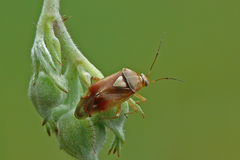
The bug’s body is yellow to reddish brown with yellow veins and dark stripes on the wings, though some individuals are much darker and resemble Miris striatus.
Source: Wikipedia
Size
Adults measure about 7 to 9 mm in length (0.3 to 0.4 in).
Source: Wikipedia
Where it lives
It is associated with oak trees.
Source: Wikipedia
What it eats
Nymphs suck juices from flowers and fruits, while adults prey on aphids and other insect larvae.
Source: Wikipedia
Where it comes from
The species occurs widely throughout Europe, except the extreme north and the southern Mediterranean. Its range also extends eastward across Asia Minor to the Caucasus.
Source: Wikipedia
Lookalikes
Darker individuals can look similar to the related Miris striatus.
Source: Wikipedia
Where it is found in the US
Recorded in 3 of 51 states and DC. Most records: New York, Massachusetts, Connecticut.
Darker = more records. Counts are museum and citizen-science records, not population size.
Source: GBIF
Status: introduced in United States. Source: iNaturalist
Months it is reported in the US
Source: GBIF
More photos
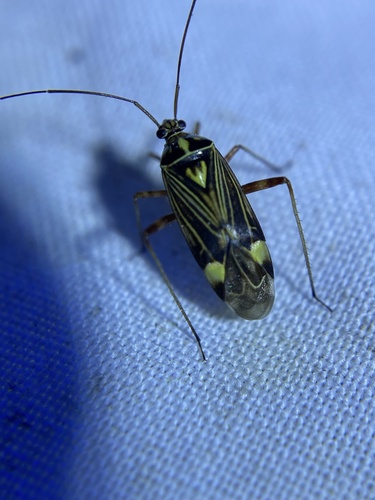
Same family (Miridae)
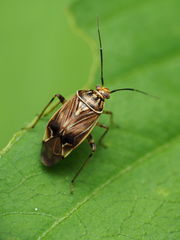 North American Tarnished Plant BugLygus lineolarisDamages trees, gardens or crops
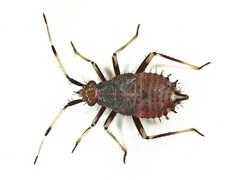 Red-spotted Plant BugDeraeocoris ruber
 Alfalfa Plant BugAdelphocoris lineolatusDamages trees, gardens or crops
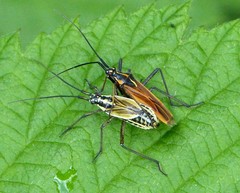 Meadow Plant BugLeptopterna dolabrataDamages trees, gardens or crops
 Four-lined Plant BugPoecilocapsus lineatusDamages trees, gardens or crops
 Lygus pratensisLygus pratensisDamages trees, gardens or crops
Sources
- Wikipedia: https://en.wikipedia.org/wiki/Rhabdomiris_striatellus
Look it up elsewhere: GBIF · iNaturalist · BugGuide · Wikipedia
Text written 2026-10-22 from the sources above and checked sentence by sentence against them. Data fetched 2026-10-22.