 Bug FAQ
Striped ambrosia beetle
Trypodendron lineatum · Order: Coleoptera · Family: Curculionidae
Also called: Lineated Bark Beetle, Lineate Bark Beetle
Source: Wikipedia
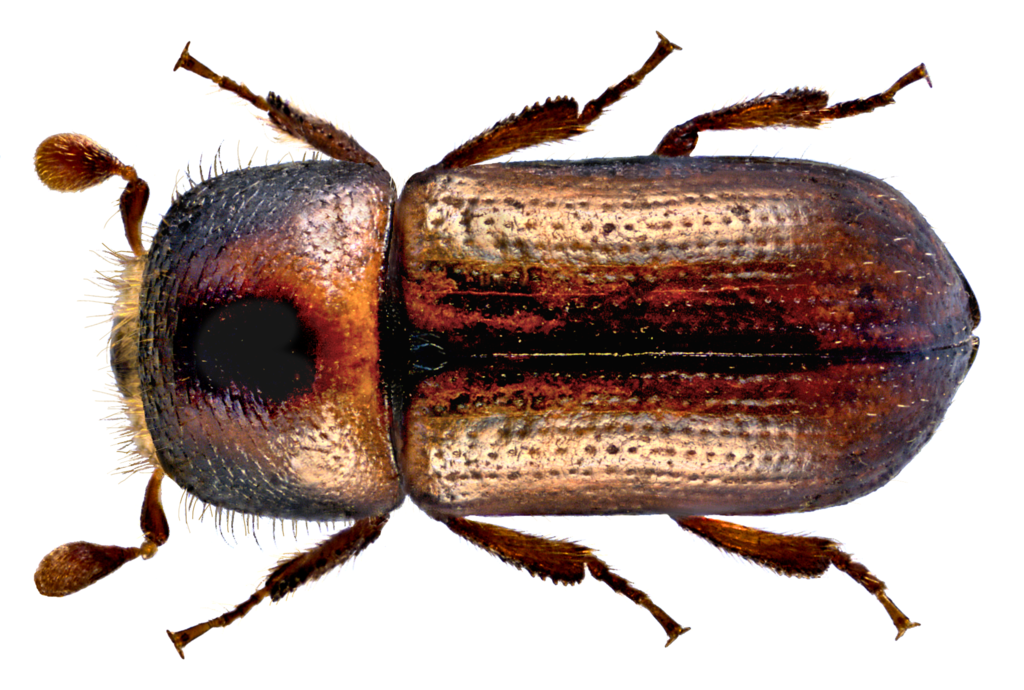
Adults are about 3.5 mm long and 1.5 mm wide, with females larger than males. They infest stressed or dying conifers and can also be found on several deciduous trees such as alders, birches, apples and maples. The beetle is a major forest pest that harms wood quality, causing economic losses.
Source: Wikipedia
How to recognize it
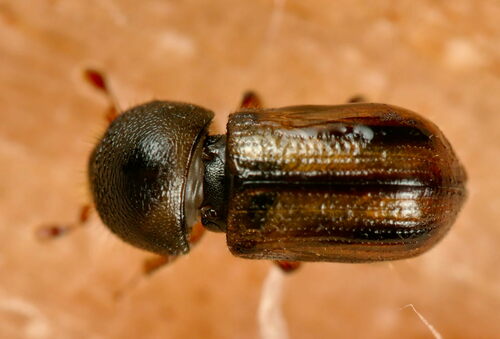
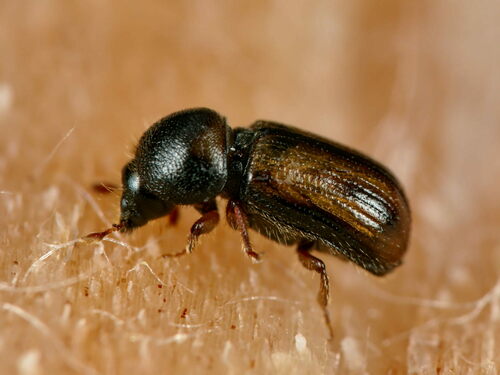
Its common name comes from the distinctive striped pattern on its back.
Source: Wikipedia
Size
Adults average 3.5 mm in length and 1.5 mm in width. Males are generally smaller than females.
Source: Wikipedia
Is it a pest in the house?
Although it prefers dead or dying wood, it can lower the commercial value of wood by staining and creating galleries.
Source: Wikipedia
How to get rid of it
Integrated pest management suggests quickly removing and processing wind-thrown or harvested wood. Timely debarking, proper storage, and using traps to monitor susceptible stands are also recommended.
Source: Wikipedia
Where it lives
It mainly attacks coniferous trees, especially those that are stressed or dying. It has also been recorded on four genera of deciduous trees: alders, birches, apples and maples.
Source: Wikipedia
What it eats
Larvae depend entirely on cultivated fungi that break down wood and provide nutrients.
Source: Wikipedia
Life cycle
The species has two distinct dispersal flights each year. All new adults must overwinter before reaching sexual maturity and joining the spring swarming flight.
Source: Wikipedia
When you see it
Mass emergence occurs when temperatures rise above 16 °C. Daily flights start in late morning, peak mid-afternoon, and drop sharply in the late afternoon.
Source: Wikipedia
Where it comes from
It has a Holarctic distribution, including North America. Its range also covers Europe, northern Asia and parts of North Africa.
Source: Wikipedia
Where it is found in the US
Recorded in 19 of 51 states and DC. Most records: Vermont, Alaska, Colorado, Washington, Oregon, Michigan, New Mexico, Kansas.
Darker = more records. Counts are museum and citizen-science records, not population size.
Source: GBIF
Status: native in North America; native in Canada. Source: iNaturalist
Months it is reported in the US
Source: GBIF
More photos
Questions people ask
How can I prevent damage to my wood from striped ambrosia beetles?
Remove and process wind-thrown or harvested wood promptly, debark and store wood properly, and use traps to monitor vulnerable areas.
Source: Wikipedia
When are striped ambrosia beetles most active?
They emerge in mass when temperatures exceed 16 °C, with daily flights beginning late morning and peaking mid-afternoon.
Source: Wikipedia
What trees do striped ambrosia beetles infest?
They mainly infest stressed or dying conifers but have also been found on alders, birches, apples and maples.
Source: Wikipedia
What do the larvae of striped ambrosia beetles eat?
The larvae feed on cultivated fungi that break down wood and supply them with nutrients, steroids, and vitamins.
Source: Wikipedia
Same family (Curculionidae)
 Green Immigrant Leaf WeevilPolydrusus formosusDamages trees, gardens or crops
 Black Vine WeevilOtiorhynchus sulcatusDamages trees, gardens or crops
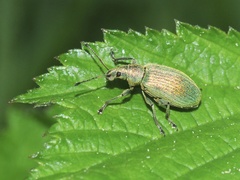 Nettle weevilPhyllobius pomaceusDamages trees, gardens or crops
 Asian Oak WeevilCyrtepistomus castaneusDamages trees, gardens or crops
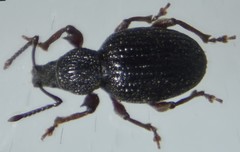 Strawberry Root WeevilOtiorhynchus ovatusDamages trees, gardens or crops
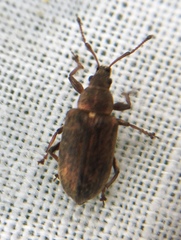 Common Leaf WeevilPhyllobius pyriDamages trees, gardens or crops
Sources
- Wikipedia: https://en.wikipedia.org/wiki/Trypodendron_lineatum
Look it up elsewhere: GBIF · iNaturalist · BugGuide · ITIS · Wikipedia
Text written 2026-10-24 from the sources above and checked sentence by sentence against them. Data fetched 2026-10-24.