 Bug FAQ
Large Pine Weevil
Hylobius abietis · Order: Coleoptera · Family: Curculionidae
Also called: Pine Weevil
Source: Wikipedia
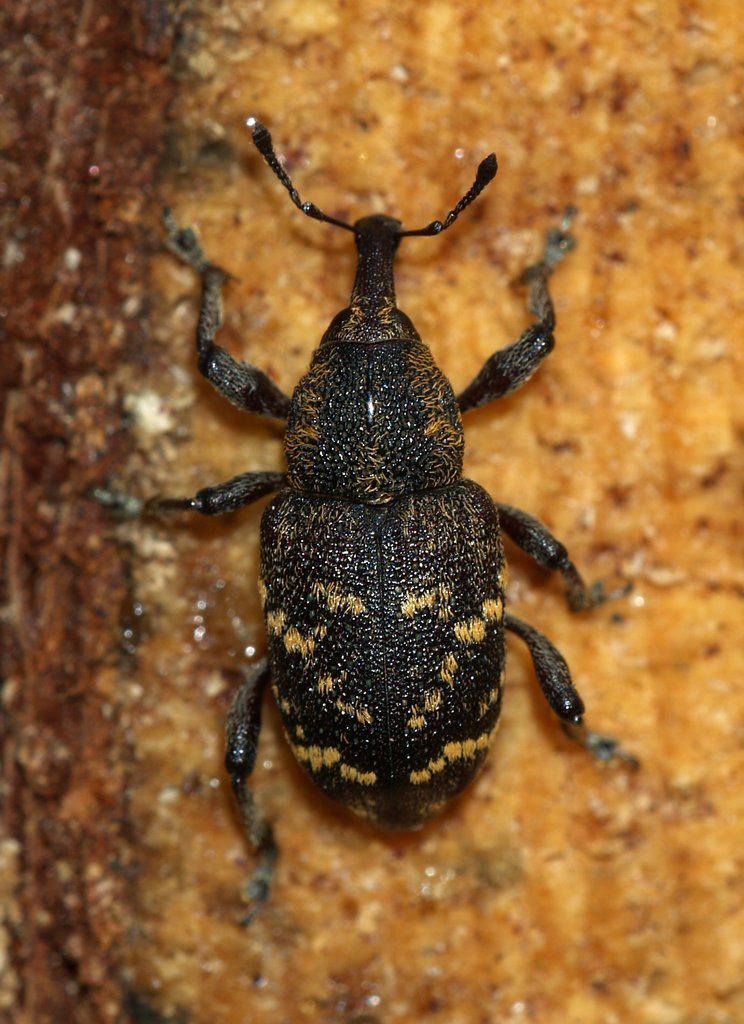
Adults are 10 to 13 mm long and have black or deep-red legs with a tooth on the femur and tibia. The beetles are most problematic after clear-felling and in phosphorus-fertilized plantations.
Source: Wikipedia
Size
Adults measure about 10 to 13 mm in length, not counting the snout. Full-grown larvae are 14 to 16 mm long, curved, whitish with a brown head.
Source: Wikipedia
Is it a pest in the house?
Adults damage seedlings by eating bark around the stem collar, effectively ring-barking and killing the plant. Clear-cut areas that are not burned or cleared of stumps favor spread of the pest.
Source: Wikipedia
How to get rid of it
Seedling dressing with insecticides is the main protection method. Natural enemies such as predatory beetles, fungi, entomopathogenic nematodes and a parasitic wasp also attack weevils.
Source: Wikipedia
Where it lives
They especially attack trees fertilized with phosphorus, which makes the phloem more nutritious. Adults are present year-round but usually hibernate during cold winter months.
Source: Wikipedia
What it eats
The main damage comes from adults eating bark and cambium.
Source: Wikipedia
Life cycle
Females lay eggs in the ground near roots of sick or freshly felled trees in spring. Development takes four to five months; eggs are laid in April-May, adults emerge in August-September and are not sexually active until after winter.
Source: Wikipedia
When you see it
Adults feed throughout the growing season, with peak attacks in spring (April-May) and autumn (August-September). Adults can be found all year but usually hibernate in winter.
Source: Wikipedia
Where it comes from
The species is the most important pest of commercially important coniferous trees in European plantations. Problems increase with clear-felling and replanting practices.
Source: Wikipedia
Lookalikes
Adult size is 10 to 13 mm; larvae are 14 to 16 mm, curved, whitish with brown head.
Source: Wikipedia
Where it is found in the US
Recorded in 1 of 51 states and DC. Most records: Pennsylvania.
Darker = more records. Counts are museum and citizen-science records, not population size.
Source: GBIF
Questions people ask
How can I protect my seedlings from pine weevils?
Treat seedlings with insecticide dressings and keep clear-cut sites clean of stumps; natural predators also help reduce numbers.
Source: Wikipedia
Same family (Curculionidae)
 Green Immigrant Leaf WeevilPolydrusus formosusDamages trees, gardens or crops
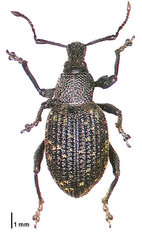 Black Vine WeevilOtiorhynchus sulcatusDamages trees, gardens or crops
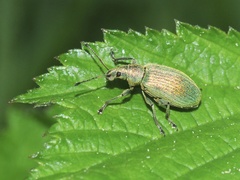 Nettle weevilPhyllobius pomaceusDamages trees, gardens or crops
 Asian Oak WeevilCyrtepistomus castaneusDamages trees, gardens or crops
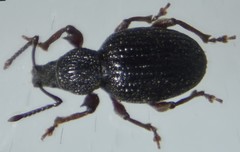 Strawberry Root WeevilOtiorhynchus ovatusDamages trees, gardens or crops
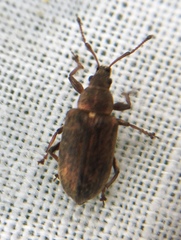 Common Leaf WeevilPhyllobius pyriDamages trees, gardens or crops
Sources
- Wikipedia: https://en.wikipedia.org/wiki/Hylobius_abietis
Look it up elsewhere: GBIF · iNaturalist · BugGuide · Wikipedia
Text written 2026-10-22 from the sources above and checked sentence by sentence against them. Data fetched 2026-10-22.