 Bug FAQ
Strawberry Bud Weevil
Anthonomus signatus · Order: Coleoptera · Family: Curculionidae
Source: Wikipedia
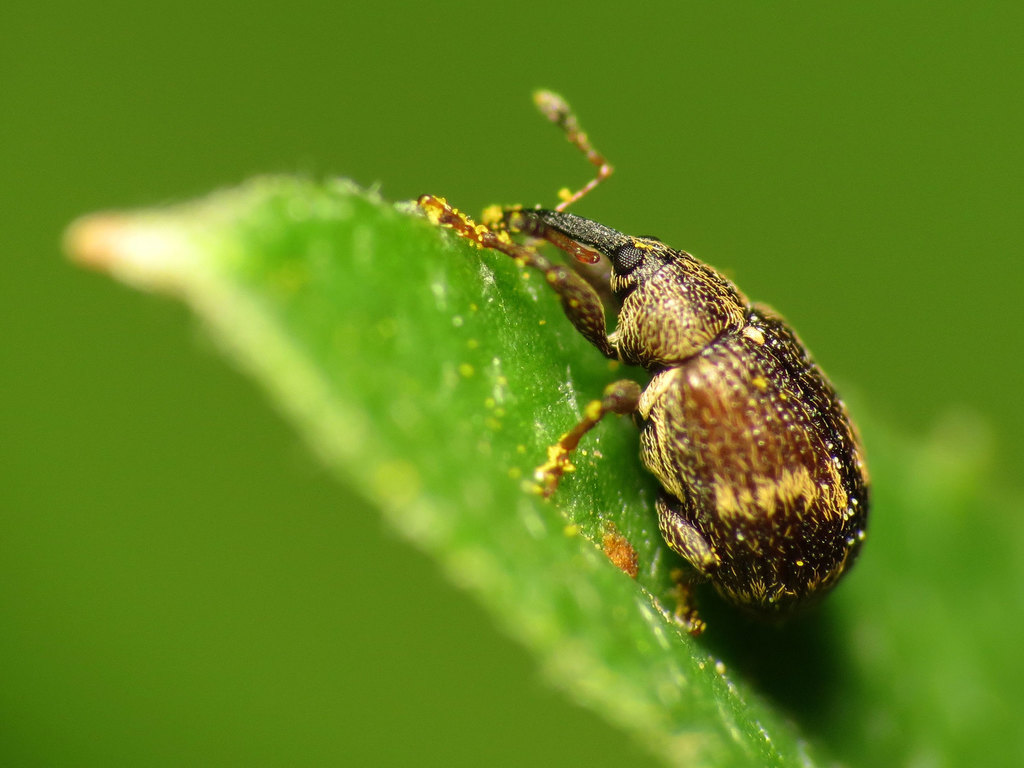
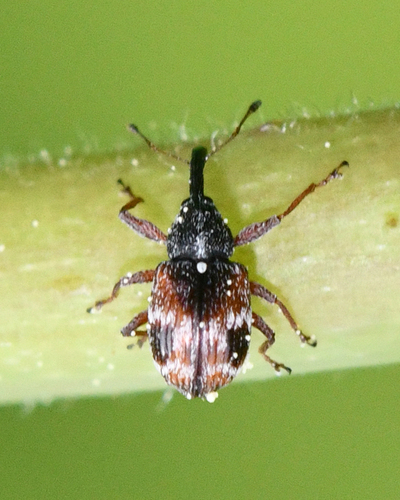
The strawberry bud weevil is about 1/8 inch long and shows copper, black and white stripes. Females lay eggs on flower buds and then cut the buds off, which makes it a major pest of raspberries.
Source: Wikipedia
How to recognize it
Their bodies have copper, black and white striped patterns.
Source: Wikipedia
Size
Adults measure roughly one-eighth of an inch.
Source: Wikipedia
Is it a pest in the house?
They are considered a major pest of raspberry plants.
Source: Wikipedia
What it eats
They are generalist feeders that consume pollen from their host plants.
Source: Wikipedia
Life cycle
A female can produce up to 75 eggs during a season.
Source: Wikipedia
Where it comes from
They are native to North America.
Source: Wikipedia
Where it is found in the US
Recorded in 29 of 51 states and DC. Most records: Kansas, Nebraska, Louisiana, New York, Pennsylvania, Texas, Massachusetts, Arkansas.
Darker = more records. Counts are museum and citizen-science records, not population size.
Source: GBIF
Status: native in North America; native in Canada. Source: iNaturalist
Months it is reported in the US
Source: GBIF
More photos
Questions people ask
What does the strawberry bud weevil look like?
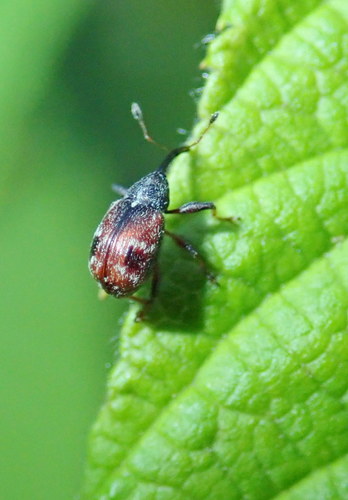
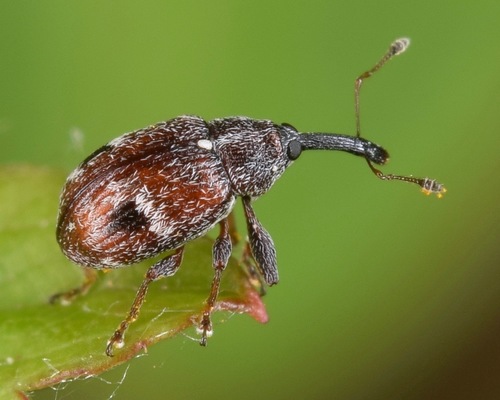
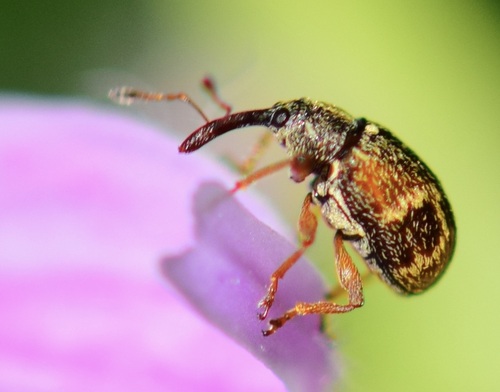
It has copper, black and white striped markings.
Source: Wikipedia
Is the strawberry bud weevil a problem for raspberries?
Yes, it is a major pest that damages raspberry crops.
Source: Wikipedia
How does the female strawberry bud weevil lay its eggs?
She deposits eggs on flower buds and then cuts the buds off the plant.
Source: Wikipedia
Same family (Curculionidae)
 Green Immigrant Leaf WeevilPolydrusus formosusDamages trees, gardens or crops
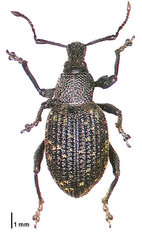 Black Vine WeevilOtiorhynchus sulcatusDamages trees, gardens or crops
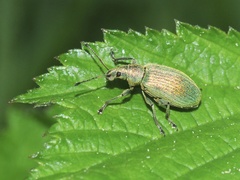 Nettle weevilPhyllobius pomaceusDamages trees, gardens or crops
 Asian Oak WeevilCyrtepistomus castaneusDamages trees, gardens or crops
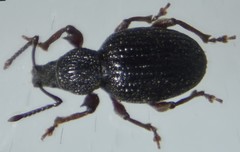 Strawberry Root WeevilOtiorhynchus ovatusDamages trees, gardens or crops
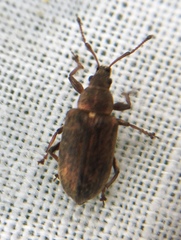 Common Leaf WeevilPhyllobius pyriDamages trees, gardens or crops
Sources
- Wikipedia: https://en.wikipedia.org/wiki/Anthonomus_signatus
Look it up elsewhere: GBIF · iNaturalist · BugGuide · ITIS · Wikipedia
Text written 2026-10-27 from the sources above and checked sentence by sentence against them. Data fetched 2026-10-27.