 Bug FAQ
Stout Pintail
Acisoma inflatum · Order: Odonata · Family: Libellulidae

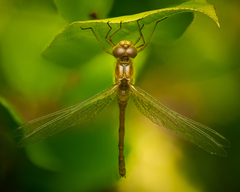
Males are pale blue with heavy black mottling and bright turquoise eyes, while females are duller with a yellow-brown wash on the abdomen and front thorax segments. They live around calm, grassy water bodies such as ponds and pans.
Source: Wikipedia
How to recognize it
Males have bright turquoise eyes and a pale blue base color heavily mottled with black patterns. Females retain some pale blue and black mottling but also show a yellow-brown wash on the abdomen and the first few thorax segments, making them look duller.
Source: Wikipedia
Where it comes from
They occur throughout much of Africa, with relict populations in Algeria, Egypt and Libya north of the Sahara.
Source: Wikipedia
Lookalikes
The stout pintail looks very similar to the slender pintail and they often share the same habitats.
Source: Wikipedia
More photos


Same family (Libellulidae)


Sources
- Wikipedia: https://en.wikipedia.org/wiki/Acisoma_inflatum
Look it up elsewhere: GBIF · iNaturalist · BugGuide · Wikipedia
Text written 2026-10-23 from the sources above and checked sentence by sentence against them. Data fetched 2026-10-23.