 Bug FAQ
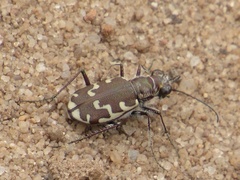
St. Anthony Dune Tiger Beetle
Cicindela arenicola · Order: Coleoptera · Family: Carabidae
Also called: Idaho dunes tiger beetle
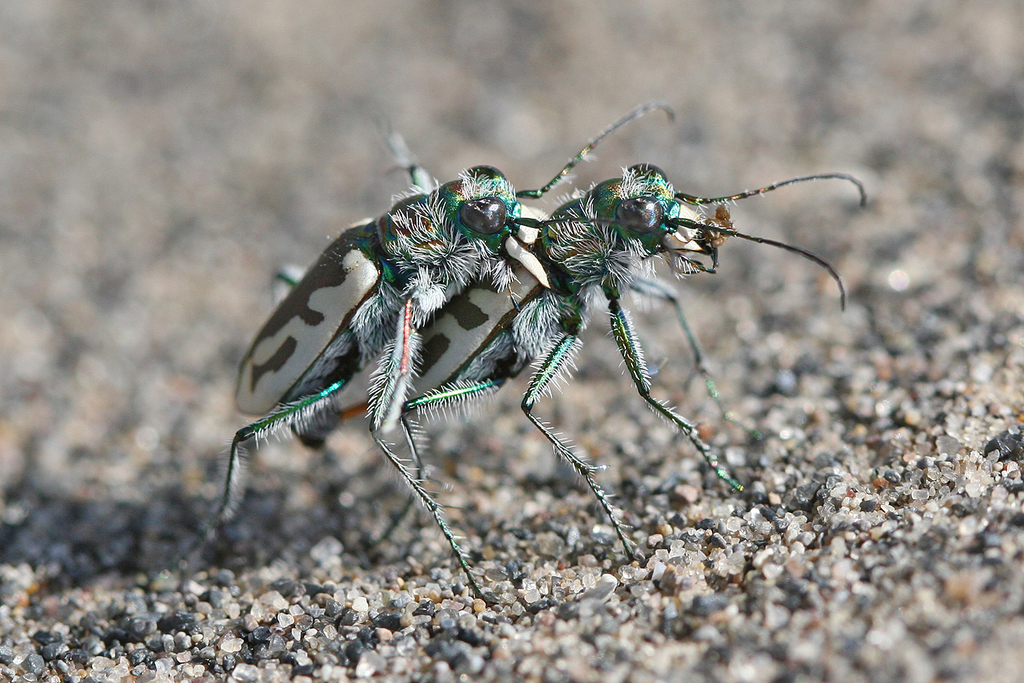
The St. Anthony Dune tiger beetle was first described in 1967. It lives in sand-dune ecosystems, burrowing into the sand when it gets too hot or cold. Adults hibernate through winter and emerge in spring to mate and lay eggs, being most active on warm spring and fall days.
Source: Wikipedia
How to recognize it
It was first described in 1967.
Source: Wikipedia
Where it lives
It lives in sand-dune ecosystems. When temperatures are extreme it retreats to burrows in the sand.
Source: Wikipedia
Life cycle
Adults hibernate during winter and come out of their burrows in spring to mate and lay eggs.
Source: Wikipedia
When you see it
It is most active on warm days in spring and fall.
Source: Wikipedia
Lookalikes
It is most closely related to Cicindela theatina in habitat, shape and ecology.
Source: Wikipedia
Where it is found in the US
Recorded in 1 of 51 states and DC. Most records: Idaho.
Darker = more records. Counts are museum and citizen-science records, not population size.
Source: GBIF
Months it is reported in the US
Source: GBIF
More photos

Questions people ask
When was the St. Anthony Dune tiger beetle first described?
It was first described in 1967.
Source: Wikipedia
What habitat does this beetle prefer?
It lives in sand-dune ecosystems and burrows in the sand when it gets too hot or cold.
Source: Wikipedia
When are they most active?
They are most active on warm days during spring and fall.
Source: Wikipedia
What other beetles are they similar to?
They are most closely related to Cicindela theatina in habitat, shape and ecology.
Source: Wikipedia
Same family (Carabidae)


Sources
- Wikipedia: https://en.wikipedia.org/wiki/Cicindela_arenicola
Look it up elsewhere: GBIF · iNaturalist · BugGuide · ITIS · Wikipedia
Text written 2026-10-29 from the sources above and checked sentence by sentence against them. Data fetched 2026-10-29.