 Bug FAQ
Spotted-wing antlion
Euroleon nostras · Order: Neuroptera · Family: Myrmeleontidae
Also called: Suffolk ant-lion
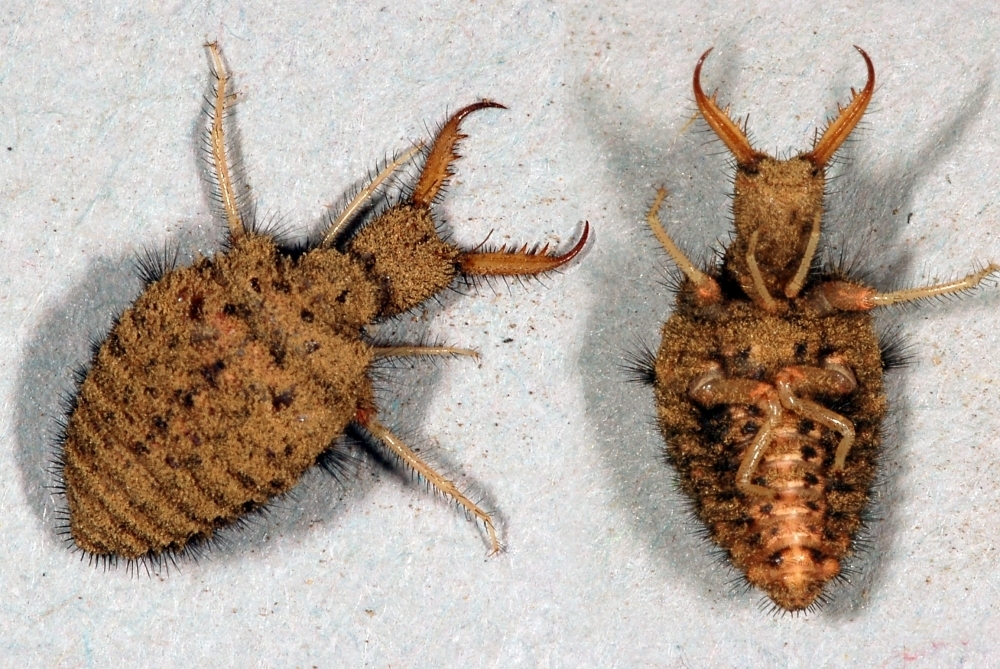
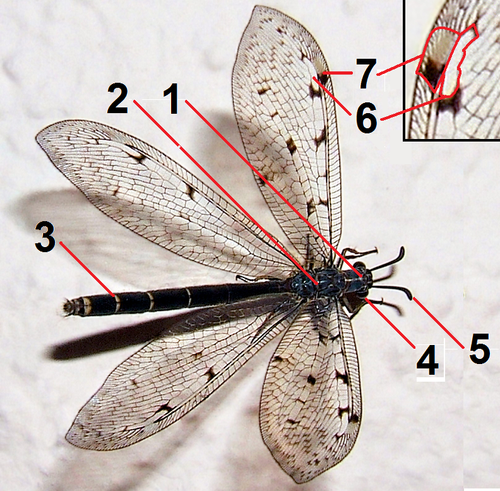
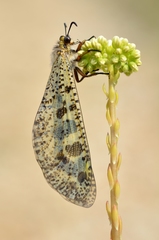
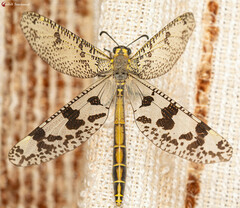
Adults look like brown dragonflies with four spotted translucent wings and can reach about 30 mm long with a 70 mm wingspan. The larvae live in dry sandy soil, dig pitfall traps, and eat ants and other small arthropods. Adults fly from June to September, are nocturnal, and mate while the female hangs from a twig.
Source: Wikipedia
How to recognize it
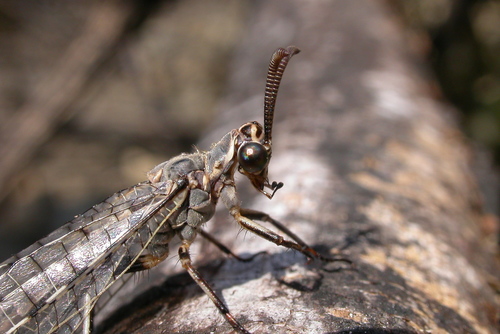
Its four large translucent wings have brown spots.
Source: Wikipedia
Is it a pest in the house?
Larvae prefer dry sand under rocks or overhangs, which can occur in garden or yard settings.
Source: Wikipedia
Where it lives
Larvae need dry sandy soil, often under rocks or overhangs that keep rain out.
Source: Wikipedia
What it eats
Larvae capture ants and other small creatures that fall into their sand pits.
Source: Wikipedia
Life cycle
The larva develops for up to two years, then pupates in the soil and emerges a month later as a winged adult. Adults live only long enough to reproduce.
Source: Wikipedia
When you see it
Adults are on the wing from June through September but are rarely seen because they are active at night. During mating the female hangs from a twig while the male dangles below for an hour or two.
Source: Wikipedia
Where it comes from
It occurs across most of Europe and is very rare in Britain, known only from a few coastal sites.
Source: Wikipedia
Lookalikes
The adult’s brown, dragonfly-like shape can be confused with true dragonflies or damselflies.
Source: Wikipedia
More photos


Questions people ask
When can I see adult spotted-wing antlions?
Adults are active from June to September and are mostly nocturnal, so they are rarely seen during the day.
Source: Wikipedia
What do antlion larvae eat?
They catch ants and other small arthropods that fall into their sand pits and then suck out the fluids.
Source: Wikipedia
Where do antlion larvae live?
They live in dry sandy soil, often under rocks or overhangs that keep rain away.
Source: Wikipedia
Same family (Myrmeleontidae)



Sources
- Wikipedia: https://en.wikipedia.org/wiki/Euroleon_nostras
Look it up elsewhere: GBIF · iNaturalist · BugGuide · ITIS · Wikipedia
Text written 2026-10-22 from the sources above and checked sentence by sentence against them. Data fetched 2026-10-22.