 Bug FAQ
Grand Antlion
Palpares libelluloides · Order: Neuroptera · Family: Myrmeleontidae
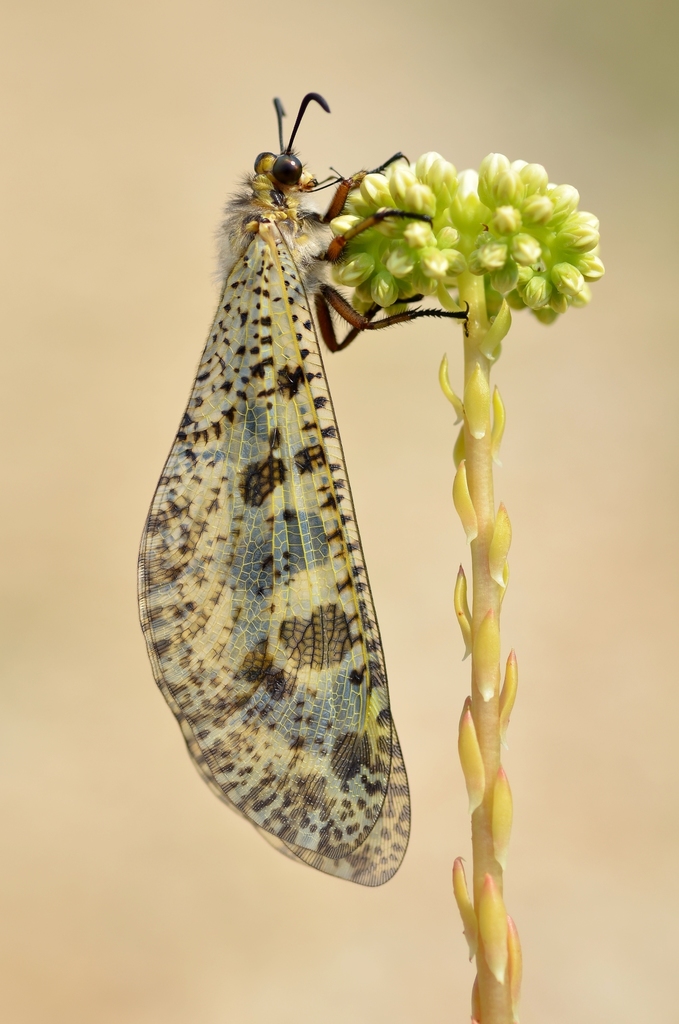
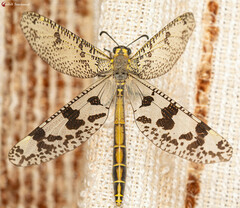
The Grand Antlion has a wingspan over 10 cm and broad, dark-brown mottled wings. Males are identifiable by long, delicate genital appendages.
Source: Wikipedia
How to recognize it
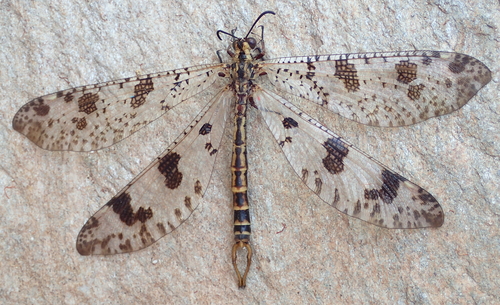
The wings are broad and have a mottled dark-brown pattern. Males have long, delicate genital appendages.
Source: Wikipedia
Size
Wingspan exceeds 10 cm (about 3.9 in).
Source: Wikipedia
Where it lives
Found in thickets and on rocky slopes up to roughly 1000 m elevation.
Source: Wikipedia
When you see it
Adults are active from May to September, both day and night.
Source: Wikipedia
Lookalikes
Its name means “dragonfly-like,” referring to its resemblance to dragonflies of the genus Libellula.
Source: Wikipedia
More photos
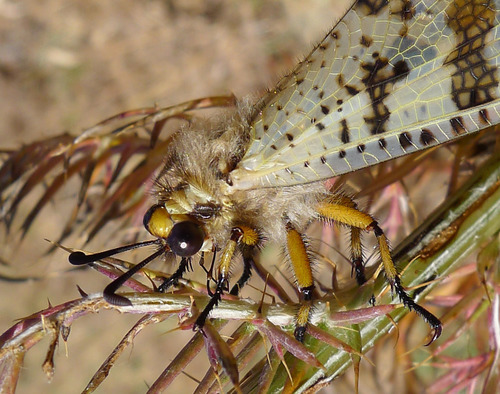
Questions people ask
When can I see Grand Antlions?
Adults are on the wing from May through September, active both day and night.
Source: Wikipedia
How can I tell a male Grand Antlion apart?
Males have long, delicate genital appendages.
Source: Wikipedia
Same family (Myrmeleontidae)
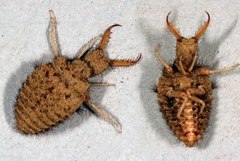


Sources
- Wikipedia: https://en.wikipedia.org/wiki/Palpares_libelluloides
Look it up elsewhere: GBIF · iNaturalist · BugGuide · Wikipedia
Text written 2026-10-23 from the sources above and checked sentence by sentence against them. Data fetched 2026-10-22.