 Bug FAQ
Spotted Fritillary
Melitaea didyma · Order: Lepidoptera · Family: Nymphalidae
Also called: Red-band Fritillary
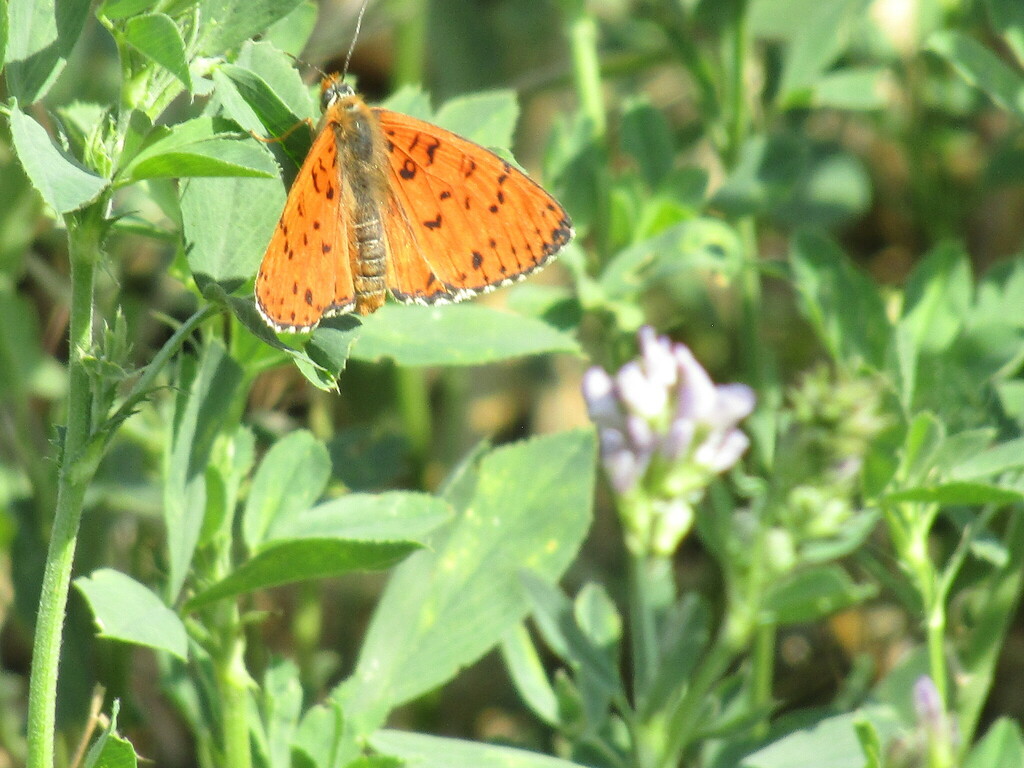
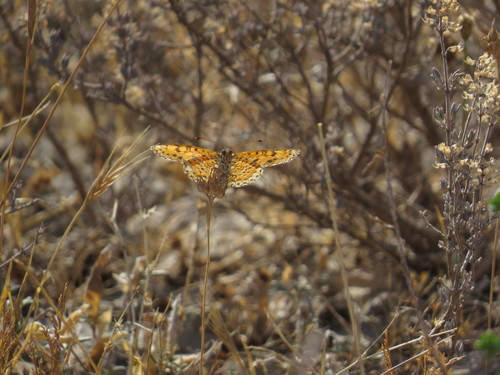
Its upper wings are bright orange-brown with variable dark brown markings, while the underside is a chequered pale yellow-orange.
Source: Wikipedia
How to recognize it
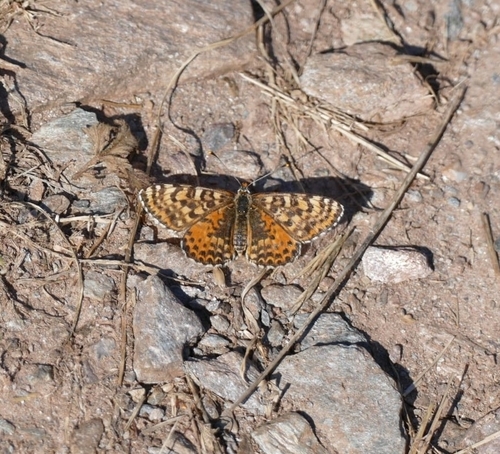
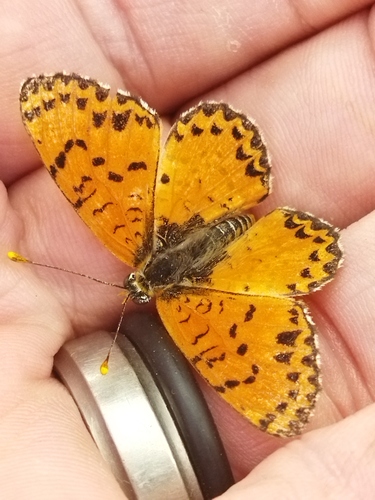
The upper side shows bright orange-brown with rows of dark brown spots that vary in number and size. The underside is a chequered pattern of pale yellow and pale orange.
Source: Wikipedia
Size
Adults have a wingspan ranging from 35 to 50 mm.
Source: Wikipedia
Where it lives
It prefers flowery, grassy habitats such as meadows and roadside verges.
Source: Wikipedia
Life cycle
The species produces two or three generations per year and overwinters as a young caterpillar.
Source: Wikipedia
Lookalikes
Melitaea didyma, known as the spotted or red-band fritillary, belongs to the Palearctic Nymphalidae family.
Source: Wikipedia
More photos
Questions people ask
When can I see the spotted fritillary?
Adults fly from March through October, varying with local climate.
Source: Wikipedia
Same family (Nymphalidae)





Sources
- Wikipedia: https://en.wikipedia.org/wiki/Melitaea_didyma
Look it up elsewhere: GBIF · iNaturalist · BugGuide · Wikipedia
Text written 2026-10-22 from the sources above and checked sentence by sentence against them. Data fetched 2026-10-22.