 Bug FAQ
Spotted Blisterbeetle
Ceroctis capensis · Order: Coleoptera · Family: Meloidae
Source: Wikipedia
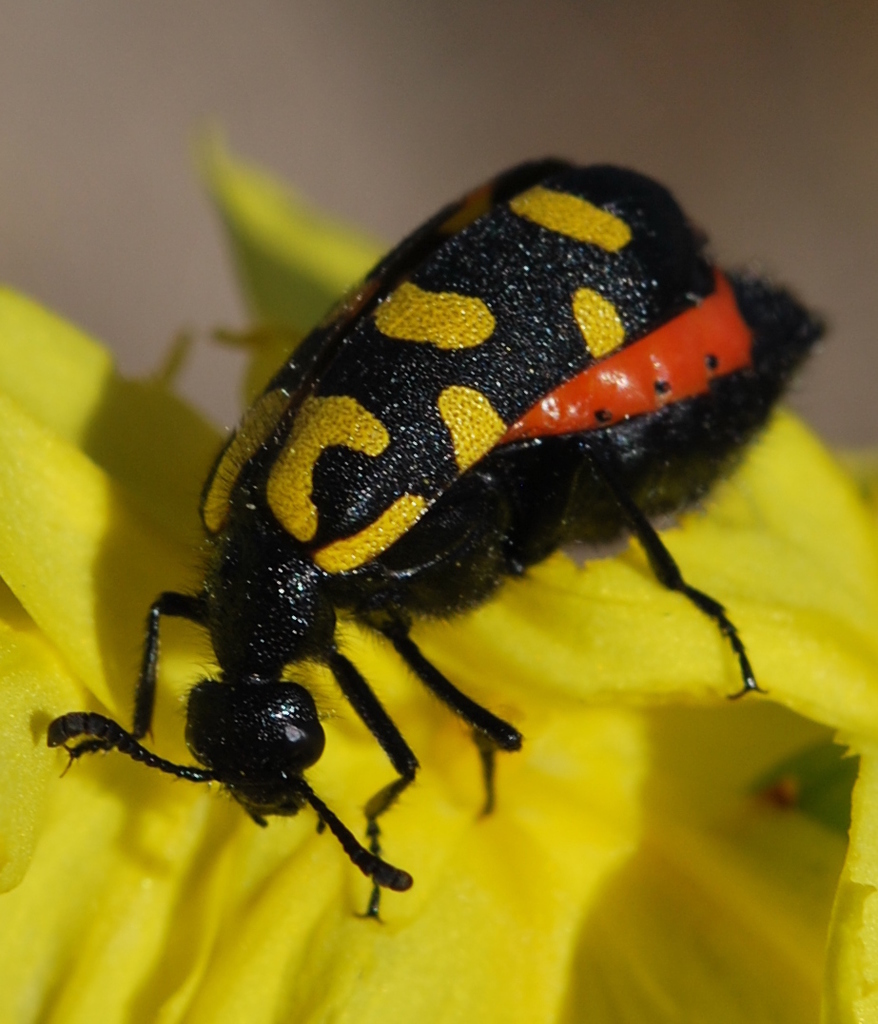
The spotted blister beetle is about 12 mm long and has black elytra dotted with yellow spots, while its head, antennae and legs are black. It lives throughout Southern Africa in many habitats, feeds on flower parts, especially legumes and Watsonia species, and its larvae hunt for buried locust and grasshopper eggs. Females lay eggs in the soil; when disturbed the adult releases a toxic liquid from its leg joints that can blister human skin.
Source: Wikipedia
How to recognize it
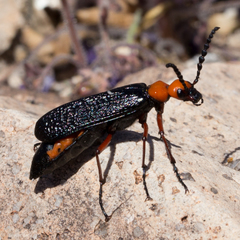
Its wing covers are black with yellow spots; the head, antennae and legs are also black.
Source: Wikipedia
Size
Adults are roughly 12 mm long.
Source: Wikipedia
Where it lives
It is endemic to Southern Africa and occurs in a variety of habitats.
Source: Wikipedia
What it eats
Adults feed on floral parts, preferring legumes and Watsonia species.
Source: Wikipedia
Life cycle
Females deposit eggs in the soil; the hatched larvae are tiny, active, six-legged hunters that seek buried locust and grasshopper egg pods.
Source: Wikipedia
Where it comes from
The species is native only to Southern Africa.
Source: Wikipedia
Lookalikes
It resembles Mylabris oculata, another member of the same beetle family.
Source: Wikipedia
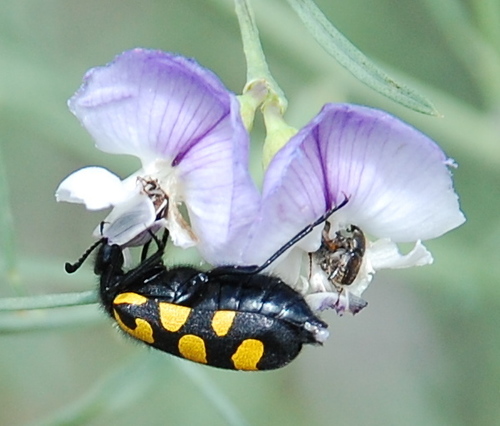
More photos
Questions people ask
What does the spotted blister beetle look like?
It has black wing covers dotted with yellow spots, and its head, antennae and legs are black.
Source: Wikipedia
Where can I find this beetle?
It is native to Southern Africa and lives in many different habitats there.
Source: Wikipedia
What should I do if it blisters my skin?
Avoid handling the beetle roughly, as it can release a toxic liquid that causes skin blisters.
Source: Wikipedia
Same family (Meloidae)



Sources
- Wikipedia: https://en.wikipedia.org/wiki/Ceroctis_capensis
Look it up elsewhere: GBIF · iNaturalist · BugGuide · Wikipedia
Text written 2026-10-23 from the sources above and checked sentence by sentence against them. Data fetched 2026-10-23.