 Bug FAQ
Black Oil Beetle
Meloe proscarabaeus · Order: Coleoptera · Family: Meloidae
Also called: Oil beetle
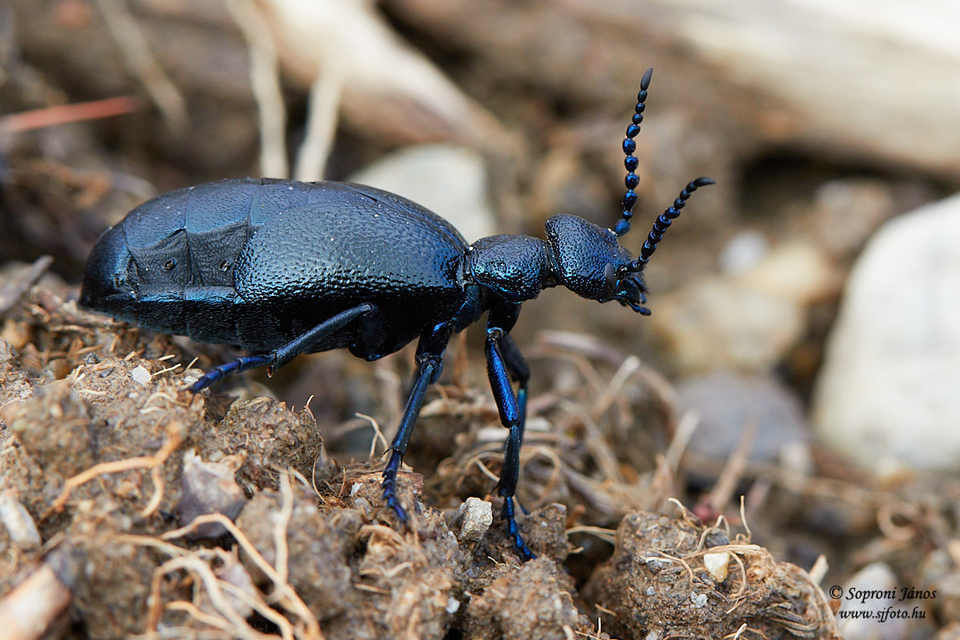
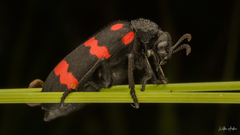
The black oil beetle is a European species that lives in warm meadow and field-edge habitats across most of the continent. It lacks hind wings and has reduced elytra, and its larvae hitch a ride on solitary bees to reach the bees' nests where they feed on bee eggs, pollen and nectar before pupating.
Source: Wikipedia
How to recognize it
Meloe proscarabaeus is a European oil beetle.
Source: Wikipedia
Size
It has no hind wings and its elytra are small.
Source: Wikipedia
What it eats
The larvae eat the eggs of solitary bees and the pollen and nectar the bees collected.
Source: Wikipedia
Life cycle
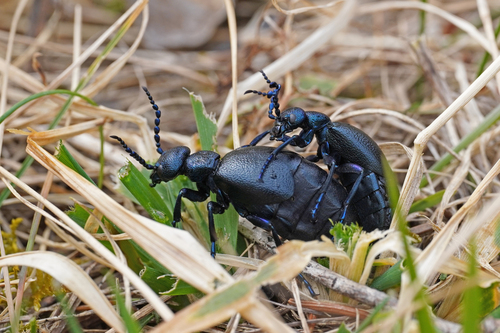
Females lay eggs in soil; larvae climb onto flowers and wait for solitary bees to visit. After being taken to a bee's nest, the larva pupates there and then leaves to find a mate.
Source: Wikipedia
Where it comes from
It is native to Europe.
Source: Wikipedia
More photos

Questions people ask
What do the larvae eat?
They feed on solitary bee eggs and the pollen and nectar the bees have gathered.
Source: Wikipedia
Where can I find black oil beetles?
Look for them in warm meadow edges and field margins across most of Europe, but not in the far north.
Source: Wikipedia
Same family (Meloidae)



Sources
- Wikipedia: https://en.wikipedia.org/wiki/Meloe_proscarabaeus
Look it up elsewhere: GBIF · iNaturalist · BugGuide · Wikipedia
Text written 2026-10-22 from the sources above and checked sentence by sentence against them. Data fetched 2026-10-22.