 Bug FAQ
Splendid Royal Moth
Citheronia splendens · Order: Lepidoptera · Family: Saturniidae

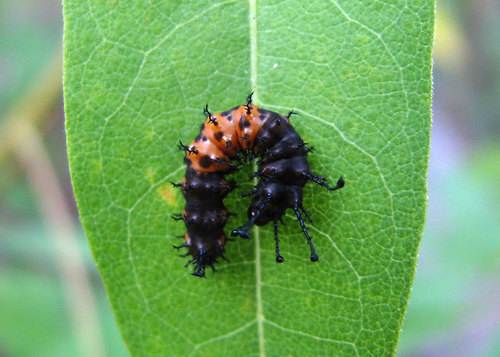
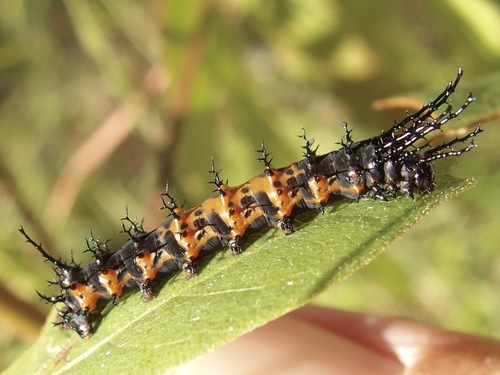
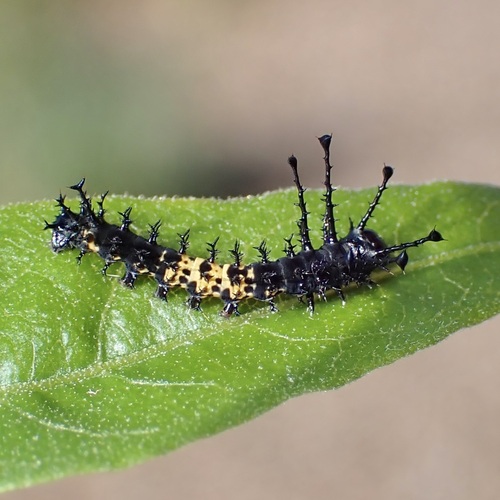
It lives from southern Arizona down through central and southeastern Mexico and flies in midsummer. Caterpillars resemble bird droppings and feed on plants such as cotton and sumac species.
Source: Wikipedia
How to recognize it
The caterpillars look like bird droppings.
Source: Wikipedia
Size
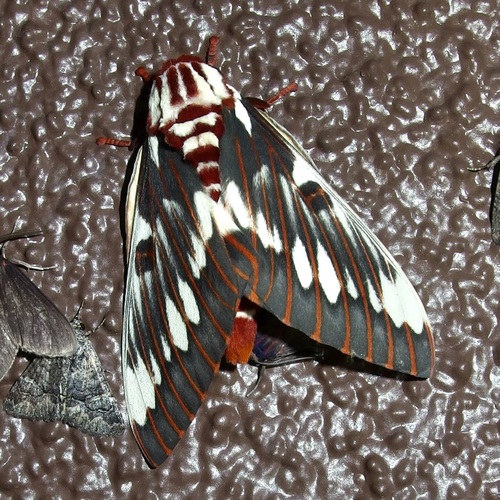
Adults have a wingspan ranging from 106 to 150 mm (about 4.2 to 5.9 inches).
Source: Wikipedia
Life cycle
Females lay eggs in small groups of one to four on leaf sides. In September the larvae burrow underground to pupate.
Source: Wikipedia
When you see it
Adults are on the wing from July through August.
Source: Wikipedia
Where it comes from
Its native range includes southern Arizona and extends into central and southeastern Mexico.
Source: Wikipedia
Where it is found in the US
Recorded in 2 of 51 states and DC. Most records: Arizona, New Mexico.
Darker = more records. Counts are museum and citizen-science records, not population size.
Source: GBIF
Months it is reported in the US
Source: GBIF
More photos
Questions people ask
When can I see adult splendid royal moths?
Adults are active during July and August.
Source: Wikipedia
Where is this moth found?
It occurs from southern Arizona down into central and southeastern Mexico.
Source: Wikipedia
Same family (Saturniidae)



Sources
- Wikipedia: https://en.wikipedia.org/wiki/Citheronia_splendens
Look it up elsewhere: GBIF · iNaturalist · BugGuide · ITIS · Wikipedia
Text written 2026-10-25 from the sources above and checked sentence by sentence against them. Data fetched 2026-10-25.