 Bug FAQ
Spiny Oakworm Moth
Anisota stigma · Order: Lepidoptera · Family: Saturniidae
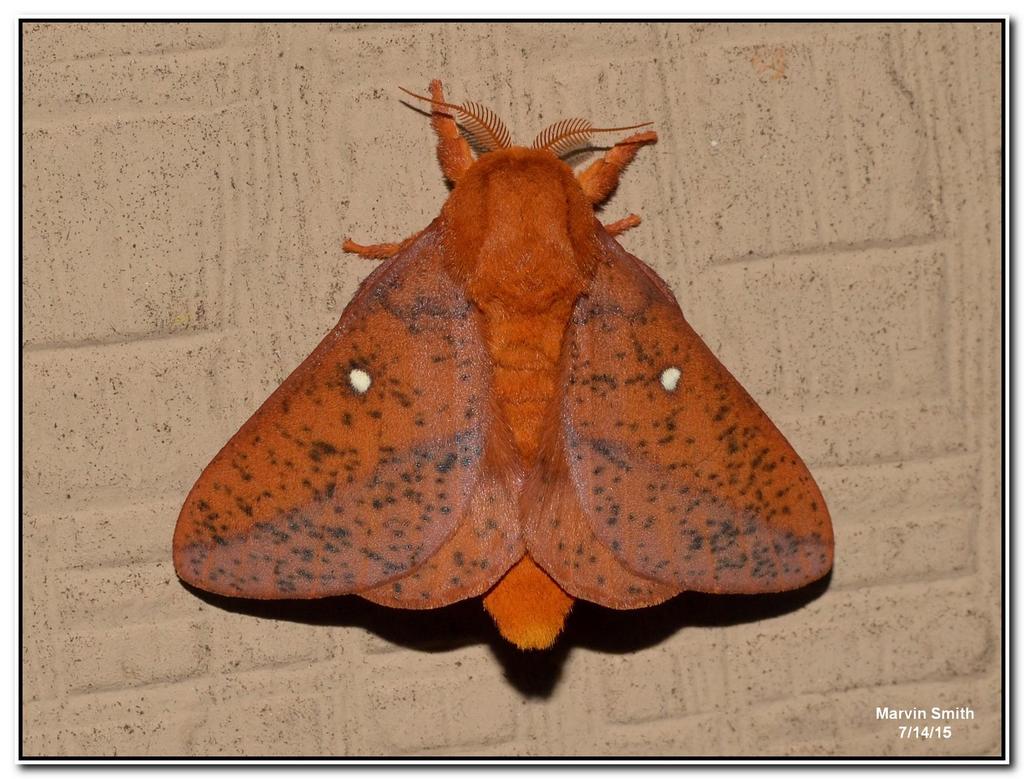
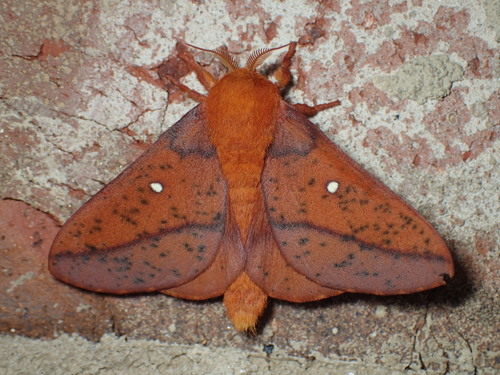
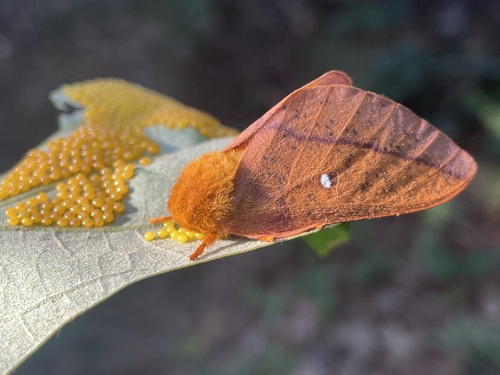
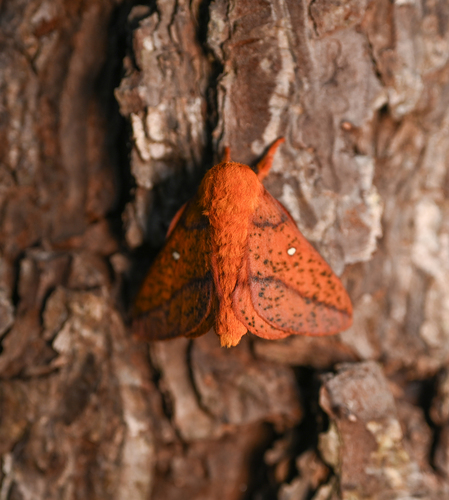
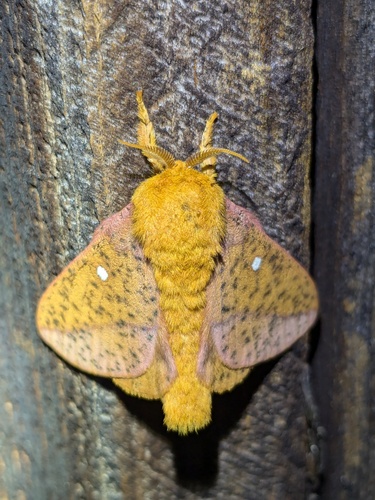
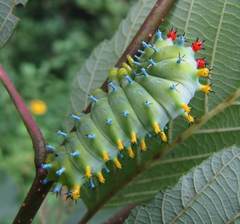
Adults have a wingspan of about 45 mm (2 in). They occur across much of the United States and southern Canada, from the Atlantic coast to the Midwest and down to Texas and Florida. Caterpillars mainly eat oak leaves, but have also been found on hazel and basswood.
Source: Wikipedia
Size
The moth’s wingspan is roughly 45 mm, about two inches.
Source: Wikipedia
Where it lives
It lives in North America, ranging from Massachusetts and southern Ontario south to Florida and west to Minnesota, Kansas and Texas.
Source: Wikipedia
What it eats
The larvae feed primarily on oak leaves, and have also been recorded on hazel and basswood.
Source: Wikipedia
Where it comes from
Its native range covers much of the United States and southern Canada.
Source: Wikipedia
Lookalikes
Male Spiny Oakworm Moths are the only Anisota species known to be attracted to light.
Source: Wikipedia
Where it is found in the US
Recorded in 33 of 51 states and DC. Most records: Alabama, Texas, Georgia, Massachusetts, Ohio, Tennessee, North Carolina, South Carolina.
Darker = more records. Counts are museum and citizen-science records, not population size.
Source: GBIF
Status: native in North America; native in United States; native in Canada. Source: iNaturalist
Months it is reported in the US
Source: GBIF
More photos
Questions people ask
What do Spiny Oakworm moth caterpillars eat?
They mainly eat oak leaves, but will also feed on hazel and basswood.
Source: Wikipedia
Where can I find Spiny Oakworm moths?
They are found from the northeastern US and southern Canada down to Florida and west to the Midwest and Texas.
Source: Wikipedia
Same family (Saturniidae)


Sources
- Wikipedia: https://en.wikipedia.org/wiki/Anisota_stigma
Look it up elsewhere: GBIF · iNaturalist · BugGuide · ITIS · Wikipedia
Text written 2026-10-23 from the sources above and checked sentence by sentence against them. Data fetched 2026-10-23.