 Bug FAQ
Spangle Swallowtail
Papilio protenor · Order: Lepidoptera · Family: Papilionidae
Source: Wikipedia
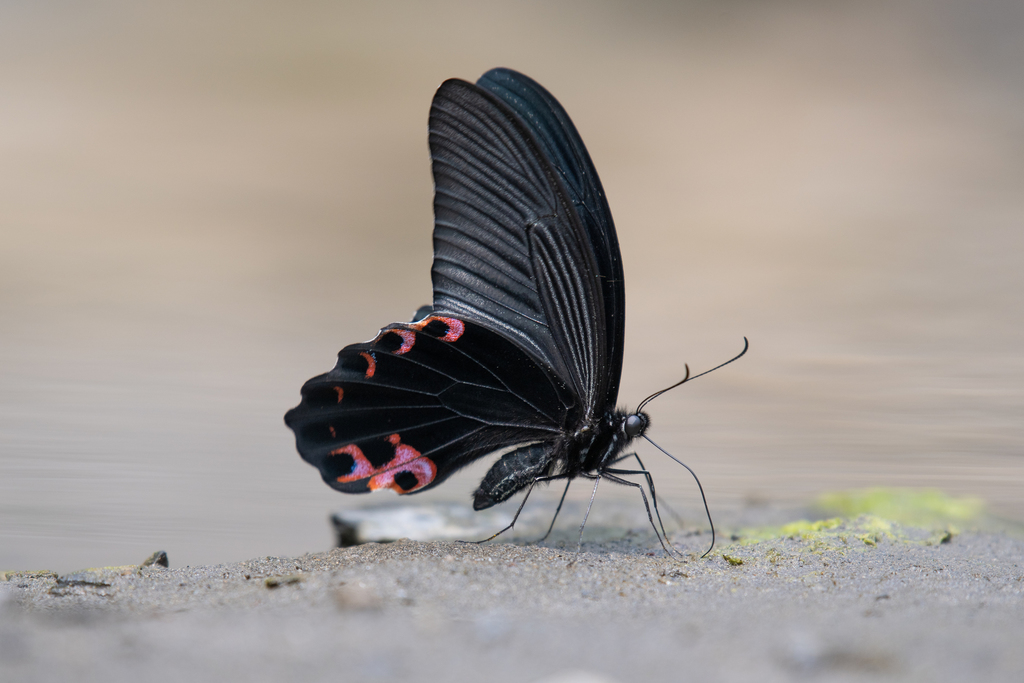
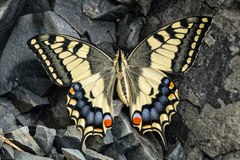
Spangle Swallowtail is a large butterfly with striking indigo-blue black upperside and pale yellow-white streaks on the hindwing. Its larvae are green with a yellow collar and feed on citrus-related plants such as Zanthoxylum alatum, which can harm citrus trees and garden fruit.
Source: Wikipedia
How to recognize it
Upperside is velvety indigo-blue black, darker on forewing; hindwing has a broad pale yellow-white streak and red tornal angle. Underside forewing is dull black with broad grey streaks; hindwing shows a large irregular tornal patch and pinkish-red subterminal lunules.
Source: Wikipedia
Where it lives
Females are strongly attracted to Citrus unshiu, the main host plant. Males tend to stay in the same area more than females.
Source: Wikipedia
What it eats
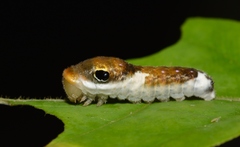
Larvae are green with a yellow collar and feed on Zanthoxylum alatum. The species is a specialist on rutaceous plants, especially citrus.
Source: Wikipedia
Life cycle
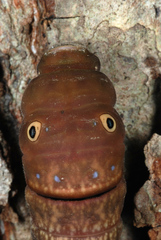
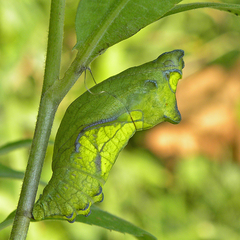
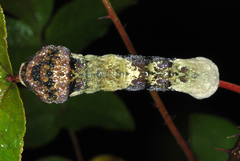
Caterpillars are green with yellow collar and brown lichen-like markings, feeding on host plants. Pupae may look like rough bark or be uniformly green.
Source: Wikipedia
Where it comes from
Found from northern Pakistan and the Himalayas through Bangladesh, Burma, southern China, Vietnam, Laos, Taiwan, Korea, Japan and Nepal.
Source: Wikipedia
Questions people ask
Does the Spangle Swallowtail damage garden plants?
Its caterpillars eat leaves of citrus and related plants, which can harm garden trees and fruit crops.
Source: Wikipedia
Same family (Papilionidae)
Sources
- Wikipedia: https://en.wikipedia.org/wiki/Papilio_protenor
Look it up elsewhere: GBIF · iNaturalist · BugGuide · Wikipedia
Text written 2026-10-22 from the sources above and checked sentence by sentence against them. Data fetched 2026-10-22.